


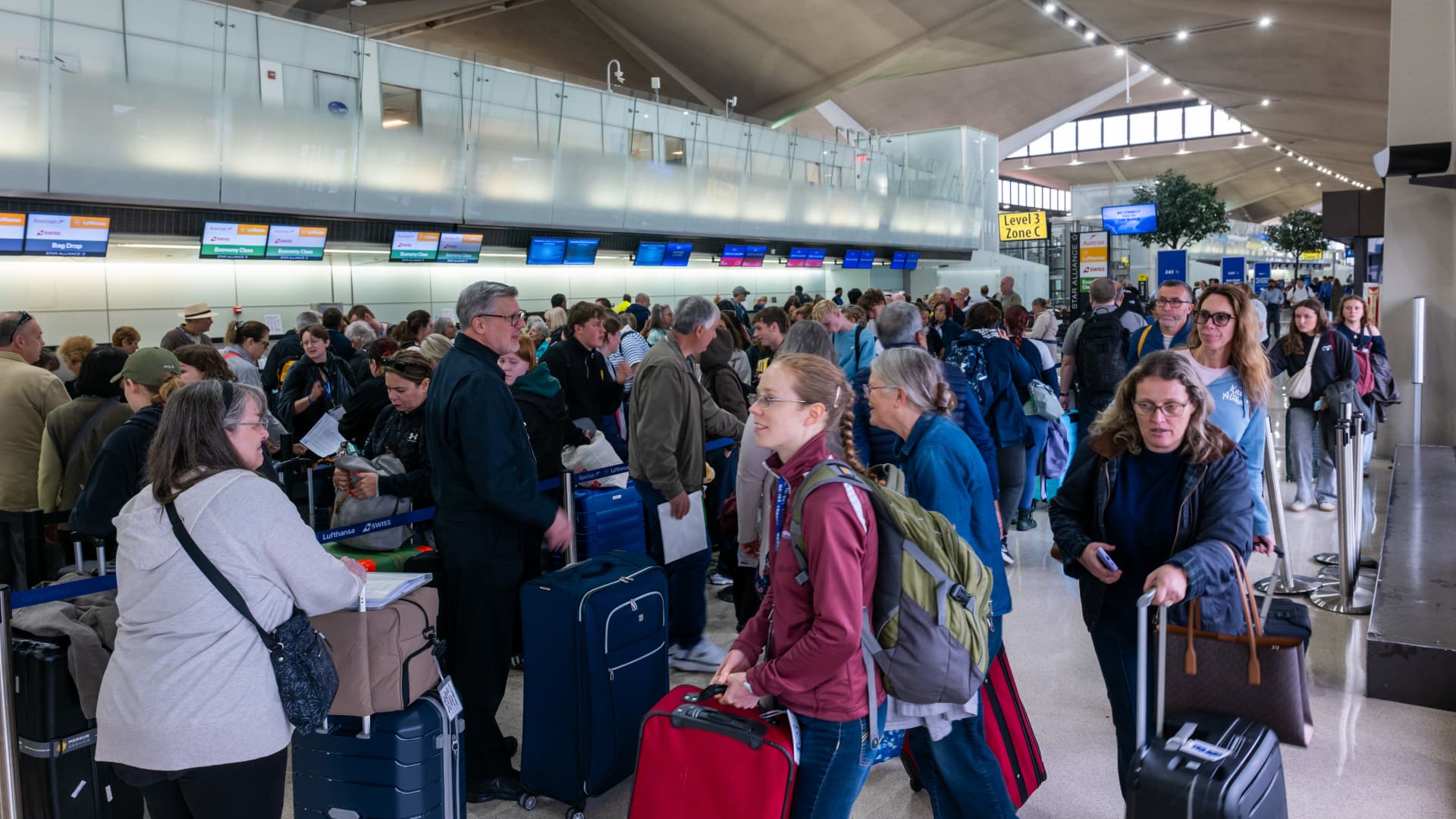
Chaos at Newark: Equipment Failure Disconnects Air Traffic Control from Planes
A significant technical glitch recently left air traffic controllers unable to maintain contact with airplanes approaching and departing the Newark airport, according to their union. This malfunction has triggered substantial flight disruptions and intensified worries about existing technological inadequacies and insufficient staffing levels.
In an incident on April 28, controllers managing flights near the New Jersey airport experienced a brief loss of both radar capabilities and communication with the aircraft they were responsible for. As stated by the National Air Traffic Controllers Association, the controllers were momentarily unable to see, hear, or communicate with the planes in their charge.
Following this disturbance, the situation was compounded by a shortage of staff, which was so severe that some controllers involved in the incident have had to take personal leave to recover from the stress associated with numerous recent outages, as reported by the Federal Aviation Administration (FAA) on Monday.
FlightAware, a flight-tracking website, reported over 1,500 flight delays at the New Jersey airport last week, attributing the disruptions to the persistent shortage of air traffic controllers.
The FAA acknowledged that outdated air traffic control systems are negatively impacting their operations. Efforts are underway to bolster the reliability of telecommunication systems in the New York area by developing a more durable and redundant framework with local telecommunication providers.
While neither the FAA nor the union specified the exact duration of the outage, Bloomberg quoted informed sources estimating it at nearly a minute and a half.
In response to the delays, plans have been announced to reduce daily flights from its Newark hub by 35, with the aim of alleviating network strain and minimizing disruptions.
United Airlines CEO Scott Kirby detailed in a customer communication that the technological failures last week were exacerbated by over 20% of FAA controllers at Newark taking leave.
Kirby underscored that the air traffic control center responsible has grappled with chronic understaffing for years, making it evident that without enough controllers, as indicated by the FAA, Newark cannot manage the scheduled volume of air traffic in the near future.
The air traffic controllers' union rebutted claims of a walkout, clarifying instead that employees accessed leave provided under the Federal Employees Compensation Act for those dealing with injury or trauma at work.
Ongoing Challenges in Air Traffic Control
The United States has endured a persistent shortfall of air traffic controllers, a situation made more complicated by federal regulations requiring controllers to retire by age 56.
Last year, the FAA relocated Newark's inbound and outbound flight controllers from Long Island to Philadelphia, intending to lessen the load on controllers also managing traffic at other major New York City airports.
The densely packed airspace surrounding New York is one of the busiest globally.
The Port Authority has invested substantial resources into upgrading Newark Liberty, but these upgrades hinge on a fully modernized federal air traffic system. They continue to advocate for the FAA to mitigate staffing deficiencies and expedite technological improvements crucial to managing delays in America's most bustling air corridor.
Recently, the U.S. Transportation Secretary visited the Philadelphia facility, promising to present plans for an entirely new air traffic control system soon.
Despite aging infrastructure, the FAA assures that the system maintains safety by slowing or grounding flights if controllers become overwhelmed.
Leave a Reply