


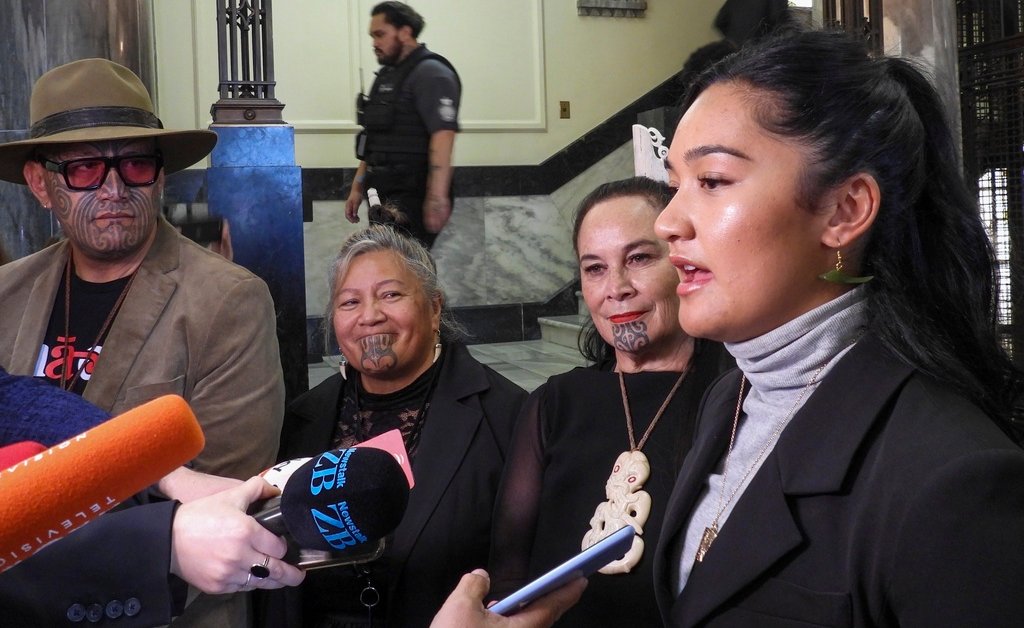
Māori Lawmakers Stir Parliament with Dramatic Protest
In a stormy session of New Zealand's parliament, a vote was abruptly halted leading to two lawmakers being escorted out. The uproar ensued over a contentious bill that could reshape the historic pact between the Māori people and the British Crown.
An Ancient Treaty Sparks Modern Conflicts
The 1840 Treaty of Waitangi laid the foundational terms for Māori rights, promising the tribes their land and protection while they ceded governance to British authorities. A new legislative proposal aims to extend these guarantees universally.
Amidst widespread opposition and a dim outlook for becoming law, the bill surprisingly passed its initial reading. This maneuver reflects complexities in New Zealand's political landscape, where smaller parties can wield significant influence.
Historical Tensions Resurface
Past misinterpretations and violations of the Treaty of Waitangi intensified struggles for the Māori, whose culture and land suffered greatly by the mid-1900s. Protests and legal actions in the 1970s began to redefine the treaty's promises.
David Seymour, leader of the ACT Party and a Māori himself, argues for restricting the treaty's distinct benefits, citing a lack of clear definition as divisive.
A Suspect Coalition Agreement
Despite his objections, Prime Minister Luxon's party supported the bill for political leverage, having secured governance support through deals with minor parties.
Criticism followed when Luxon departed for an international engagement just before the contentious vote.
Voices of Outrage in Parliament
Indigenous MP Willie Jackson and others vocally condemned Seymour's actions, calling the bill divisive and damaging.
Hana-Rawhiti Maipi-Clarke, representing Te Pāti Māori, protested via a passionate haka, inspiring others in the chamber and gallery to join amid the uproar.
Consequences of Defiance
The dramatic scene concluded with Maipi-Clarke's suspension, but the legislative process will continue with public consultations and further debate.
As tensions mount, the nation braces for large demonstrations in the capital, marking a pivotal moment in its ongoing dialogue on race relations.
Leave a Reply