


Understanding Egg Freezing: Process, Cost, and Reasons
In the United States, despite ongoing fluctuations in birth rates, there is a growing trend among women to opt for fertility preservation through egg freezing.
Since its standardization 12 years ago, the method has skyrocketed in popularity, with procedures jumping from 6,000 in 2014 to over 39,000 by 2023. This advancement allows women not only to freeze their eggs but also to have more control over their reproductive timelines, postponing parenthood until they feel prepared.
The earlier stigma attached to egg preservation, suggesting personal life setbacks, has largely dissipated. Dr. Tomer Singer from Northwell Health notes that many view the procedure as empowering, stating, "Women in their 30s may choose it because they are not ready for children yet, not wanting to make hasty relationship or life decisions."
The Egg Freezing Procedure
The preparation involves administering hormonal injections daily for approximately two weeks to stimulate ovarian follicles to mature. This process can involve multiple daily doses.
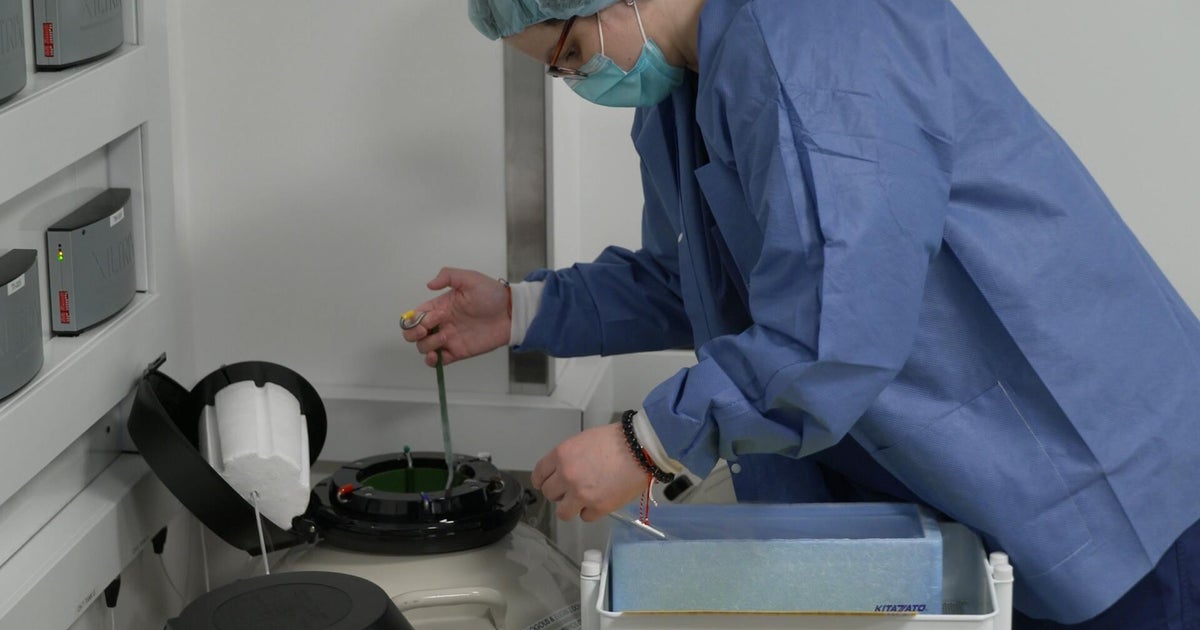
A surgical procedure follows where a physician uses a fine needle to retrieve the eggs by extracting fluid from the follicles. These extracted samples are transported to an embryology lab, where specialists carefully identify and separate the egg cells with precision instruments.
After selection, the eggs undergo cryopreservation. They are placed in micro-storage units, immediately submerged in liquid nitrogen, and maintained at a freezing -320 degrees Fahrenheit. The preservation state remains intact until the individual chooses to thaw, fertilize with sperm, and develop embryos — a method akin to half of the IVF cycle.
Current research indicates that children born from frozen eggs do not exhibit health differences compared to those from non-frozen counterparts.
Financial Aspects of Egg Freezing
The initial egg freezing cycle, encompassing hormonal medication, typically costs between $12,000 and $15,000, alongside an annual storage fee ranging from $500 to $1,000. Additional future expenses for thawing and subsequently fertilizing the eggs can add another $10,000.
Companies like Apple and Facebook previously made waves by incorporating egg freezing as a health benefit for employees. Currently, over one-third of large U.S. enterprises with 20,000+ workers offer this option, with Paramount, affiliated with 60 Minutes, among them.
Why Women Choose Egg Freezing
Despite more corporate sponsorships, many women such as Tina Rampino still fund the procedure independently. At 35, her doctor recommended egg freezing during a routine check-up, underscoring the limited fertility window.
Rampino recollects her gynecologist saying, "Marriage can wait, but motherhood cannot," highlighting the urgency. Despite high costs, she deemed the decision worthwhile.
Similarly, Yasmine Higbee, a 29-year-old in consultation, values her current lifestyle and relationship over immediate parenthood, opting for egg freezing to maintain freedom.
Nameetha Jacob, 38, who works in health care management, perceives her frozen eggs as a safety net, acknowledging her potential for later motherhood given her ongoing search for a partner.
She appreciates the diminished pressure to 'settle down' quickly, stating, "The haunting urgency of time eases away."
The Role of Biology in Egg Freezing
Women are born with their lifetime's supply of eggs, says Dr. Lucky Sekhon, a fertility expert at RMA of New York. These egg numbers dwindle continuously over time.
Beginning with around 6 to 7 million eggs as a fetus in utero, this count reduces across the life span.
Egg freezing halts egg aging, crucially as egg integrity declines with age. Even in optimal fertility years (20s), 25% of eggs may form genetically abnormal embryos leading to miscarriages. This risk worsens with advancing age.
Women approaching their late 30s face an escalation in problems, where approximately half the eggs, once fertilized, might be chromosomally anomalous. Many wrongly believe that maintaining a healthy lifestyle can positively influence egg health, but evidence remains unconvincing.
Egg freezing ideally occurs during the 20s, according to Sekhon, due to minimal genetic errors and a higher egg reserve at that age.
Leave a Reply