


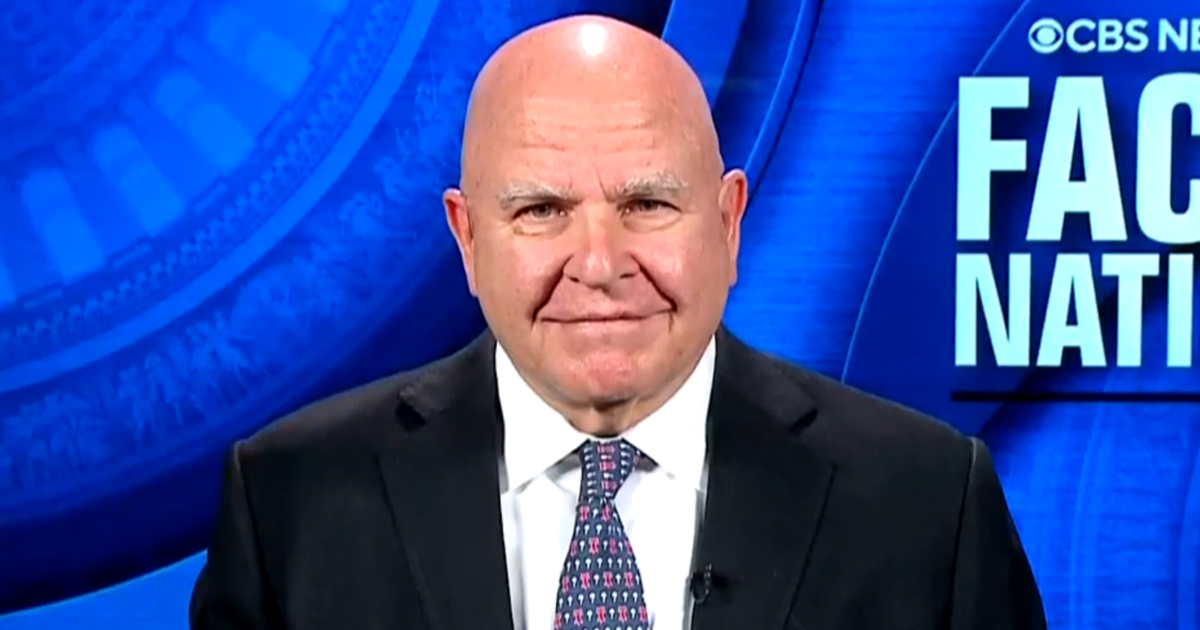
Interview with H.R. McMaster on "Face the Nation," May 4, 2025
CBS News
MARGARET BRENNAN: We have with us today, retired Lieutenant General H.R. McMaster, who once served as the National Security Advisor under President Trump during his initial term. He’s also the author of the book 'At War With Ourselves: My Tour of Duty in the Trump White House.' It's a pleasure to have you back on the show.
H.R. MCMASTER: Thanks, Margaret. It's great to be here.
MARGARET BRENNAN: There have been changes in the National Security Council. Mike Waltz is no longer the National Security Advisor, and there were reports that his deputy, Alex Wong, would also leave his position. Interestingly, Alex Wong was still working as of Friday morning. What does this indicate about the current state of America’s national security?
MCMASTER: This situation shines a light on the inner conflicts within the administration regarding America's global role and international alliances. Mike Waltz understood the necessity of international cooperation and believed in maintaining robust alliances, especially in countering figures like Putin. Yet, there are others in the administration who advocate for a more isolationist approach, focusing on regional defense.
MARGARET BRENNAN: Do you think this is a deeper ideological conflict rather than a mere communication error within the administration?
MCMASTER: Definitely, it extends beyond just communication issues. It involves differing opinions about the function of the National Security Council and the president's decision-making strategy. President Trump might see the National Security Council as a constraint rather than as a useful tool to navigate his strategies and align with international allies.
MARGARET BRENNAN: During his first term, President Trump seemed to distrust the National Security Council, largely due to its perceived role in his impeachment over Ukraine. How does this skepticism affect his reliance on external advice, like that from fringe figures such as Laura Loomer?
MCMASTER: In any administration, you find three types of people: those who genuinely advise the president, those who manipulate decisions for their own agendas, and those trying to counteract the president. A structured decision-making framework usually annoys the latter two, as they thrive in discord and play on the president's apprehensions.
MARGARET BRENNAN: In recent international news, Germany labeled the political group AfD as an extremist entity due to its far-right stance. American leaders like Rubio have critiqued this, calling it "tyranny in disguise." Is it wise for US officials to engage in these matters?
MCMASTER: This reaction partially stems from broader international movements, like the Women, Peace, and Security initiative. The issue also reflects internal political dynamics, where some view figures like Putin as defenders of Western values, which complicates diplomatic landscapes. The Trump administration needs to be cautious not to repeat the past international policy missteps seen in previous administrations.
MARGARET BRENNAN: Thank you, H.R. McMaster, for sharing your perspectives. We appreciate your time. We'll continue with more after the break.
Leave a Reply