


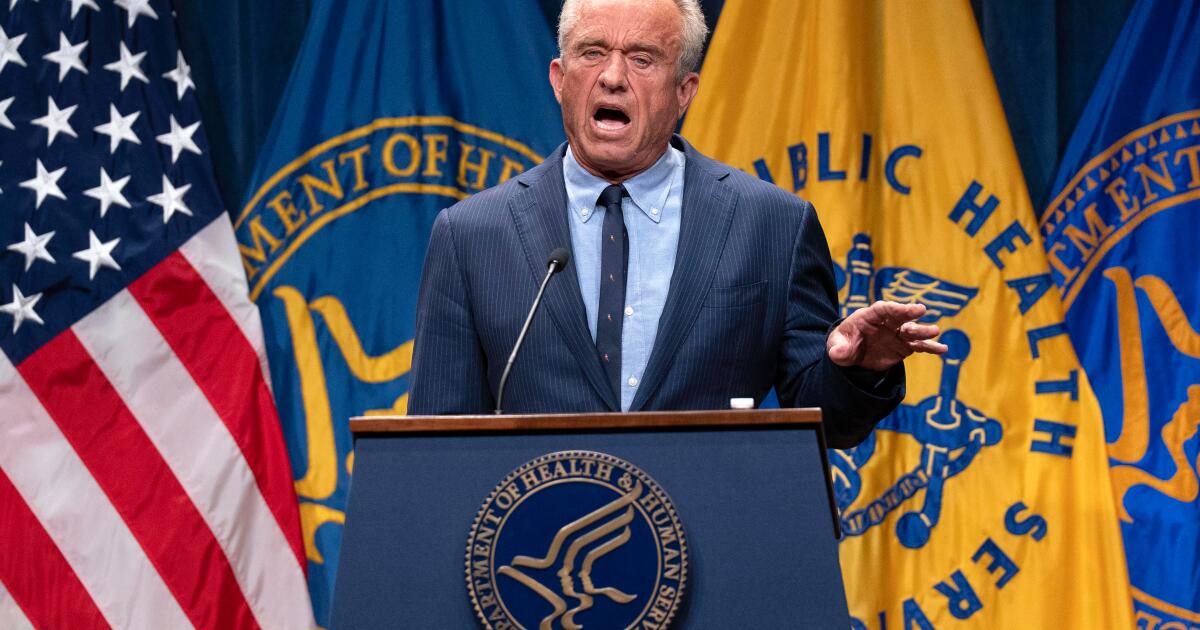
RFK Jr.: A Dangerous Vision for American Health
I posed an intriguing question to my daughter, who works as a nurse practitioner specializing in addiction medicine—what would be the scenario if Narcan, the life-saving opioid antidote, was suddenly unavailable?
Her response was unsurprising. "The result would be more fatalities due to overdoses." The answer reflects the stark reality.
Some may hold the belief that such fatal outcomes are justified by the initial decision to consume drugs like fentanyl. This rather harsh perspective is difficult to engage with.
If we define addiction as a medical condition, as is widely accepted within the medical community, supporting initiatives that protect lives from accidental overdoses becomes imperative.
For anyone who has endured years battling heroin dependency, pushing for widespread availability of Narcan becomes a critical mission, especially given the current fentanyl crisis.
Yet, Robert F. Kennedy Jr., despite his background as a former heroin user and the current Health and Human Services Secretary, finds himself in the spotlight for apparent contradictions. A leaked budget from President Trump suggests potential cuts to a $56 million initiative for naloxone distribution and training.
Autism researchers are increasingly worried about dramatic reductions in federal support, facing misinformation along with unsettling policy directions.
While this budget plan remains in draft form, Kennedy has yet to publicly critique it. In contrast, during a drug summit in Nashville, he discussed strategies to tackle addiction using maintenance treatments like suboxone and methadone, as well as the critical need for fentanyl detection and availability of Narcan.
However, Kennedy’s silence on supporting the naloxone program amid reports of funding cuts is notable. Perhaps preoccupied with an agenda described as a massive health bureaucracy overhaul, he remains disengaged.
To 'make America healthy again,' Kennedy, alongside Elon Musk's initiative for governmental reductions, has drastically trimmed 20,000 employees from the Health and Human Services roster, projecting large savings but affecting vital programs.
Illustrating the disruption are drastic actions like disbanding the CDC's efforts around lead poisoning prevention, crucial for safeguarding against contaminants in products like applesauce.
Alarm over budget cuts ripples through healthcare landscapes, with figures like Monica Soni, a health official, expressing concern over the future of programs like those under the Affordable Care Act in California.
Also noteworthy was public outcry ensuring the temporary restoration of a black lung screening initiative essential to coal miners.
A range of other programs, previously engaged in safety and health tasks, have been scrapped as officials pursue financial restraint.
The FDA, for instance, saw reductions affecting food and animal safety personnel, critical during outbreaks like bird flu.
Scientific roles crucial for monitoring sexually transmitted infections, including HIV and hepatitis, have not been spared in the sweeping dismissals.
Yet, among these concerning trends, the most alarming is Kennedy’s stance against vaccinations, reflecting a pattern of promoting unscientific claims.
Kennedy’s controversial positions, often undermining vaccine efficacy, coincide with budgetary moves endangering crucial health protections.
Recently, he promised an impending revelation that would supposedly clarify the origins of autism, already a deeply misunderstood topic.
Adding to the missteps, individuals lacking appropriate scientific credentials have been suggested to lead investigations linking vaccines to autism, an ongoing misinformation campaign.
This approach contradicts established scientific consensus and invites potential harm to the immunization agenda spurred by unproven assertions.
Kennedy further fuels the debate by encouraging parents to self-evaluate vaccines, ignoring the complexity and rigors involved in such scientific inquiries.
Alison Singer, representing an autism advocacy group, criticizes the administration's predetermined conclusions regarding vaccines, highlighting a departure from credible research methods.
In these trying times, placing someone like Kennedy, with questionable views on medical science, at the helm of national health policy harkens troubling consequences.
Leave a Reply