


Impact of Tariffs on Major Brands
The imposition of tariffs is having noticeable consequences for prominent consumer brands.
For a number of companies, these tariffs introduce a challenging situation: products manufactured abroad, particularly from China, face increased costs when imported into the United States. To maintain profit margins, brands and retailers often need to transfer these added expenses to consumers by raising prices.
Conversely, some brands that import less to the U.S. are noticing that international consumers are steering clear of their products because of their American ties.
Here’s how some of the most significant brands and retailers are experiencing the impact of tariffs, according to recent earnings disclosures.
Adidas
Adidas, headquartered in Germany, indicated that nearly all of its product prices will experience an upward shift in the U.S. due to existing tariffs.
CEO Bjørn Gulden clarified, "We are unable to produce a significant portion of our products within the U.S."
"If these tariffs remain, U.S. consumers should anticipate a price hike," Gulden mentioned during a company earnings discussion.
Amazon
On Thursday, Amazon emphasized its unwavering commitment to keeping consumer prices stable despite tariffs. CEO Andy Jassy highlighted the extensive range of Amazon's products as beneficial for cost-conscious shoppers or those seeking specific items during supply chain strains.
Nonetheless, price adjustments also depend on the decisions of over two million independent sellers on Amazon's platform, added Jassy.
The company reported $1 billion in unexpected expenses for the first quarter, partly due to advancing inventory import schedules to limit tariff charges.
White House press secretary Karoline Leavitt criticized Amazon following news reports suggesting that the e-commerce giant intended to outline tariffs' contributions to price hikes. She labeled this plan as a 'provocative political maneuver.'
Amazon later clarified that while the idea was explored for its Haul website, competing with Temu and others, it was never sanctioned.
Insights from retail analysts, as shared with Business Insider, suggest that Leavitt's comments may discourage other retailers from transparently communicating tariff impacts to consumers.
Coca-Cola
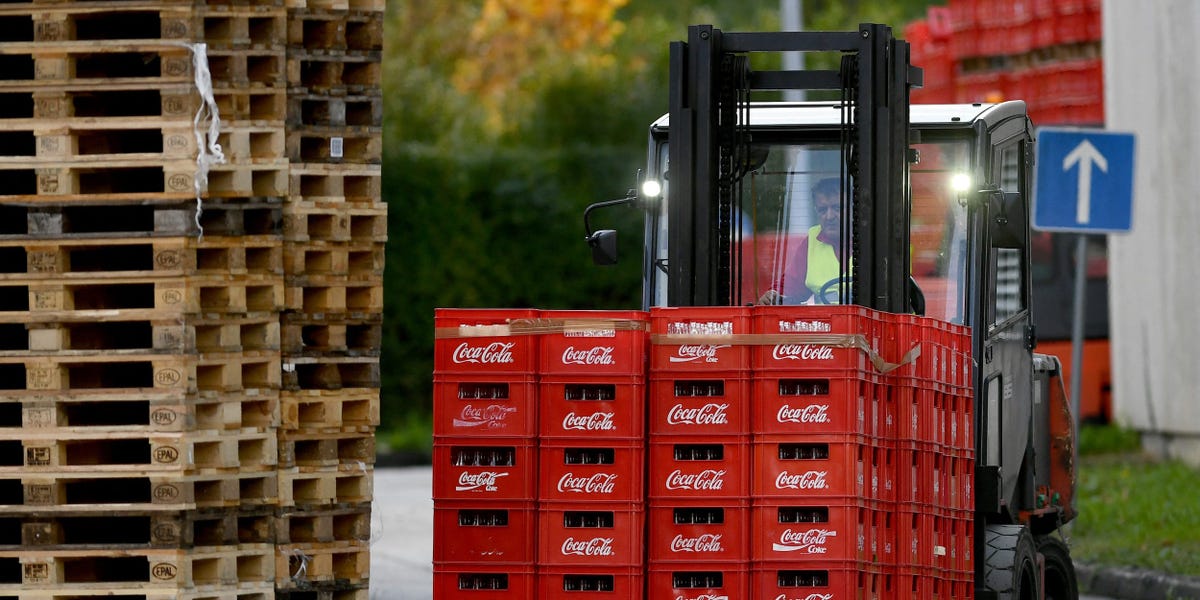
Coca-Cola CEO James Quincey described the tariff impact as 'manageable' during a recent earnings discussion.
This is because many of their bottling materials are sourced locally, requiring only limited importation of non-local inputs like machinery.
Despite this, the company still feels the pressure of tariffs and anti-U.S. sentiment, especially with declining sales among Hispanic consumers in the U.S. and parts of Mexico near the border.
To address this, Coca-Cola launched a campaign highlighting its local operations in Mexico, branding it "Hecho en México," or "Made in Mexico."
Hasbro
According to Hasbro CEO Christian Cocks, the tariffs may exert an impact on toy sales akin to that witnessed during the 2008-2009 financial downturn.
The toy industry experienced a decline in sales by mid-single digits during the Great Recession, as noted by Cocks.
Tariffs might also adversely affect Hasbro's net income, potentially reducing it by $60 million to $180 million by 2025.
With many toys produced in China or other nations, and board games like Monopoly made domestically, the company remains sensitive to tariff-induced cost shifts.
Leave a Reply