


Emerging Stealth Jets: A Shift in Global Air Power Dynamics
Since the debut of the F-22 Raptor in 2005, the aviation landscape has been dominated by 5th-generation fighter jets, celebrated for their unparalleled performance in the skies.
These cutting-edge aircraft are distinguished by their agility, sophisticated electronic systems, ability to remain undetected by radar, and capacity to maintain speed without afterburners. They are a top priority for leading air forces around the globe.
Currently, a dozen nations operate the elite 5th-generation fighter jets, including icons like the American-made F-22 and F-35, China's J-20, and Russia's Su-57. However, this exclusive group is poised to expand with the inclusion of new participants by 2030.
South Korea's Cutting-Edge Initiative: The 'Fighting Hawk'
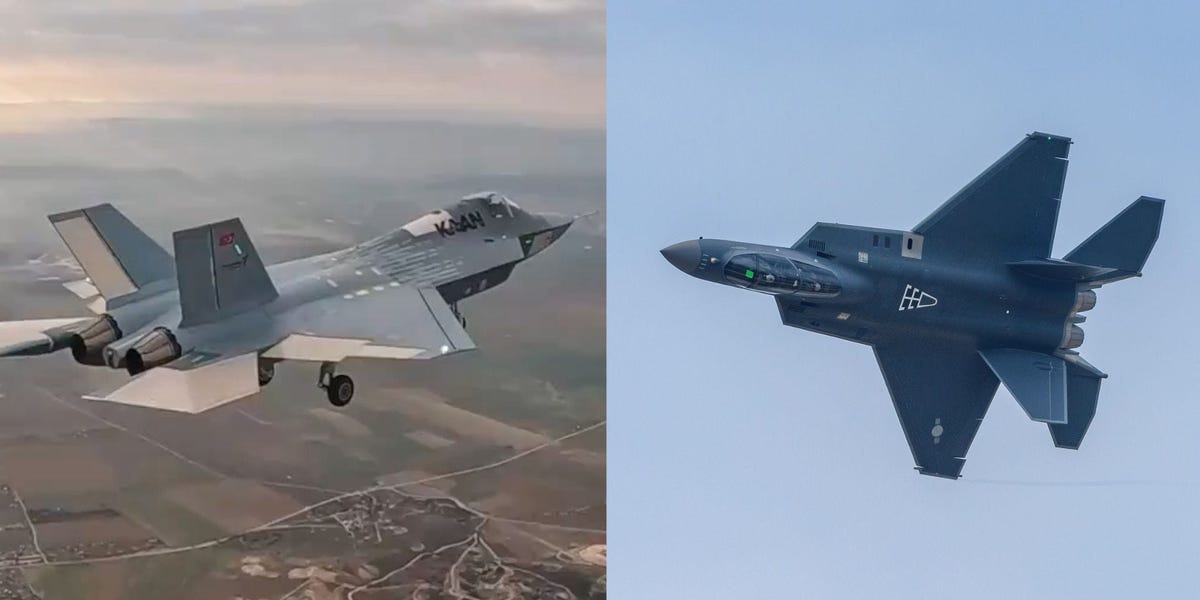
Korean Aerospace Industries (KAI) introduced the KF-21, South Korea's first indigenous fighter jet, in April 2021, aiming to transform it into a stealth aircraft.
The KF-21, affectionately named Boramae or 'fighting hawk,' traces its origins back to 2001 when South Korean leadership expressed the ambition to replace aging military jets with home-manufactured alternatives.
The prototype was showcased at KAI's headquarters and took its inaugural flight in July 2022, reaching supersonic speeds by January 2023.
Boasting remarkable specifications, the KF-21 can achieve speeds of Mach 1.8 and ascend up to 50,000 feet while carrying 17,000 pounds of weaponry.
Despite these assets, the KF-21 is categorized as a '4.5 generation' fighter due to its partial stealth capabilities, unlike its fully stealth 5th-gen counterparts.
Plans are underway for an enhanced KF-21EX version, featuring internal weapon storage and advanced radar-absorbent coatings, anticipated by the late 2030s.
Turkey's Ambitious Leap: The TF Kaan
Turkey's response to the stealth fighter realm is the TAI TF Kaan, a jet labelled as a complete stealth model despite certain challenges in achieving low detectability.
Following its removal from the F-35 program in 2019 due to geopolitical dynamics, Turkey doubled down on the Kaan to replace its aging fleet and fulfill its vision of crafting a 5th-gen stealth fighter.
The Kaan's prototype was displayed at the Paris Air Show in 2019, and after overcoming developmental hurdles, it was publicly unveiled in 2023.
Although the Kaan boasts similar dimensions to the F-22, its ability to remain furtively hidden from radar is not yet guaranteed, pending enhancements to its stealth technology.
Questions remain regarding its use of radar-absorbent materials, though Turkey's state institutes are actively working to develop and refine such technologies.
The Broader Impacts on Global Air Defense
The introduction of KF-21 and Kaan potentially reshapes the accessibility landscape of stealth fighters, making them available to countries previously excluded from such capabilities due to cost and strategic alliances.
The KF-21's development program has already attracted international interest, with Indonesia as a confirmed participant and other nations showing potential engagement pending the feasibility of financing and procurement conditions.
The United Arab Emirates, Saudi Arabia, and Ukraine are among the countries that could become key players in acquiring these new stealth fighters, should political and economic circumstances align.
As technological advancements continue, Turkey and South Korea's efforts may signal a pivotal shift in air power distribution, challenging the longstanding dominance of traditional aerospace giants.
Leave a Reply