


Australians Head to Polls Amid Economic Concerns
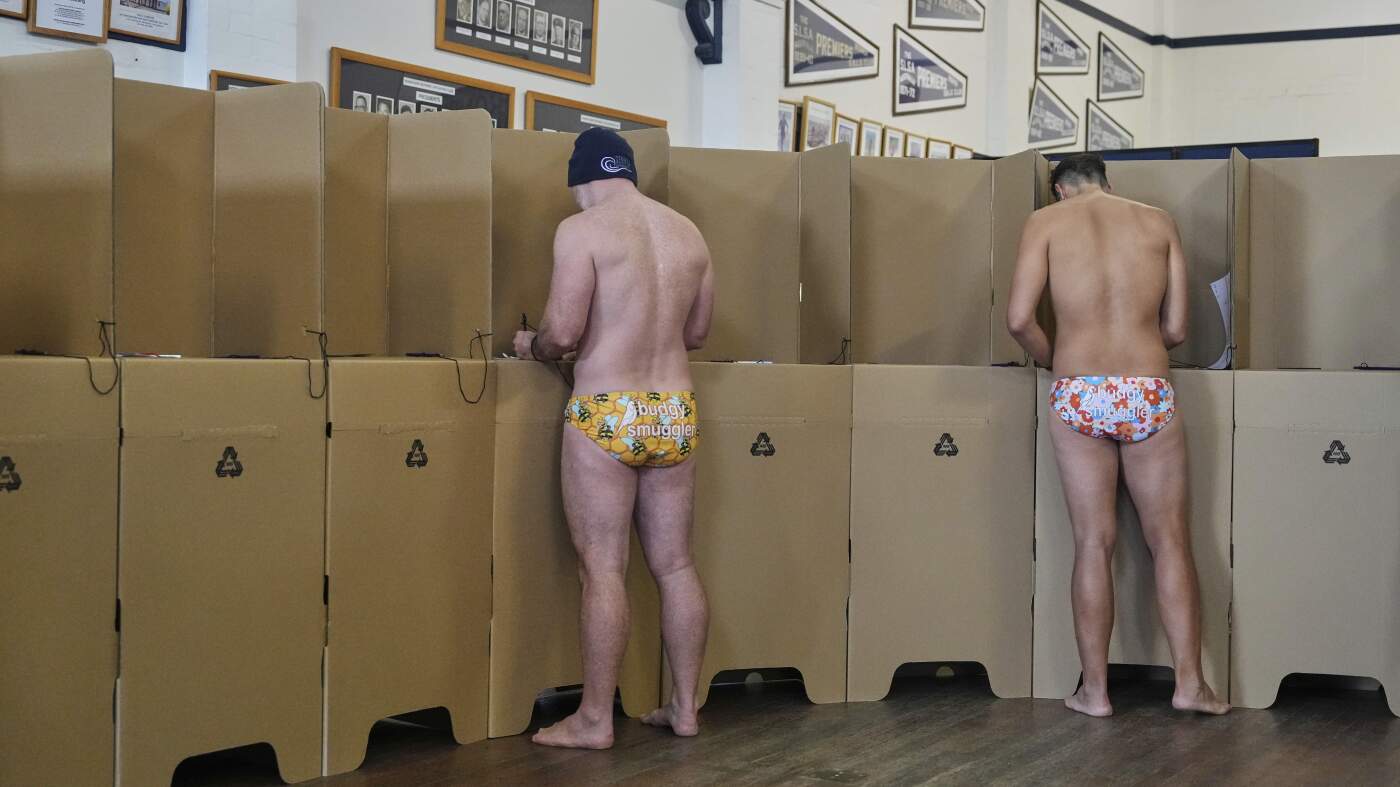
Australians gathered at polling stations like the one at Sydney's Bondi Beach as voting commenced on May 3, 2025.
In Melbourne, polling for the national election began on Saturday. Key topics of interest include economic pressures and a critical shortage of housing, both pivotal in the current election discussions.
Voting occurs across a country that spans three time zones. In Eastern Australia, polls are open from 8 a.m. to 6 p.m., while timing adjusts two hours later for the Western regions. Authorities reported that 8.6 million of Australia's 18.1 million registered voters had already cast their votes since early voting began on April 22.
In Australia, voting is mandatory, aiming to produce moderate governments. The last election in 2022 saw a 90% turnout rate.
Prime Minister Anthony Albanese, leading the center-left Labor Party, seeks to secure a second three-year term against opposition from conservative leader Peter Dutton, who aims to topple a first-term government, a feat last achieved in 1931.
Economic and Inflation Challenges
With inflation spiking at 7.8% a year after Labor's 2022 victory, the central bank raised interest rates, affecting financial stability. The benchmark rate increased from 0.1% to 0.35% just before the government transition and has been adjusted upwards multiple times, reaching 4.35% by November 2023.
February saw a decrease in inflation to 4.1%, implying improving economic conditions. Predictions suggest a potential rate cut due to global economic tensions.
Housing, with its skyrocketing costs and rental increases, is further strained as construction firms deal with inflationary pressures reducing their profitability.
Possibility of a Shift in Government
Before the election, Labor controlled 78 seats in the 151-seat House of Representatives. The upcoming parliament will have 150 seats due to boundary redistributions.
Dutton's coalition controlled 53 seats, with 19 seats held by neither major party, reflecting a trend towards smaller parties and independents.
Monash University expert Zareh Ghazarian notes a decline in major party votes, benefiting minor and independent parties, possibly resulting in a minority government, similar to historical occurrences during WWII and post-2010 elections.
Demographic Influence on Election Dynamics
This election sees Baby Boomers eclipsed by younger generations in voter numbers for the first time, highlighting shifting demographic influences.
Policy Plans for Young Voters
Both sides have pledged to ease homeownership barriers for first-time buyers facing a prohibitive market.
The energy strategy marks another key difference. The opposition plans to build nuclear plants operational by 2035, while Labor aims for renewable energy dominance, targeting 82% renewable supply by 2030.
Notable Endorsement for Labor
On election eve, WikiLeaks' Julian Assange publicly backed Albanese, praising his efforts for Assange's release. This marks Assange's first political comment since returning to Australia.
Albanese minimized the endorsement's significance, emphasizing the personal nature of Assange's remarks and expressing satisfaction with Assange's reunion with family.
Leave a Reply