


Thunderbolts*: Marvel's Latest Attempt to Find Its Direction
Marvel Studios' new film aims to address the franchise's current challenges by focusing on emotional depth mixed with humor and returning to basics.
Despite maintaining their status as box office giants, Marvel's recent films have often felt aimless due to their emphasis on multiverse stories. This has led to movies that feel like preludes to future hits, instead of stand-alone stories.
Directed by Jake Schreier, Thunderbolts* doesn't offer a cure-all for the issues plaguing the Marvel Cinematic Universe (MCU), but it does show an attempt by the studio to recalibrate. While it weaves in themes of loss, the film largely sticks to the action-centered narrative that has been a hallmark of the franchise.
Following the events of Captain America: Brave New World, Thunderbolts* reintroduces several adversaries and ethically ambiguous characters from earlier Marvel stories, exploring a world without the Avengers. The universe's former chaos of people disappearing and then reappearing en masse remains an unresolved trauma for many characters.
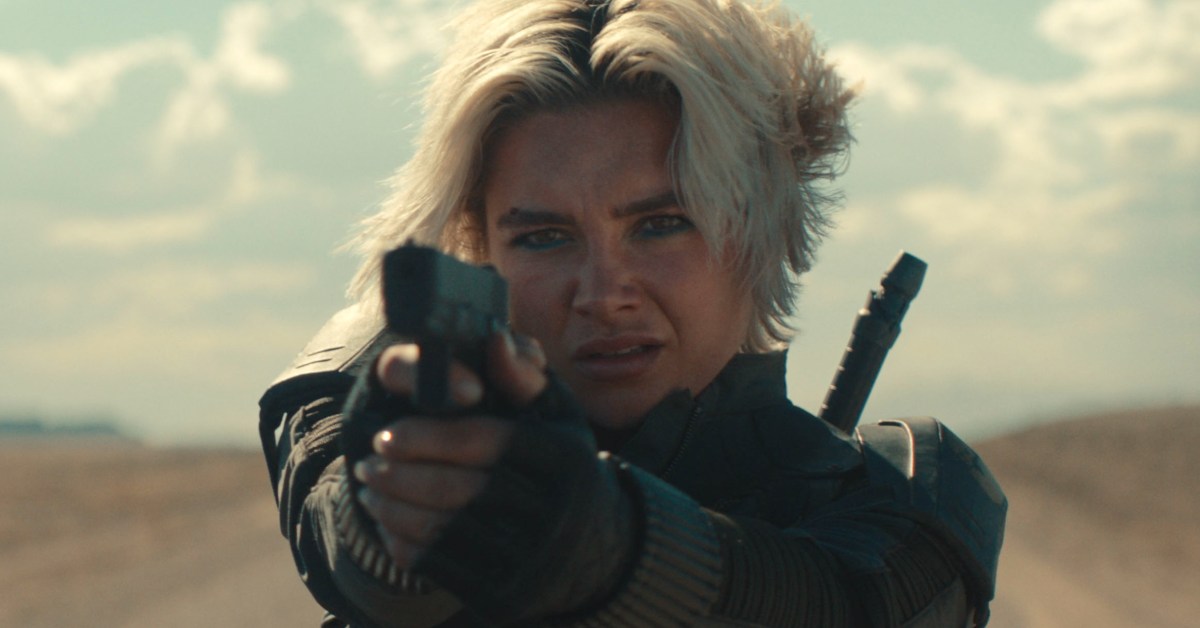
For Yelena Belova, portrayed by Florence Pugh, each day serves as a painful reminder of loved ones lost permanently. Although her adoptive father, the Red Guardian Alexei Shostakov, sees potential for good in her, Yelena grapples with guilt over her past actions.
Both Yelena and Alexei find themselves in a shared existential crisis, a frequent consequence of losing one's identity and purpose. The film delves into these deep emotional wounds, offering a glimpse into their escapist tendencies like drinking. While her father's coping mechanisms are self-destructive, Yelena channels her talents into covertly sanctioned assassinations.
The film highlights how each character under CIA director Valentina Allegra de Fontaine, played by Julia Louis-Dreyfus, feels a similar lack of direction. De Fontaine's secrecy around the operatives is deliberate, aiming to keep their missions and true agendas hidden, especially from Bucky Barnes, played by Sebastian Stan.
Yelena soon realizes she's part of a larger scheme involving characters like John Walker, the disgraced Captain America analogue, and others like Taskmaster and Ghost. Their intended fatal confrontation signifies Valentina's manipulative intentions.
In a spectacularly choreographed encounter, the film unites its ensemble in a booby-trapped scenario, seemingly drawing inspiration from competitors’ styles. The story doesn't shy away from the fact that certain characters might not make it out alive, underscoring mortality with humor typical of Marvel.
Bob, humorously portrayed by Lewis Pullman, is discovered among Valentina's secret files, adding levity but also depth with his unassuming nature. Bob’s presence helps encapsulate the profound post-apocalyptic reality the MCU rarely addresses head-on.
The exploration of an abruptly changed world is a welcome narrative shift, emphasizing psychological scars and emotional voids that the characters grapple with. Even Valentina's machinations are depicted as a reactionary attempt to fortify a hero team for future crises.
Thunderbolts* introduces a new antagonist, illustrating how perpetual uncertainty grinds down personal identities. While the villain’s storyline echoes past MCU plots, it also affirms Marvel's intent to self-reference and reflect on their vast storytelling landscape.
Critics may find parallels with other Marvel installments, suggesting a reliance on familiar formulas. Yet Thunderbolts* presents itself as a nostalgic, straightforward action movie amidst a shift away from earlier MCU filmmaking paradigms.
Significantly, understanding its plot requires familiarity with previous MCU films and series. Thunderbolts*, however, manages to succeed as an unpretentious B-movie that delivers simplicity—a potential lesson for Marvel’s massive franchise.
Edward Pierce and Chris Bauer also appear in the film, which is currently available in theaters.
Leave a Reply