


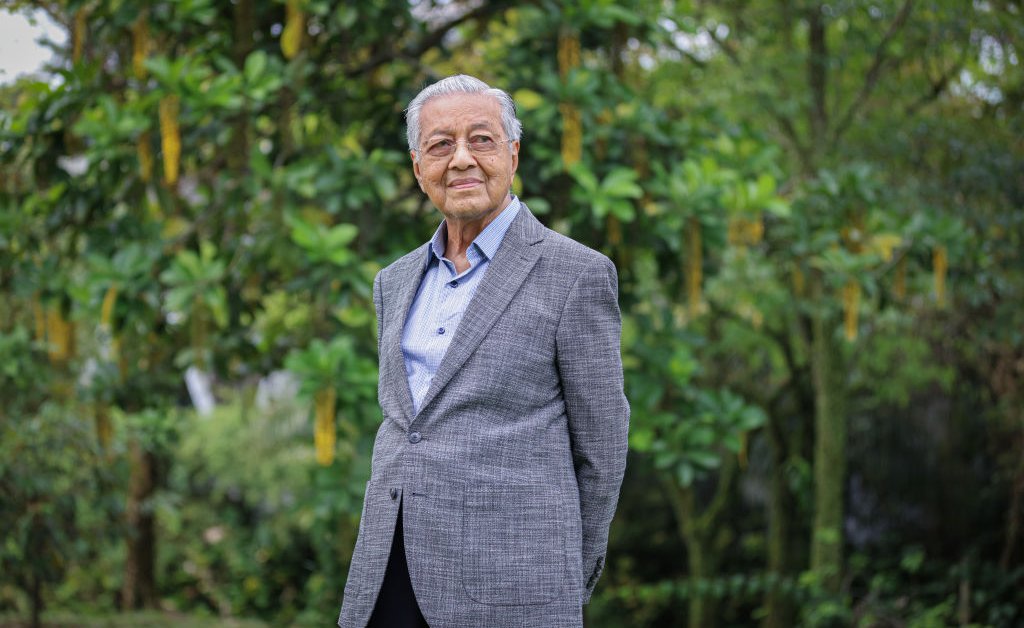
A Century of Perception: Mahathir Mohamad on Donald Trump and Current Global Dynamics
At 99 years old, Mahathir Mohamad, Malaysia’s longest-serving Prime Minister, continues to be an active voice in global politics. His routine remains as busy as when he left office in 2020, starting his day early and engaging in discussions on both domestic and international matters.
“Staying active and mentally engaged is crucial as we age,” Mahathir advises from his office in Kuala Lumpur. “If you become inactive, you start to lose your edge.”
An Evolving World View
Mahathir observes a world he once strongly influenced, now positioned in a state he finds bewildering. Recent moves by former U.S. President Donald Trump, such as aggressive trade wars and unconventional diplomatic actions, leave Mahathir critical and wary of America's direction. He states that Trump’s talk of annexation and expulsion of peoples is outdated. Mahathir has been skeptical of many American administrations, blaming recent escalations in geopolitical tensions on missteps from Washington.
Though traditionally critical of U.S. policies, especially concerning Israel and NATO's expansion, Mahathir sees Trump's approach as especially disconcerting. He notes a shift away from the U.S.'s past championing of human rights and independence to what he views as contradictory and self-serving actions.
U.S. Foreign Policy Under Scrutiny
To Mahathir, current U.S. foreign policies exhibit double standards, particularly visible in its dealings with Ukraine and Gaza. He criticizes Trump’s seeming uneven approach to global crises, portraying the U.S.'s mixed messages over military support and economic influence as inconsistent and provocative.
Mahathir perceives the U.S. interaction with China as especially concerning. Washington's assertive military posturing near Chinese waters and its dealings with Taiwan are seen by him as fueling unnecessary conflict.
Ambivalence Towards China
Despite a legacy of curbing local Chinese dominance in Malaysia, Mahathir acknowledges China's rise as inevitable and criticizes American efforts to restrain it. He appreciates China's industrious nature and questions the wisdom of U.S. attempts to stifle its progress, drawing historical comparisons to past Western imperial methods.
Mahathir views Xi Jinping's diplomatic efforts, including recent state visits and economic partnerships, as evidence of China’s strategic growth in Southeast Asia. In contrast, he cautions about the U.S.'s focus on containment, cautioning that this may lead to broader confrontations, especially regarding Taiwan.
Stalwart or Stubborn?
Mahathir’s perspective often contrasts sharply with prevailing narratives in Western policy environments. His critiques highlight a belief in what he sees as the undue fomenting of tensions by Western actions. While recognizing the complexities of geopolitical relationships, Mahathir maintains that the U.S.'s interactions with Russia and China point to a larger issue of provocation, rather than effective diplomacy.
Recalling personal interactions with Vladimir Putin, Mahathir notes the possibility of cooperation rather than confrontation, attributing some current conflicts to exaggerated Western fears and NATO's pursuit of expansion.
Looking Back and Facing Forth
Reflecting on his own political journey and the future of international relations, Mahathir remains unsparing in his criticism of what he terms Western provocations. His discussions often return to the theme of missed opportunities for diplomatic resolution, positioning current U.S. policy as somewhat anachronistic and disconnected from the lessons of history.
In assessing Trump's impact, Mahathir conveys a view that the former president lacked understanding of modern international politics, essentially placing him out of sync with the current global climate—a sentiment resonating with leaders like Mahathir who have navigated decades of complex political landscapes.
Leave a Reply