


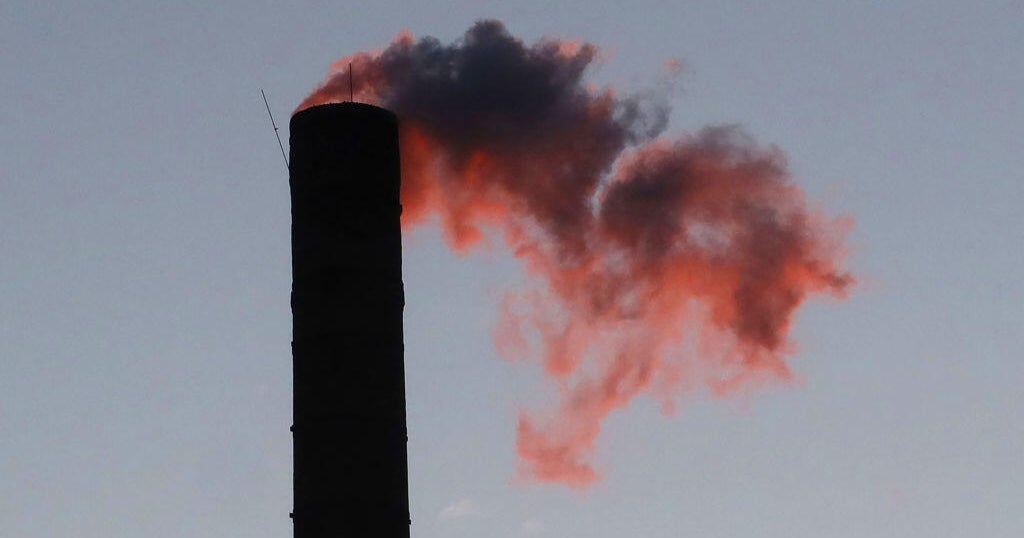
Senate Vote Reverses EPA Rule on Hazardous Pollutants
In a notable development, the Senate voted on Thursday to roll back an Environmental Protection Agency regulation associated with the Clean Air Act. This regulation was intended to cap emissions of seven particularly harmful air pollutants produced by large-scale industries.
The 52-46 vote followed party lines, marking a historic shift in the application of the Clean Air Act's authority, which hadn’t been challenged in its 55-year existence in this manner.
Regulatory Shift Initiated by Senate Republicans
Employing the Congressional Review Act, Senate Republicans voted against the rule that the Biden administration had successfully passed in 2024. Now, the resolution advances to a Republican-controlled House, where it is anticipated to gain approval.
The regulation in question, finalized last year, aimed to address a gap that demanded all 'major' sources of these dangerous pollutants to maintain maximum emission reductions, adhering to the 'Once in, Always In' principle.
Industry Concerns and Legislative Efforts
Industries such as chemical processing, oil refining, and various other factories were bound by this rule, requiring them to uphold stringent pollution control measures. This was mandatory even when pollution levels complied with the standards, maintaining their classification as 'major' pollutant sources.
During Trump's first presidency, this rule was abolished, only to be reinstated and modernized in September under President Joe Biden by the EPA. Environmental activists, including Earthjustice, have supported this approach to tighter pollution controls.
Opposition from Lawmakers and Industry Groups
Among Republican legislators, Sen. John Curtis of Utah played a pivotal role in introducing the resolution passed on Thursday. Curtis contended that the regulation dissuaded companies from adopting innovative technology to curtail pollution.
"The previous administration's policy was a blockade to progress," Curtis stated after the passage. "This policy disincentivized investment in emission reductions by perpetuating unnecessary regulatory constraints. Our resolution reinstates a logical incentive: Cleaner operations should yield tangible recognition."
Environmental Concerns and Advocacy Responses
Environmental advocates voiced strong disapproval of the Senate's decision. Melody Reis, speaking for a national environmental organization, expressed grave concerns about potential impacts on public health, emphasizing the risks to children from loosened controls on notorious pollutants like dioxins, mercury, and PCBs.
Michelle Roos of the Environmental Protection Network criticized the legislative move, urging for enhanced regulatory capabilities rather than diminishing these crucial protections.
Implications for Industry and Regulation
The decision represents a strategic victory for fossil fuel and petrochemical industry advocates, who have long opposed the 'Once in, Always In' stipulation. The National Association of Manufacturers had labeled the rule as an economic hindrance that should be reversed.
Since January, initiatives under Trump sought to mitigate the EPA’s regulatory reach. Current EPA leadership maintains that these regulatory relaxations will not compromise public health or environmental safety.
Leave a Reply