


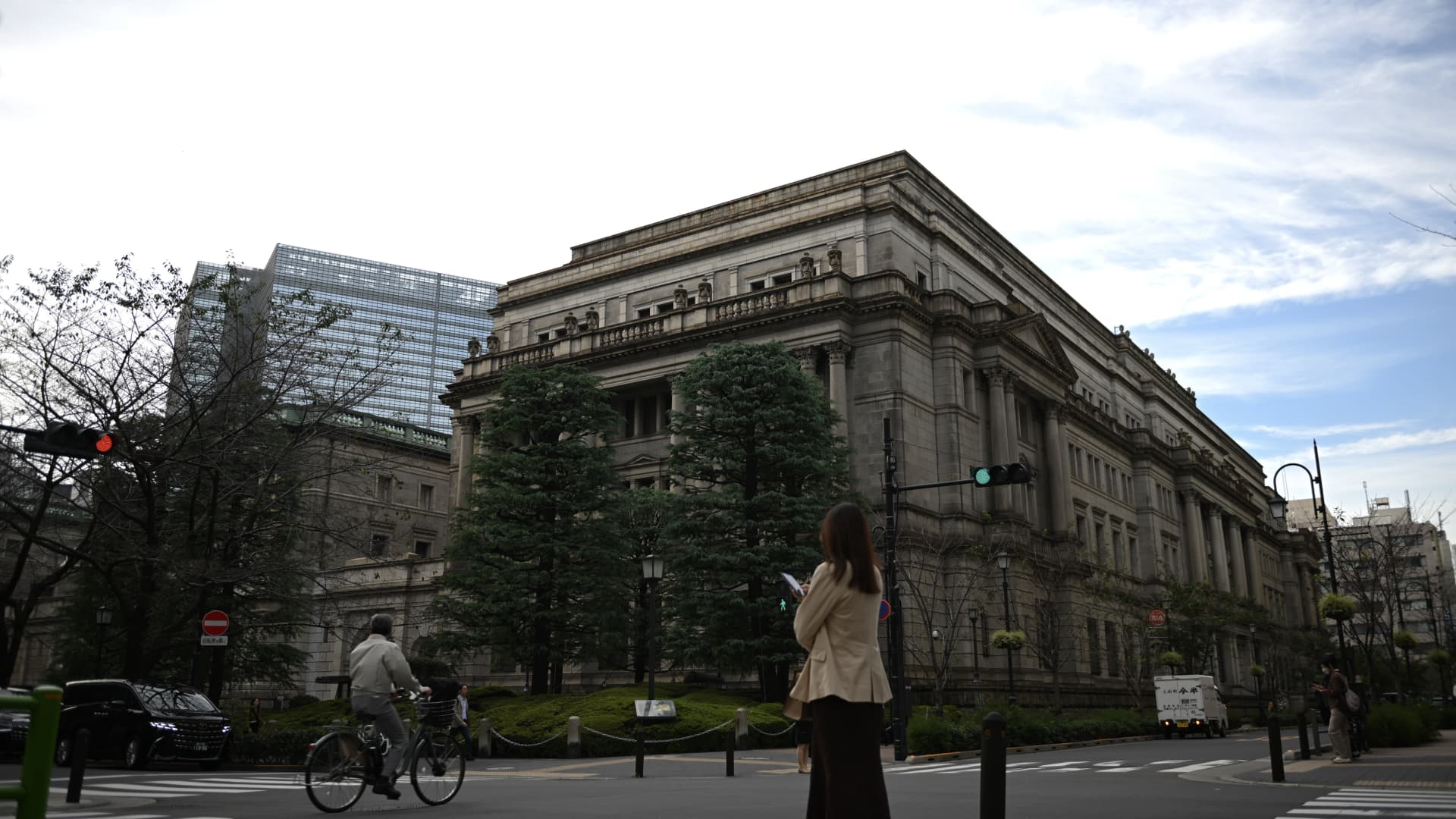
Bank of Japan Maintains Stable Interest Rates Amid Export Challenges
The Bank of Japan decided to keep its interest rate unchanged at 0.5% for the second consecutive meeting. This comes in the context of the economic challenges posed by President Trump's tariff policies, which could potentially impact Japan's export-driven economy.
Global Trade Pressures
Consistent with expert predictions gathered by Reuters, the decision aligns with the broader challenges in international trade as the United States urges other nations to enter mutual trade agreements under the looming threat of reciprocal tariffs.
Although Japan has maintained inflation levels above the central bank's target of 2% for 36 consecutive months, allowing room for potential interest rate increases, President Trump’s tariff strategy complicates such monetary policy moves.
Future Economic Guidance
The Bank of Japan has emphasized that it plans to adjust its interest rate according to economic and inflation forecasts, ensuring that any realignment aligns with broader financial indicators.
They also cautioned that economic growth might slow, influenced by reduced profitability among local corporations and global economic downturns.
Inflation Predictions
Projected inflation rates are expected to hover between 2% and 2.5% for fiscal year 2025, followed by a slight decrease to between 1.5% and 2% in 2026. By 2027, the consumer price index is anticipated to stabilize around 2% annually.
It's important to note that Japan's fiscal calendar runs from April to March, with GDP figures for the first quarter scheduled for release on May 16.
Recent Economic Performance
Japan’s economy saw a 1.2% year-on-year increase in the final quarter of the year, though overall 2024 growth was minimal at 0.1%, a significant decrease from the 1.5% growth experienced in 2023.
The Bank of Japan’s recent rate decision follows inconclusive trade discussions between Tokyo and Washington two weeks prior.
Market Reactions
Following the decision, the Nikkei 225 index rose by 0.54% by mid-afternoon Japanese time, with the Topix index also showing a modest increase of 0.23%.
Conversely, the yen experienced a depreciation of 0.29% against the U.S. dollar, trading at 143.49.
Currency and Trade Dynamics
Currency exchanges have figured prominently in trade negotiations, especially as President Trump recently expressed discontent over Japan’s efforts to maintain a weaker yen. Japan had shifted from a highly accommodating monetary stance last year, resulting in the yen gaining strength against the dollar.
Exchange Rate Discussions
Finance Minister Katsunobu Kato refuted claims in a Yomiuri report suggesting U.S. Treasury Secretary Scott Bessent had advocated for exchange rate adjustments in favor of a weaker dollar and stronger yen. Kato clarified via social media that Secretary Bessent did not comment on such matters.
Impact on Trade
Citi Research recently noted that, despite relatively harmonious trade talks, Japan’s exports to the U.S. might suffer pressure from reciprocal tariffs of 10% and 25%.
Analysts also warned of potential broader economic impacts stemming from global slowdowns, particularly in China, which may subsequently reduce Japanese export volumes as U.S. consumer demand and job numbers show signs of weakening.
Central Bank Stance and Economic Risks
Nomura's analysis suggests the Bank of Japan is likely to keep its posture on raising interest rates, yet urges patience given the heightened economic vulnerabilities stemming from U.S. trade policies.
While Nomura hasn't set a specific timeline for forthcoming rate hikes, Citi anticipates changes by March 2026.
Leave a Reply