


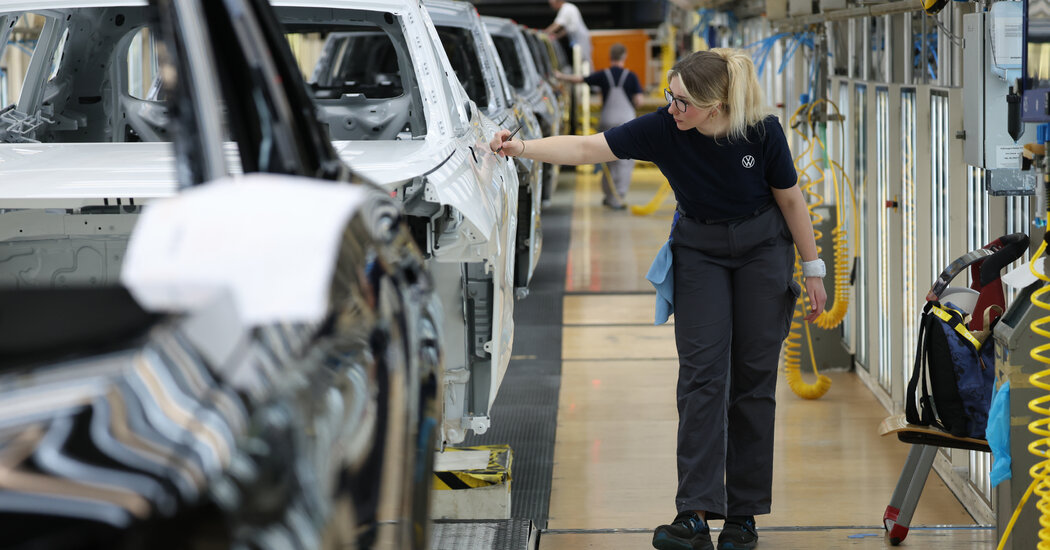
European Car Manufacturers Navigate Tariff-Induced Complications
The introduction of tariffs by President Trump on automotive products, as well as on raw materials like steel and aluminum, has cast a shadow over Europe's car industry, leading to a somber outlook for future prospects.
Adjusting to Market Disruptions
In light of these new trade barriers, key players like Mercedes-Benz, Stellantis, and Volkswagen have expressed grave concerns over their capacity to accurately predict and strategize for the years ahead.
Years of weak market demand paired with rising costs had set a challenging stage for European automakers, who had hoped to recover with the launch of electric vehicles in 2025, aimed at reigniting consumer interest.
Impact of Tariffs on Market Strategies
Countering expectations, the decision by the U.S. to impose a 25% tariff on auto imports, alongside tariffs on foundational materials, has sparked a global ripple effect, muddying supply chains and skewing anticipated customer behavior.
On a recent statement, Mercedes-Benz, as well as Stellantis—which comprises brands like Fiat, Peugeot, and in the U.S., Chrysler and Jeep—announced they would no longer release financial predictions for 2025 due to the unpredictable nature of these tariffs.
Corporate Responses to Unpredictable Tariff Policies
Mercedes-Benz commented on the difficulty of managing such volatility, especially in forecasting outcomes when customer behaviors could shift unexpectedly. Meanwhile, Stellantis emphasized the complexity introduced by these trade changes on their competitive positioning.
Leave a Reply