


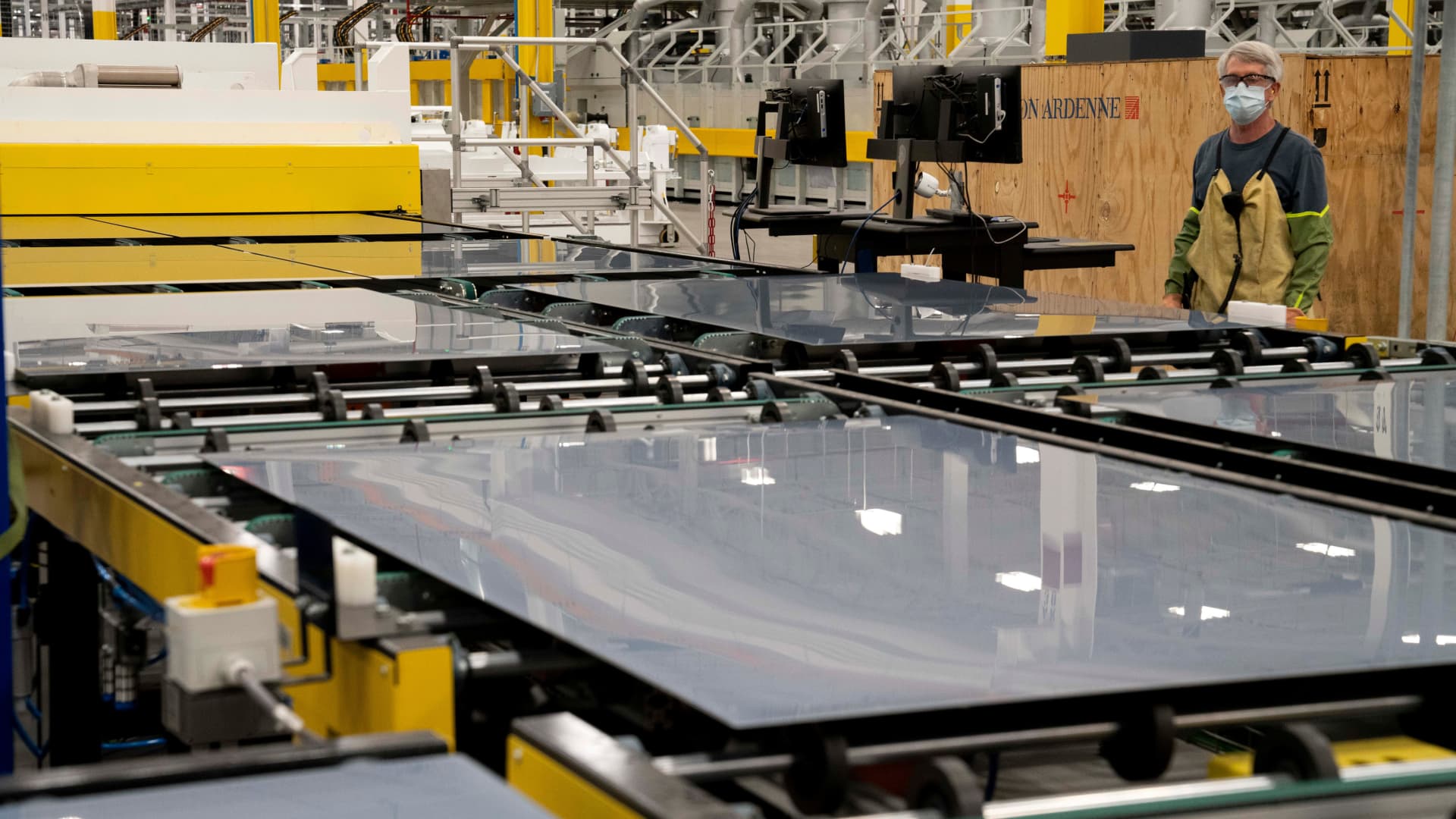
First Solar's Market Setback Amidst Concerns Over Trump Tariffs
Shares of First Solar experienced a steep drop on Wednesday following CEO Mark Widmar's comments about the unexpected impact of President Donald Trump's tariffs, which he described as a substantial economic challenge for the company's manufacturing operations.
The tariffs imposed by the U.S. administration were anticipated as a potential risk by First Solar, yet the reality of the tariffs, introduced earlier in the month, has brought unforeseen difficulties extending into 2025.
The company's shares showed a nearly 13% decline in pre-market trading, with a more than 22% dip recorded for the year so far.
As the largest U.S.-based public entity producing solar modules, First Solar was perceived by Wall Street as well-prepared to handle tariff pressures due to its investments in domestic facilities.
However, Widmar expressed concerns that the tariffs are delivering a considerable economic burden for its plants located in India, Malaysia, and Vietnam. Specifically, the Malaysian and Vietnamese sites are primarily focused on supplying the U.S., whereas the Indian facility caters to both South Asia and North America. This economic strain might necessitate a slowdown or temporary halt in operations at their Malaysian and Vietnamese sites.
There remains uncertainty whether the current 10% tariffs will persist or increase after the president’s 90-day reprieve. This ambiguity adds to the difficulty in calculating the exact tariff rates that will apply to First Solar’s shipments in the current and upcoming period.
In light of these financial burdens, First Solar has adjusted its annual forecast, now projecting earnings between $12.50 and $17.50 per share along with revenue estimates of $4.5 billion to $5.5 billion. These projections assume the continued enforcement of the 10% tariffs. Previously, expectations had been set at $17 to $20 per share in 2025 and a revenue range of $5.3 billion to $5.8 billion.
Despite these challenges, Widmar remains optimistic about the long-term demand for solar energy, which is bolstered by increasing electricity requirements in the United States. In response, First Solar is actively lobbying for the preservation of manufacturing tax credits under the Inflation Reduction Act, to bolster its future operations and growth.
Leave a Reply