


The Concealed Perils in Trump's Trade Conflict
Could this economic skirmish escalate into actual warfare?
Reflecting on the growing trade skirmish between the U.S. and China, historical parallels, like the U.S.'s economic actions against Japan in the 1940s, might be instructive but discouraging.
Back in 1940, the U.S., alarmed by Japan's military advances in China and ties to Nazi Germany, implemented harsh restrictions on exports of vital materials to Japan. Ultimately, the U.S. froze Japanese assets and stopped oil exports, hoping to limit Japan's military goals.
Instead, anticipating unavoidable conflict, Japan struck first with the attack on Pearl Harbor.
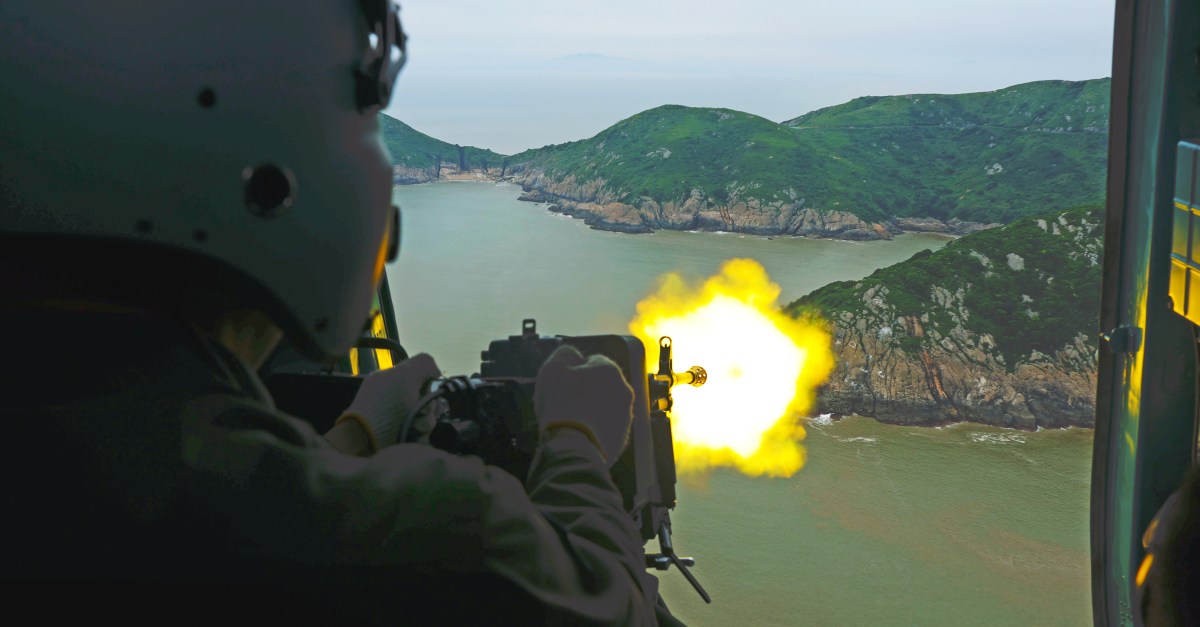
While we're not at that stage now, it's crucial to recognize that these trade tensions unfold amid rising military frictions. When President Trump first introduced tariffs, China was conducting major military drills around Taiwan, showing significant potential tactics for claiming the island.
These maneuvers coincided with reports about supposed 'invasion barges' for Taiwan, internet disruptions by Chinese ships, and issues with other East Asian nations, illustrating underlying military assertions complementing economic conflicts.
This mix of economic penalties and military demonstrativeness indicates that the trade war must be viewed within a broader geopolitical framework.
Are We Sleepwalking into a Conflict?
In Trump's administration, many high-ranking officials view China critically, yet the focus on broader US-China competition seems diminished beyond the arena of trade.
Some formerly aggressive administration voices have softened, suggesting Taiwan's lesser importance to the U.S. This is notably different from Biden's presidency, where countering regimes, including China, was pivotal.
There's been no escalation toward conflict, though China remains a key concern for U.S. defense planning. However, Trump signals a willingness for direct talks with Xi Jinping on critical matters beyond trade, a prospect China seems to resist, opting to negotiate with global entities separately.
China has long suspected U.S. policies aim to thwart its rise as a significant global power; Trump’s tariffs are viewed as part of this strategy.
Old Rivals, New Dependencies
Despite strategic efforts to reduce reliance, U.S. military logistics still heavily depend on Chinese tech and materials, a situation spotlighted by recent restrictions China placed on rare earth exports.
The entanglement of both nations' economic and military infrastructures is unprecedented, as demonstrated by figures like Elon Musk, whose ventures straddle American defense interests and Chinese resources.
This deep economic link has prompted initiatives to reduce interdependence, termed 'decoupling,' or foster alliances termed 'friendshoring.' For example, Apple's move to India for some production sidesteps China-centric supply chains.
However, cutting ties could reduce collaborative platforms at various societal levels, raising risks if tensions heighten.
Revisiting the 'Capitalist Peace'
The idea that trade deters war is not novel, yet its effectiveness is mixed. Contradictions arise as past global peace owed partly to economic ties, yet recent aggressions involve major trading partners.
Current actions against global trade norms coincide disturbingly with resurging conflicts, casting uncertainty on how international relations might evolve from this 'terra incognita.'
Leave a Reply