


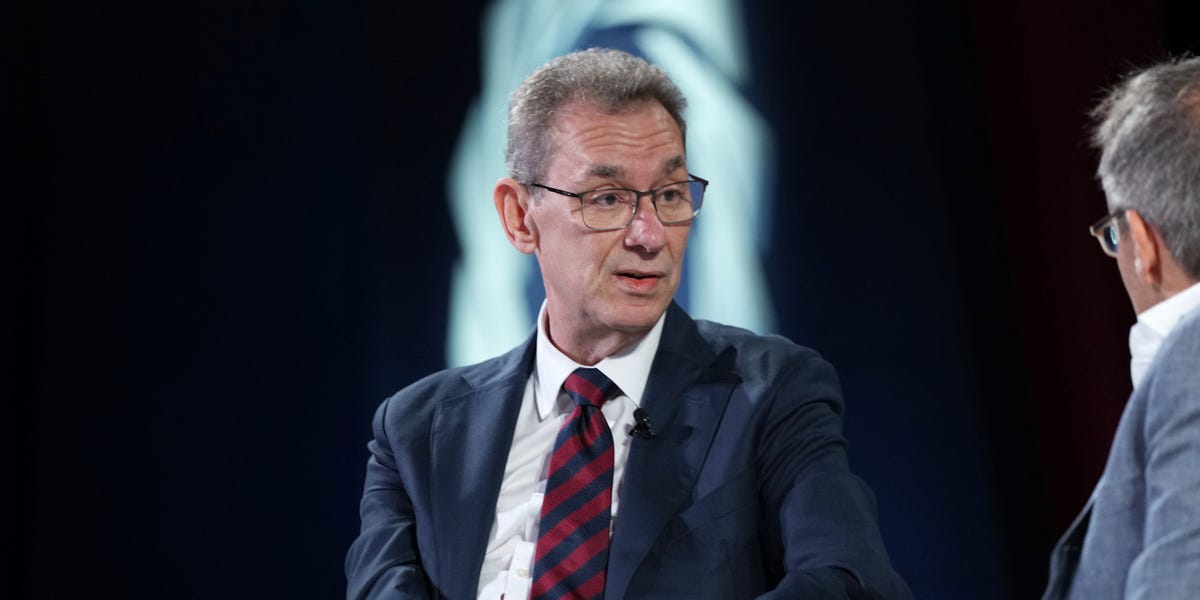
Pfizer's CEO Envisions Significant U.S. Investments if Tariffs Are Relaxed
Albert Bourla, CEO of Pfizer, has indicated that the company is being held back from substantial investments in the United States due to the current landscape of tariffs and resulting uncertainty under President Donald Trump's administration.
During a recent earnings call for the first quarter, Bourla was queried regarding what changes in tariff policies would encourage him to enhance Pfizer's manufacturing presence within the U.S.
Bourla stated, "If there is assurance that tariffs will not be an issue, we are poised to undertake remarkable investment efforts domestically, particularly in research and development as well as production."
He further mentioned that in times of market instability, cost control becomes a priority for everyone, and Pfizer is no exception. The company is adopting a cautious investment approach to ensure preparedness for unforeseen events.
Previously, Bourla had expressed an intention to counteract the potential impact of tariffs by potentially increasing manufacturing activity within the U.S.
At a healthcare conference hosted by TD Cowen in March, Bourla remarked, "Pfizer currently operates 13 facilities across the U.S., all of which are fully functional."
He emphasized, "Given our robust capabilities here, should circumstances change, we aim to swiftly shift production from international sites to domestic ones if feasible."
According to Dave Denton, Chief Financial Officer at Pfizer, the prevailing tariffs are projected to impose a financial burden of about $150 million by 2025.
While Trump's initial 10% tariffs introduced in early April excluded pharmaceuticals, he has recently suggested applying tariffs specifically to this sector to incentivize moving manufacturing to the U.S.
Trump stated, "Introducing a tariff prompts faster relocation; the direct relationship between tariff magnitude and response speed is clear. We intend to implement this strategy."
The notion of pharmaceutical tariffs has spurred various industry leaders to express concerns, with some predicting a rise in prices.
In a parallel conversation, Pascal Soriot, the CEO of AstraZeneca, another notable player in the field, mentioned the potential for transferring some manufacturing operations to the U.S. as a response.
Soriot suggested that AstraZeneca could relocate the production of its U.S.-destined goods from Europe.
Meanwhile, Merck, another American pharmaceutical giant, announced it had begun constructing a $1 billion facility in Delaware, underlining its dedication to bolstering U.S. manufacturing.
And drawing attention to the debate, investor Mark Cuban noted in March that potential tariffs on imports from India could lead to a price increase for medications from his firm, Cost Plus Drugs.
Despite requests for comments, Pfizer did not provide a response to inquiries from Business Insider.
Leave a Reply