


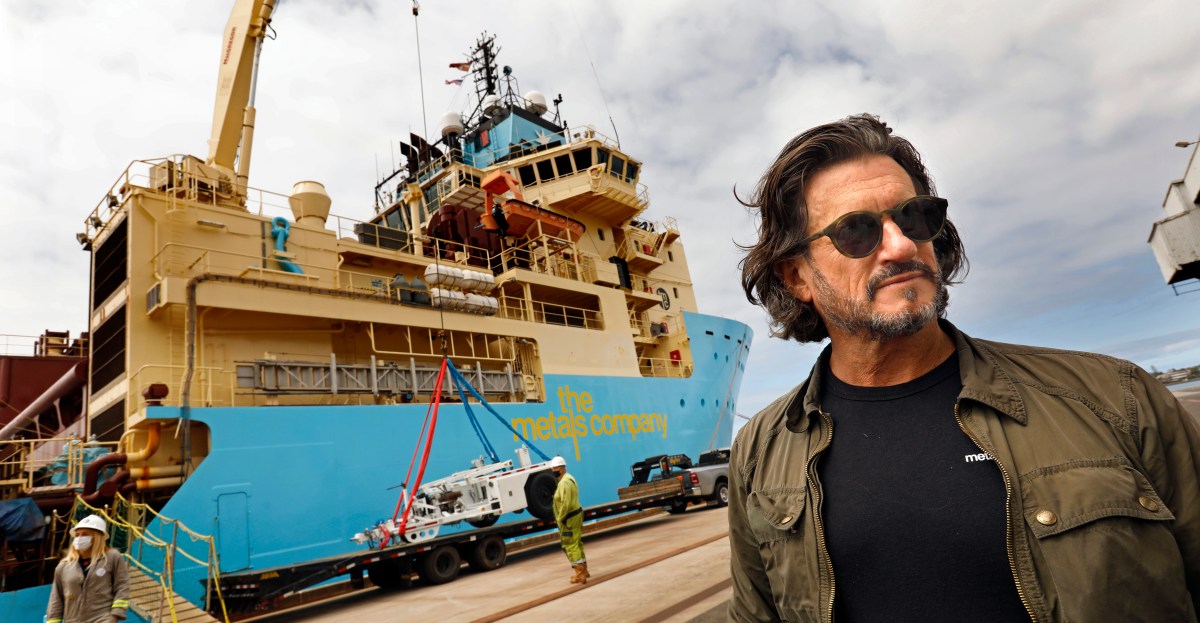
Canadian Firm Seeks Trump's Green Light for Oceanic Excavation
The Metals Company collaborates with the Trump administration to sidestep global regulations for seabed mining.
For years, The Metals Company has pursued access to minerals scattered across the ocean's depths. Today, they announced a bid for a commercial mining permit in international waters from the Trump administration.
By joining forces, The Metals Company and President Trump aim to bypass a collaborative international process that has so far delayed commercial seabed mining.
Initiating excavation without fully assessing environmental consequences or establishing international guidelines has incited international government and environmental advocate dissatisfaction.
International Law and Scientific Consensus Dismissed
Louisa Casson, a senior campaigner at Greenpeace International, declared the application to mine the seabed as a flagrant dismissal of international law and scientific agreement. She urged global governments to protect international rules from rogue mining activities.
Last week, Trump authorized an executive order to expedite ocean floor mining, framing it as a strategic counter to China's stronghold on mineral resources.
The administration claims its licensing rights stem from the 1980 US Deep Seabed Hard Mineral Resources Act, noting that the U.S. has not ratified the 1982 United Nations Convention on the Law of the Sea, which created the International Seabed Authority (ISA) to set mining regulations.
China criticized the order, with a foreign ministry spokesperson stating it violates international law and broader community interests.
The island nation of Nauru had previously backed The Metals Company's endeavors, spurring a rush for international rule-making in 2021. However, the ISA failed its 2023 deadline due to unresolved liability issues over potential environmental damage.
Seafloor Exploration and Environmental Concerns
Our understanding of the ocean's depths is rudimentary—much less so than lunar surfaces—raising concerns over the ecological impacts of seabed mining. Over 30 nations, including Canada and Mexico, advocate for a suspension of such practices until an international framework is established.
Frustrated by delays, The Metals Company sought licensing from the NOAA to extract resources from a 25,160 square kilometer area about 1,300 nautical miles south of San Diego and is exploring further development areas.
The area, known as the Clarion Clipperton Zone, is nutritious in polymetallic nodules containing nickel, cobalt, and manganese—vital for rechargeable batteries—and lies outside U.S. jurisdiction but within where ISA oversight is anticipated.
Prime Resources and Potential Global Leadership
Reports suggest Trump is enthusiastic about exploring these nodule-rich regions. Gerard Barron of The Metals Company noted the presentation of a nodule to Trump, who displayed it prominently.
The company emphasizes enabling the U.S. to source critical materials—nickel, copper, cobalt, and manganese—important for sectors such as energy and defense, expressing readiness to rejuvenate U.S. leadership in deep-sea resource acquisition.
Having invested over half a billion dollars, the company believes it's poised to retrieve millions of tons of these critical minerals from the Clarion Clipperton Zone, advocating the marine process as less damaging than terrestrial mining.
Alternative Solutions and Industry Opposition
Conversely, industry critics suggest alternative approaches that negate the need for seabed mining, like reducing nickel and cobalt usage in EVs. Studies predict that recycled materials can fulfill half of the U.S. demand by 2050.
Leave a Reply