


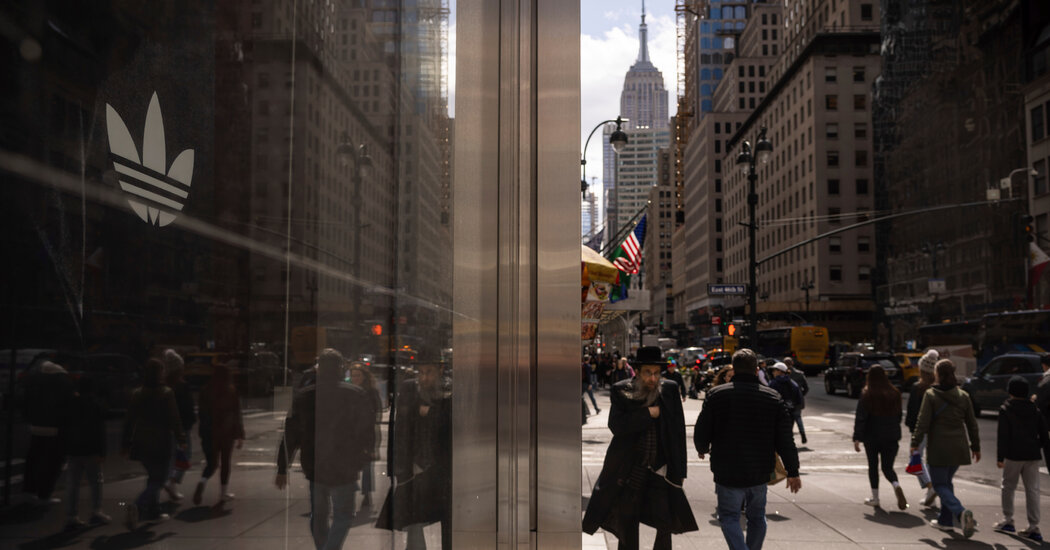
Adidas Predicts Higher Sneaker Prices in the U.S. Due to Tariffs
The CEO of the renowned German sportswear brand has indicated that the volatility surrounding tariffs has made it challenging to provide a complete annual forecast. However, he foresees a rise in prices for consumers in America.
Impact of Tariffs Announced by Adidas
On Tuesday, Adidas revealed that the recent tariff hike is likely to result in increased costs for their shoes and sports wear sold in the United States.
Challenges in U.S. Production
Bjorn Gulden, the CEO of Adidas, communicated that the vast majority of their products are manufactured outside of the U.S. Consequently, these elevated tariffs would likely drive up expenses across their product range intended for the U.S. market.
While Adidas has attempted to mitigate these effects by shipping additional products to the U.S. ahead of the tariff implementation, Gulden noted that they will eventually encounter the effects of the 10% baseline duty increase imposed on imports by President Trump.
Consequences of Cost Increase
The rise in costs will inevitably lead to heightened prices; however, it is challenging to determine the precise effect this will have on consumer interest in Adidas products.
Moreover, Adidas has altered the destination for some Chinese-manufactured goods that were initially intended for the U.S., redirecting them to other markets that have grown in importance as a result of the intensifying trade tensions between major global powers.
Sales Performance in Various Markets
Sales in the U.S. witnessed a modest 3% rise in the first quarter, impacted partly by the discontinuation of a popular sneaker line from a collaboration that ended in 2022.
Conversely, the European market experienced a robust 14% increase in sales during the same period, with Chinese sales growing by 13%.
Future Outlook
Based in Herzogenaurach, southern Germany, Adidas has refrained from projecting profit forecasts for the entire year. The unpredictability of tariff impacts, affecting production in countries like Indonesia and Vietnam, has contributed to this decision.
In what would have been typical circumstances, the substantial first-quarter performance might have led the company to enhance its revenue and operating profit outlook for 2025. However, the current uncertainties surrounding U.S. tariff policies have halted such considerations.
Leave a Reply