


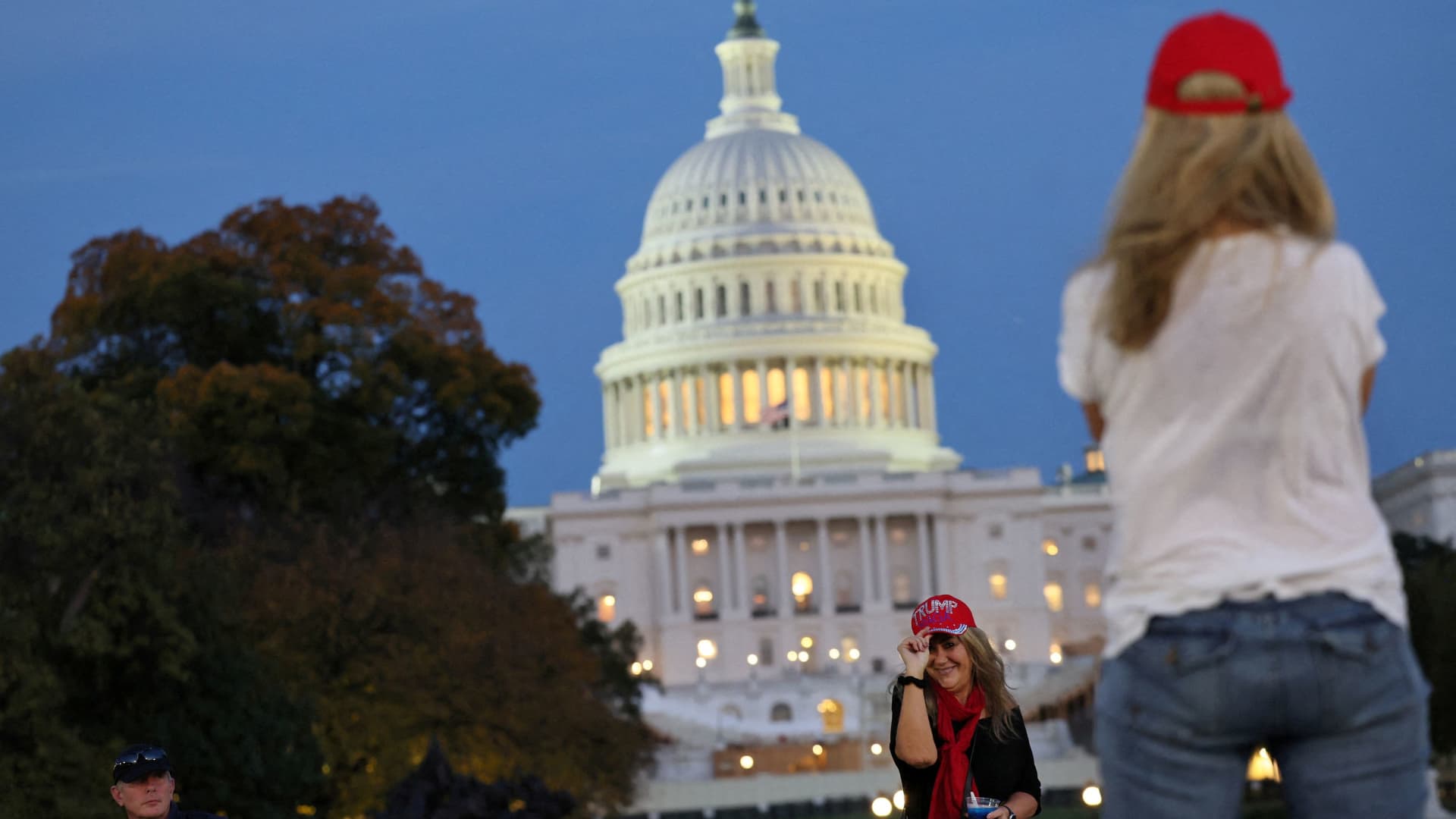
Financial Implications of a New Trump Presidency, According to Advisors
With Donald Trump's anticipated return to office, many investors are evaluating the potential impacts on their financial affairs.
Following Trump's election victory, stock markets experienced a notable surge, with the Dow Jones Industrial Average surpassing 44,000 for the first time.
Financial advisors recommend holding off on making significant financial alterations pending more clarity on Trump's proposed policies.
Jude Boudreaux, a financial planner, advises sticking with established financial strategies aligned with personal goals, even as political landscapes shift.
Over time, he suggests making adjustments only as more information becomes available about the administration's plans.
Similarly, Lee Baker, another financial expert, suggests remaining steady and refraining from broad changes until policy details unfold.
Potential for Market Fluctuations
Although initial market responses to Trump's win were positive, this trend's sustainability remains uncertain.
Baker cautions against interpreting market booms as unequivocal endorsements of Trump's policies.
Generally, markets dislike unpredictability, and the election results have provided investors with a clearer outlook for the time being.
Financial advisor Stacy Francis notes that investors are optimistic about potential economic growth under Trump, but individual financial decisions should remain aligned with personal circumstances.
Investor strategies should focus on factors like personal objectives and risk tolerance, which shouldn't be swayed by election outcomes.
Some speculate certain industries, especially energy and finance, might see an uptick due to anticipated regulatory leniency.
Francis points out that stock market success doesn't solely hinge on the president's identity.
Prospects for Prolonged Tax Reductions
The 2017 Tax Cuts and Jobs Act, enacted under Trump's first term, could see extensions beyond 2025, continuing current tax benefits.
Corporations and individuals alike anticipate further tax relief under renewed Trump leadership, which could fuel economic growth post-2025.
During his campaign, Trump suggested dropping taxes on Social Security benefits and on extra compensations like tips, yet policy certainty is currently lacking.
Inflation Concerns
The Federal Reserve has successfully managed inflation rates close to a 2% target, but Trump's policies may spur change.
Tariff implementations and additional disposable income from tax cuts might drive prices and inflation higher.
Such financial dynamics could influence the Federal Reserve's interest rates decisions during Trump’s leadership.
Leave a Reply