


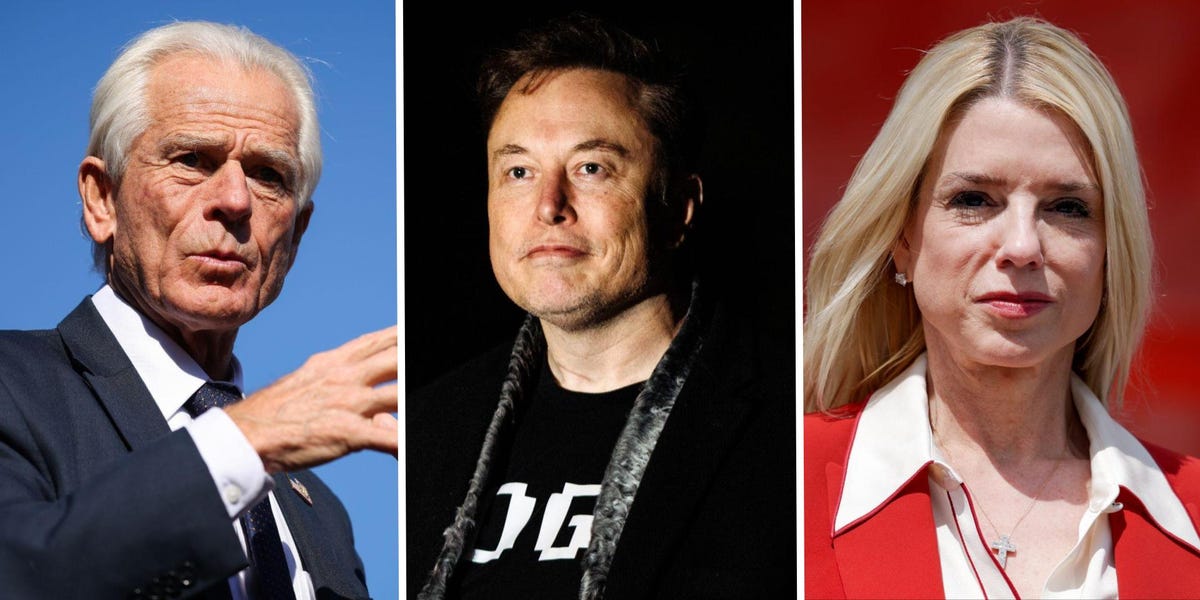
Key Influencers in Trump's Early Days
Unveiling the faces who have significantly influenced the initial 100 days of Donald Trump's presidency.
Some are frequently seen on television, while others prefer staying out of the limelight. These 14 individuals have been pivotal in crafting policies and executive orders that have radically changed norms, disrupted international markets, and set the stage for Trump's forthcoming term.
Their influence is evident in pivotal trends remolding the American landscape: protectionist tariffs, deportations, termination of federal employees, and fiscal cuts. Additionally, some are instrumental in steering the Trump narrative, affecting media and public perceptions as his administration rapidly implements its agenda.
"President Trump has assembled a superb team committed to rejuvenating America," asserted Assistant Press Secretary Liz Huston. "With his guidance, the Cabinet and White House personnel are working collectively to herald a renewed prosperous era for the United States."
Scott Bessent: The Market's Guide
Known for his former role as a hedge fund manager, Scott Bessent now serves as the Treasury secretary in the midst of one of the US's most challenging trade dialogues in recent history. Although Wall Street sees him as a stabilizing figure, with his announcements often boosting stock values, his trade-friendly stance faces uncertainties under Trump's protectionist agenda.
Pam Bondi: Legal Defender with Influence
Previously one of Trump's personal attorneys, Bondi now exerts her influence as the US attorney general. She's pursued so-called 'domestic terrorists' targeting Tesla showrooms and, aligned with Trump's policies, has sought capital punishment against certain criminals. Her approach towards Big Tech remains closely watched following the Justice Department's antitrust win.
Tom Homan: Border Policy Enforcer
As the appointed border czar, Homan is key to implementing mass deportations. He has endorsed sending alleged gang members back to countries like El Salvador and pledged regular deportation flights. Homan's experience from ICE under Obama's administration, coupled with his alignment with the conservative Project 2025, frames his immigration approach.
Delve into how these figures and others like Mike Johnson, Robert F. Kennedy Jr., and Karoline Leavitt are reshaping policies and steering Trump's second term agenda.
Mike Johnson: Legislative Strategist
Holding the position of Speaker of the House with Trump's endorsement, Johnson's initial phase might be straightforward compared to future hurdles. His primary task will involve transforming the proposed cuts by the White House's DOGE office into law, as well as navigating the passage of substantial tax reforms and immigration changes.
Robert F. Kennedy Jr.: Health Policy Visionary
Kennedy is predominantly identified as a vaccine skeptic and health advocate. His sharp reductions proposed at key health agencies like the FDA, CDC, and NIH could alter health initiatives such as hormone and dietary oversight. His strategic mandate to phase out synthetic dyes in the food industry reflects his reform-driven focus.
Karoline Leavitt: Voice of the Administration
At 27, Leavitt stands as the youngest press secretary, often seen handling the administration's press relations with determination and vigor. She is recognized for her confrontational exchanges with media personnel especially on contentious topics such as trade regulations and immigration enforcement.
Howard Lutnick: Commerce and Trade Champion
A Wall Street mogul, Lutnick, advocates reciprocal duties and has openly critiqued countries perceived to exploit the US market. Despite facing criticism for his candid media engagements, he continues to emphasize the economic resilience amidst trade tensions.
Stephen Miller: Architect of Immigration Policy
As the deputy chief of staff, Miller drives the aggressive deportation initiatives and uses historical statutes like the 1798 Alien Enemies Act to justify actions. Beyond immigration, Miller engages prominently in Trump's battles with major legal entities.
Powerhouses like Elon Musk, Peter Navarro, and Marco Rubio further shape key facets of Trump's presidency,
emphasizing workforce cuts, trade policies, and foreign diplomacy strategies.
Elon Musk: Federal Workforce Reformer
Positioned at the core of federal employment reform, Musk remains outspoken against Trump's tariff strategies and critiques other government policies openly. Navigating backlash from TESLA stakeholders, Musk is gradually stepping back from his formal advisory roles.
Peter Navarro: Architect of Trade Protectionism
Navarro returns to Trump's team bringing his staunch anti-trade beliefs. His instrumental role in imposing tariffs is part of a broader trade overhaul, resisting international trade practices deemed unfavorable to the US.
Marco Rubio: Diplomatic Innovator
Contrary to expectations to moderate Trump's foreign engagements, Rubio has instead spearheaded drastic reductions in diplomatic functions and pressed for stringent immigration controls. His tenure has also seen him pressuring international conflicts towards US-favored resolutions.
JD Vance: Vice President’s Assertive Stance
As Vice President, Vance quickly defines his role, often aligning with Trump’s eurosceptic views. He dismisses opposing Republican voices believed to lack dedication to Trump’s vision, adding a layer of assertiveness to the administration.
Russell Vought: The Visionary Planner
Vought's contributions, especially his insights for Project 2025, resonate through Trump's agenda, advocating for extensive administrative reforms and departmental overhauls aimed at streamlining federal operations.
Susie Wiles: Core to Administration Cohesion
As the first female chief of staff, Wiles is pivotal in managing the vibrant array of personalities surrounding the President. Her capabilities have been key in maintaining coherent operational strategies within Trump's inner circle.
Leave a Reply