


Why Both Political Parties Are Advocating For Stock Trading Restrictions
The notion of restricting stock trades by Congress members has gained significant traction on both sides of the political spectrum.
Concerns over lawmakers having access to confidential information have prompted major political support for instituting a ban on stock transactions by legislators. Although the initiative has seen more backing from Democratic lawmakers, several Republicans, including Donald Trump, have voiced agreement.
Beyond just ethical considerations, the matter also ties deeply into political maneuvering.
Traditional political rivalry has played a major role in advancing the push to restrict stock trading within Capitol Hill. This rivalry often involves highlighting perceived 'villains' from the opposing party.
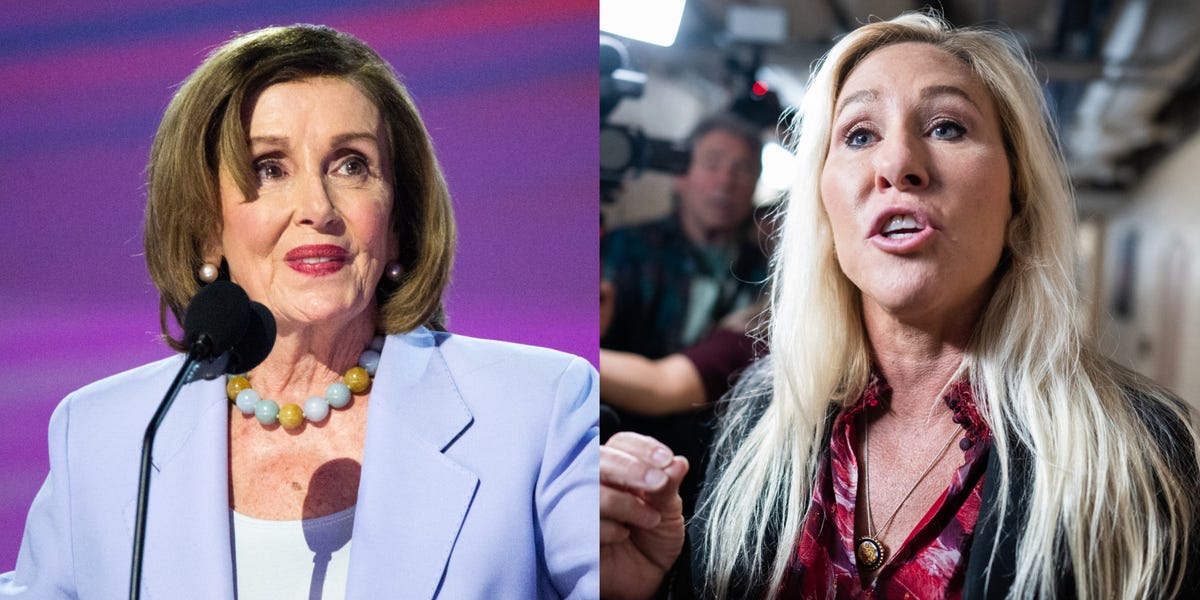
Republicans have often pointed to former Speaker Nancy Pelosi, whose spouse Paul Pelosi is known for his active stock trading. Trump remarked to TIME that he witnessed Pelosi amassing wealth through insider guidelines, and expressed his readiness to approve a stock trading prohibition.
Democrats, conversely, have targeted Georgia's Representative Marjorie Taylor Greene, who was scrutinized after purchasing stocks amid a market slump. "Many in Congress are deceptive, and Marjorie Taylor Greene is a prime example," House Minority Leader Hakeem Jeffries commented on MSNBC, arguing for legal changes to prevent Congressional members from engaging in stock trading.
Pelosi and Greene serve as convenient adversaries in the eyes of their political opponents, with their association with stock market controversies helping each side to frame the issue around ethical misconduct of the other party.
However, the situation is more nuanced than it appears at first glance.
Pelosi's stock involvements pertain to her husband, with her spokesperson confirming that she neither directly holds stocks nor engages personally in these transactions. Ironically, her initial resistance to a stock ban contributed to the movement's momentum, eventually causing her to adopt the stance.
Greene, in contrast, has mentioned that her portfolio manager manages her investments independently. "He capitalized on the market dip," she explained to the Georgia Recorder.
Despite this, Greene's recent activities have reignited discussions for a comprehensive stock trading ban, with Democrats suggesting her involvement in tariff speculation linked to Trump's announcements, a claim she rejects.
As for Pelosi, there haven't been publicly reported stock dealings by her husband since the start of the year, despite fluctuations in the stock market.
Nevertheless, Republicans are continuing to use Pelosi as a focal point in their arguments.
Senator Josh Hawley shared plans on Fox News to reintroduce the legislation known as the "Preventing Elected Leaders from Owning Securities and Investments Act" — humorously dubbed the PELOSI Act.
Leave a Reply