


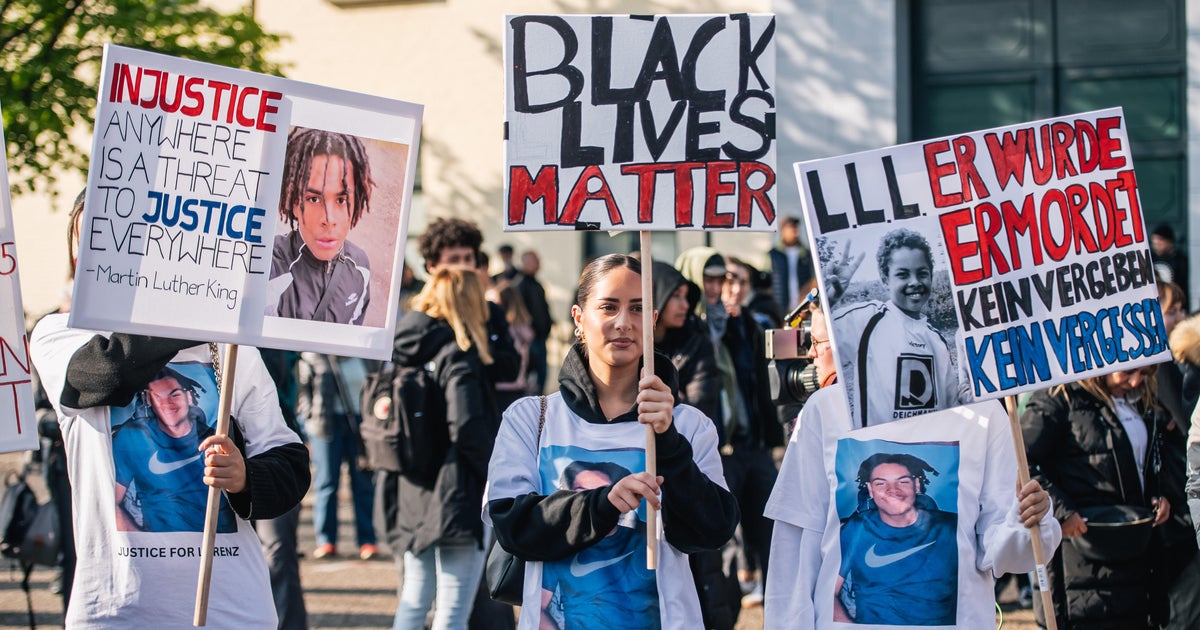
Protests in Germany After Police Shoot and Kill Black Man Outside Nightclub
Civil rights organizations are urging the need for an impartial investigation following the fatal shooting of a Black individual by law enforcement near a nightclub in northern Germany. The incident has sparked a national outcry amid allegations of ingrained racial bias within the policing system in Germany.
The young man, identified as Lorenz A., aged 21, was reportedly shot multiple times from behind by a 27-year-old officer in Oldenburg. The prosecution revealed the autopsy discovered bullets hitting Lorenz A.'s head, torso, and hip, while another bullet merely brushed his thigh. He succumbed to his gunshot injuries at a nearby hospital.
Officials report that Lorenz A. had menaced nightclub security personnel using pepper spray and a knife after being refused entry. Upon police confrontation, he allegedly brandished the pepper spray in an intimidating fashion.
Nevertheless, by Monday, prosecutors indicated that initial evidence, including footage from security cameras and accounts from witnesses, did not confirm any knife threat towards officers during the shooting incident.
The body cameras worn by the officers involved were reportedly deactivated. German police officers are not mandated by law to activate their body cameras during operations, leaving it at their personal discretion.
The incident has ignited widespread anger throughout Germany, with over 10,000 people assembling in a protest named "Justice for Lorenz" in Oldenburg last Friday. Further vigils and protests are planned in other major cities including Berlin, Munich, Frankfurt, Stuttgart, as well as in Vienna, Austria.
Organizations like Amnesty International and the Black People in Germany Initiative (ISD) are calling for a neutral and independent probe, highlighting potential bias in internal police reviews.
"Lorenz's death resonates far beyond his immediate family, affecting all individuals impacted by racism in Germany," stated Amnesty International.
These groups are also campaigning for mandatory use of body cameras by police officers during any operation involving weapons.
This incident draws parallels to numerous occurrences of police violence seen in the United States. For instance, the killing by a police officer in Minnesota in 2020 that triggered vast protests against perceived systemic bias and excessive force in policing.
Similar to American activists' demands, German advocacy groups are urging the formation of a national body dedicated to scrutinizing police misconduct claims.
The deadly event has also sparked comparisons to a historical case from 2005 involving Oury Jalloh, from Sierra Leone, who perished under suspicious conditions while in police custody in Germany. His demise became emblematic of suspected institutional racism and lack of accountability within police forces over the past two decades.
Although Germany's records of police-involved shootings remain relatively low, historically averaging around ten yearly, there has been an increase, with 22 deaths logged last year.
A study conducted in 2024 revealed that nearly one-third of German police officers have reportedly heard racist remarks from their coworkers, indicating a potential deep-rooted cultural issue.
Leave a Reply