


Trump and the Challenge of Rallying GOP Support for His Budget Proposal
As Congress reconvenes after a two-week hiatus, it's confronted with a daunting task: budget reconciliation.
Central to the agenda is molding President Trump's ambitious domestic policies into a sprawling fiscal package. This endeavor encompasses tax reductions, a substantial hike in Pentagon funds, and intensive border fortification, offset by targeted spending cuts.
Despite controlling both the House and Senate, Republicans are struggling to achieve consensus on critical facets of the budget. Dissonance lingers within internal party factions regarding the overarching budget framework guiding committee efforts.
Navigating Partisan Divides
Utilizing a special legislative process allows the GOP to sidestep the usual 60-vote Senate requirement. To meet fiscal benchmarks, committees are tasked with adjusting revenue, spending, and the debt ceiling, converging into a comprehensive legislative proposal that needs approval from both chambers.
Achieving unity remains a formidable challenge with the Republican Party's slim majority acting as a potential hurdle.
Georgetown University law professor Josh Chafetz points out the paucity of major legislative tests so far, which leaves questions around internal party coherence unresolved.
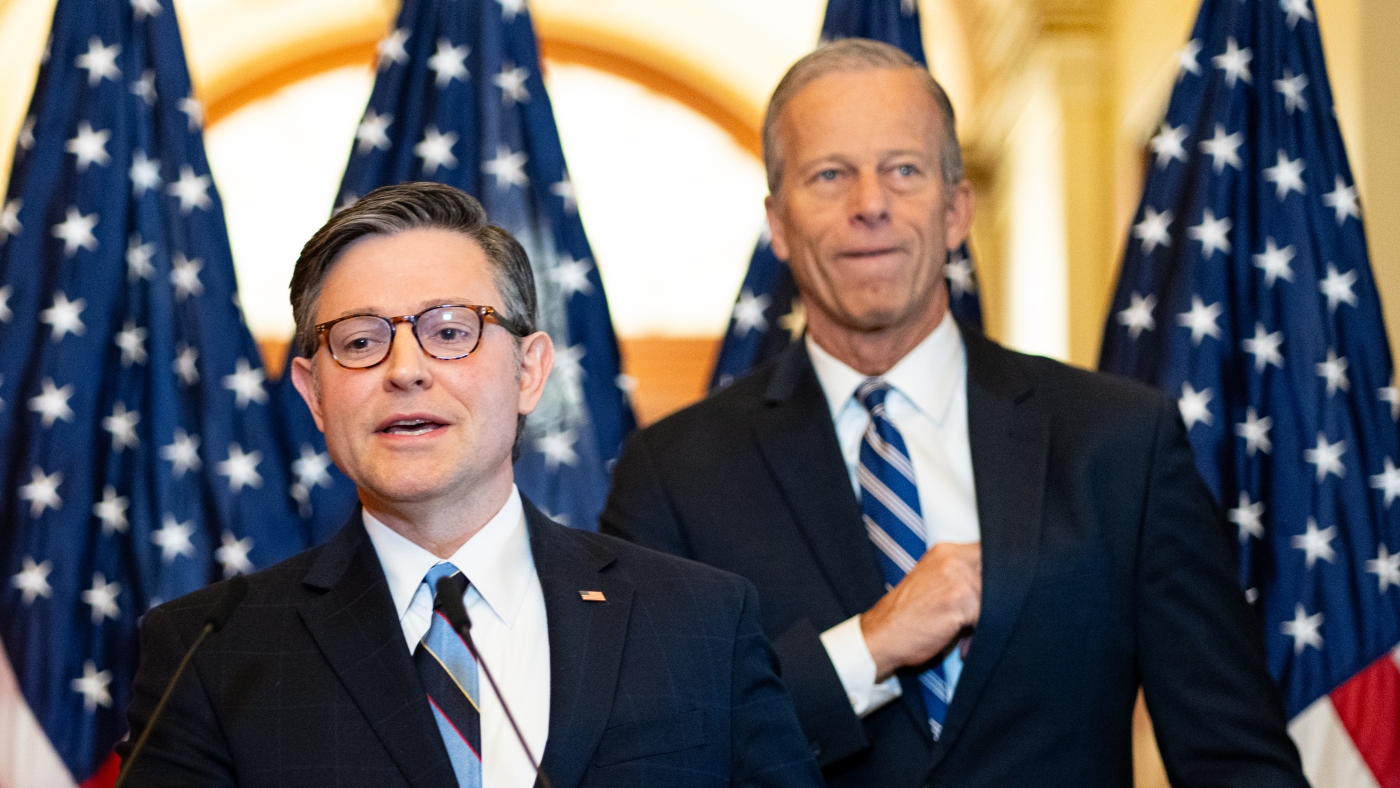
House Speaker Mike Johnson, R-La., aims to secure the bill on President Trump's desk by Memorial Day, a timeline fraught with risks.
Disputes Over Spending and Reductions
GOP lawmakers are eyeing an extensive legislative package that extends the 2017 Tax Cuts and Jobs Act. However, sharp divisions exist, especially about spending targets.
The House necessitates a minimum of $1.5 trillion in cuts, contrasting with the Senate's $4 billion starting point.
Politics professor Sarah Binder from George Washington University highlights the pressure on fiscal conservatives due to burgeoning deficits since the initial tax cuts.
There's significant discord about the spending cuts, often perceived as straightforward party agreements like tax reductions.
Medicaid: A Central Issue
Medicaid reductions emerge as a key area of contention, with the House mandating the Energy and Commerce Committee to cut $880 billion over a decade.
The Congressional Budget Office warns that meeting House plan goals demands substantial Medicaid cuts.
There's staunch opposition, notably from Missouri Senator Josh Hawley, against any measures that would diminish Medicaid provisions.
A faction of House Republicans insists on safeguarding Medicaid for at-risk groups, emphasizing that fiscal balance shouldn't undermine health and economic security.
Speaker Johnson committed to ensuring no legally entitled benefits are sacrificed, aiming to find savings through eradicating inefficiencies.
Nonetheless, these promises create challenging contradictions when balanced against substantial savings targets.
Time Constraints and Strategy
With a reconciliation deadline set for September 30, time constraints further compound challenges. Missing this deadline forfeits the budget's privileged status.
The summer legislative schedule compresses the available timeframe, raising the stakes for legislative advancement.
Budgetary Tactics and Manufacturer Baselines
A key fiscal debate revolves around using the 'current policy baseline' technique to advance tax cut extensions as cost-free.
This technique treats the 2017 tax cuts as permanent, despite their pending expiration, drawing criticism for allegedly inflating deficits.
Budget gimmickry, critics argue, could substantially inflate the national deficit, undermining fiscal accountability.
The Trump Effect on Republican Unity
Unlike his first term, Trump actively engages in Congressional negotiations, using both public and private influence to encourage adherence to his agenda.
This pressure, both persuasive and threatening, challenges GOP members to weigh their priorities against Trump's support.
Leave a Reply