


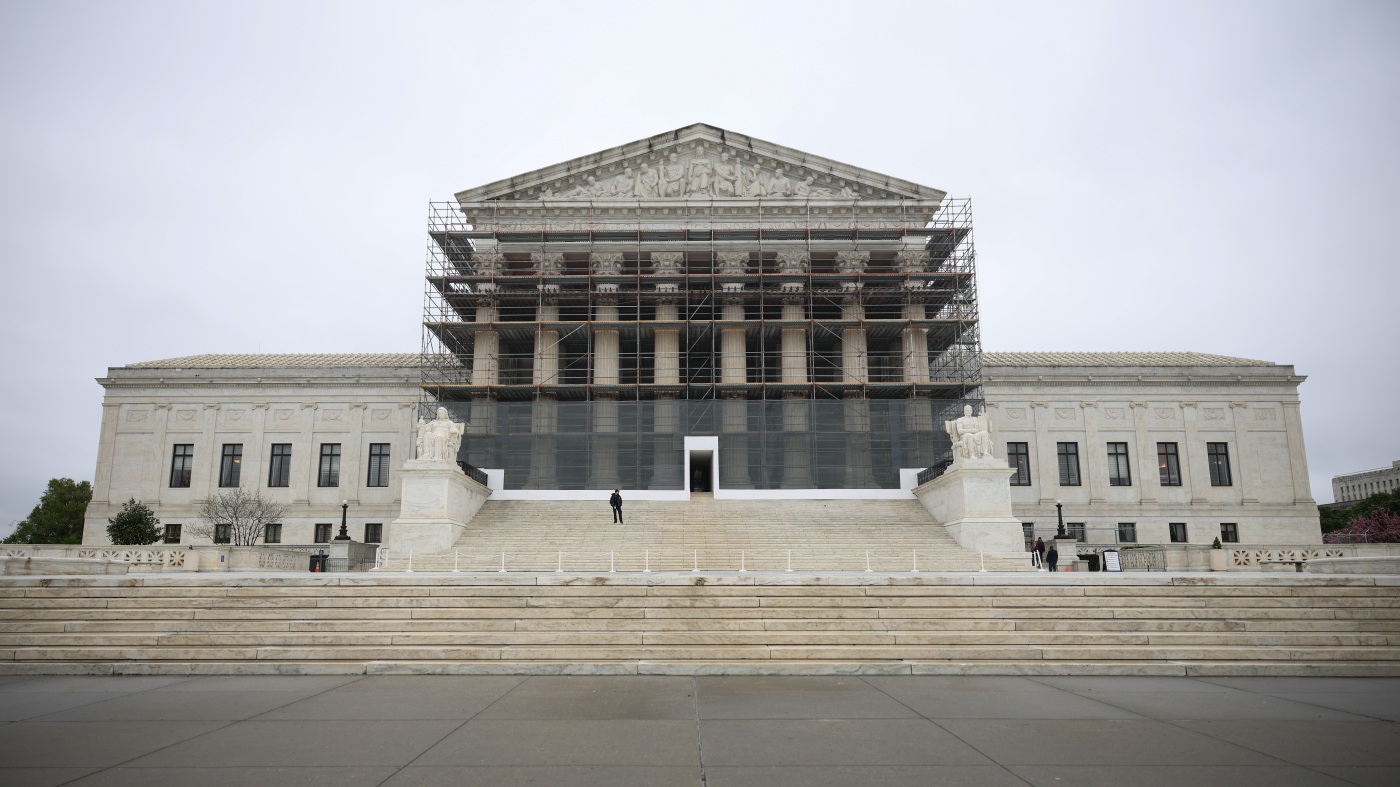
Supreme Court Reviews Case on School Support for Disabled Students
On Monday, the U.S. Supreme Court will delve into arguments concerning the extent of federal regulations designed to ensure specialized assistance for disabled students in public educational settings.
Ava Tharpe, a teenager with severe disabilities caused by an uncommon epilepsy condition, requires help with tasks like walking and using the restroom. Due to frequent morning seizures, her school in Kentucky arranged for her schedule to begin in the afternoon, with evening instruction at home. However, after her family relocated to Minnesota, her new school in the Twin Cities did not accommodate this schedule, significantly reducing her instructional hours compared to her peers.
The Tharpe family filed a lawsuit against the Osseo Area School District, arguing that the district failed to meet obligations set by the Americans with Disabilities Act, the Rehabilitation Act, and the Individuals with Disabilities Education Act. These federal statutes require schools that receive government funding to provide reasonable adjustments for disabled students.
A state administrative law judge supported the Tharpe family, ruling that the district's justification for denying her full days of learning lacked credibility.
In federal court, Tharpe’s family fought for her entitlement to a complete school day, leading to the district eventually providing full education. Additionally, they sought compensatory damages, a remedy not available under the IDEA but accessible through the other two laws concerning disability rights.
A major issue is the discrepancy among lower courts regarding what parents need to demonstrate to obtain compensatory damages. In many jurisdictions, including the federal court overseeing Minnesota, the criteria are so stringent that success for parents is nearly unattainable.
This case holds significance, says Ava’s father, Aaron Tharpe, as a favorable ruling could benefit numerous families by easing the process to secure rightful educational support for disabled children.
Currently, five federal appellate courts require parents to prove that a school district acted with 'bad faith or gross misjudgment' to receive compensatory damages. In contrast, two other appellate courts only require evidence of 'deliberate indifference' from the schools.
Determining which standard is appropriate is the critical question for the justices to resolve.
While disability advocacy organizations back Ava, the Osseo Area School District argues that a win for Ava could impose unsustainable financial burdens on schools.
Leave a Reply