


IMF: German Spending Falls Short Against U.S. Tariff Effects in Eurozone
Although Germany is set to increase its infrastructure expenditure, this move won't fully counterbalance the adverse impacts of American tariffs on the European economy. This assessment comes from Alfred Kammer, the head of the European division at the International Monetary Fund.
Recently, the IMF revised its growth projections for the eurozone downwards. Alongside this, it also adjusted its forecasts for several other major economies, including the U.S. and the U.K., mainly due to the unpredictable nature of President Donald Trump's tariff policies.
The growth estimates for the euro area for the upcoming years were reduced by 0.2 percentage points, targeting 0.8% in 2025 and 1.2% in 2026.
"The current trade tensions and imposed tariffs pose a greater challenge to our outlook than any positive fiscal developments," remarked Kammer in a conversation with CNBC's Carolin Roth during the IMF-World Bank Spring Meetings.
Kammer elaborated, highlighting a significant downgrade for advanced economies within Europe. The situation appears more severe for emerging eurozone nations during this two-year timeframe.
While tariffs are exerting a negative influence, certain measures will provide some economic uplift within the eurozone throughout this period, according to Kammer.
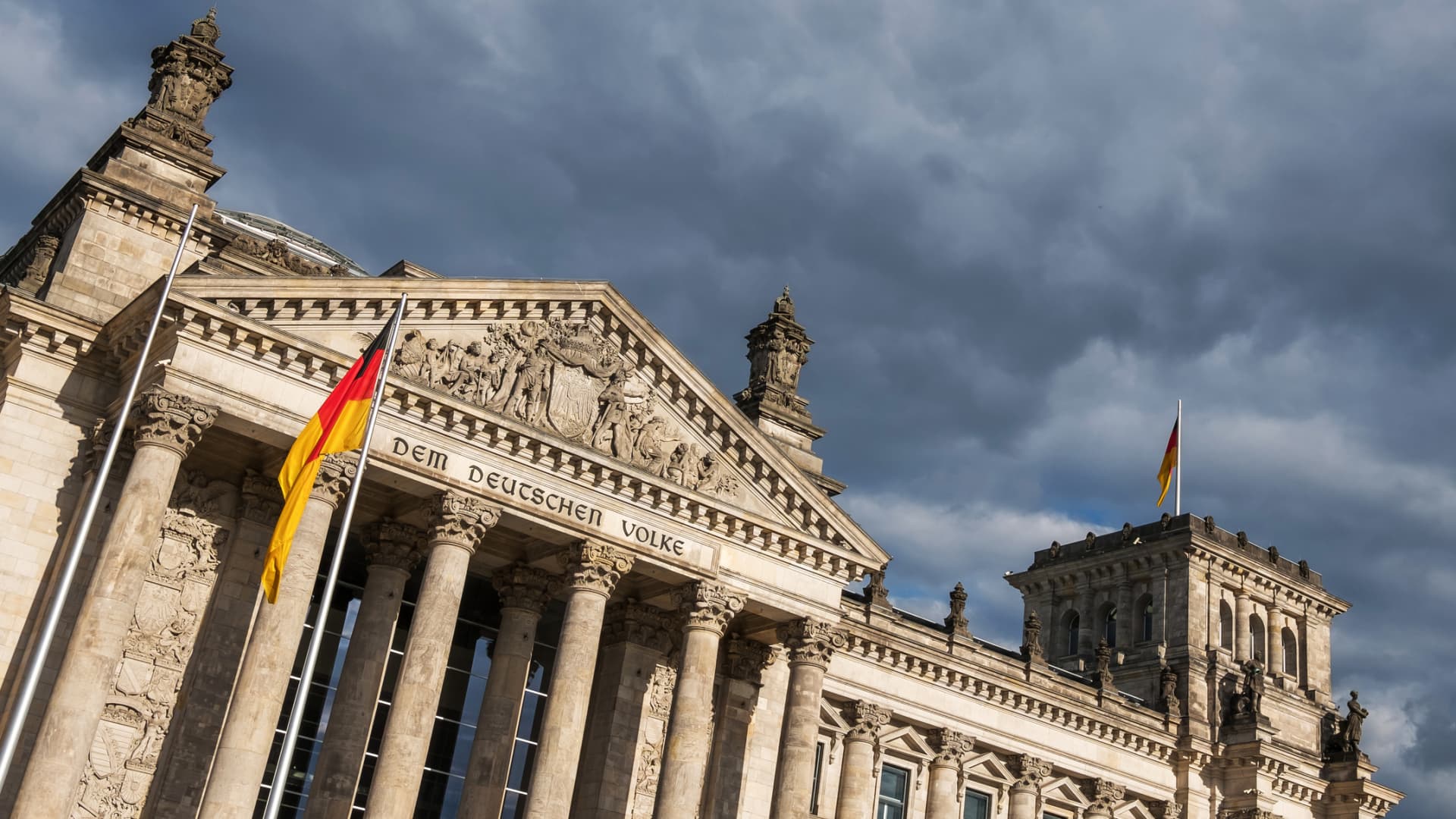
Germany has recently passed exemptions, facilitating a boost in defense allocations and leading to the establishment of a 500 billion euro fund aimed at infrastructure and climate projects. This initiative is seen as a potential transformative force for Germany, the eurozone's largest economy.
Yet, enthusiasm is tempered by the prevailing U.S. tariffs, expected by many to dampen economic optimism.
At the European Central Bank, some policymakers expressed that while the anticipated inflation trajectory seems optimistic—as tariffs could potentially lower inflation further—the broader economic forecasts have become increasingly uncertain.
Kammer from the IMF advised that the ECB should implement just one more interest rate cut this calendar year, suggesting a modest reduction of 0.25 percentage points, even in the context of growth risks.
The ECB has initiated rate reductions seven times through incremental steps, starting in June 2024, with their latest adjustment in April setting the key deposit rate at 2.25%.
"Our analysis strongly endorses the ECB's monetary policy achievements in controlling inflation; we anticipate meeting the 2% inflation threshold by the latter half of 2025," Kammer explained to CNBC.
"We suggest a further 25-basis-point cut in the upcoming summer, with stabilization at a 2% policy rate unless sudden economic shocks necessitate further policy revisions," Kammer added.
On Monday, market trends indicated expectations for two additional quarter-point rate cuts within the year, according to overnight index swap pricing.
Leave a Reply