


Ukrainian Families Torn Apart by Conflict Hold on, Await Reunion
Stories from Zaporizhzhia: A Region on the Edge
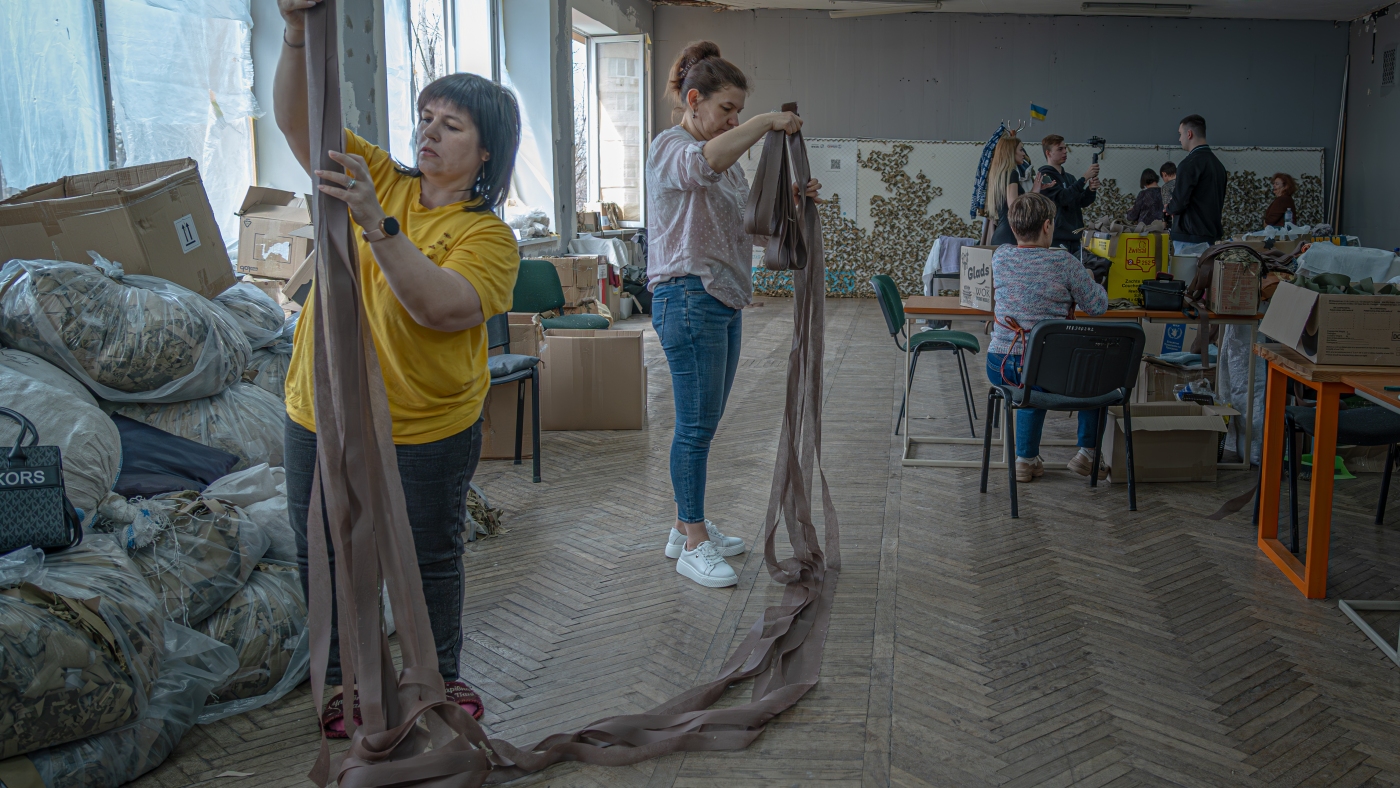
In Zaporizhzhia, a province partly under Russian control, displaced Ukrainians gather on a Saturday morning. They fill a local youth center to support their country's defenses by crafting camouflage nets for the military.
Located in Ukraine’s southeastern region, Zaporizhzhia remains a site of tension. While the main city is under Ukrainian administration, the province is largely occupied by Russia. Volunteers like 36-year-old Kateryna Kyshkan, who endured Russian occupation, embody resilience.
Recalling her time under occupation, Kateryna describes a landscape punctuated by military aggression: tanks, bombs, and invasions of her home. Despite these threats, she clung to hope that Ukrainian forces would eventually reclaim the area.
As summer 2023 arrived, escaping became perilous for residents like Kateryna and her teenage daughter, who had to navigate through territories controlled by Russia or other neighboring countries like Belarus.
The passage through Russian checkpoints was daunting, involving extensive searches and “filtration.” This process was especially worrisome for Kateryna, who concealed a patriotic Ukrainian tattoo that could have caused her trouble.
The Fight for Identity and Land
Russia's insistence that Ukraine cede territories, including Zaporizhzhia, is met with international criticism. Referendums held in these occupied areas lacked legitimacy, according to global officials, as residents were coerced to participate.
Living under these circumstances, families like Kateryna's faced frequent intimidation. Soldiers arrived with ballot papers, forcing compliance from locals.
Life in a City on Alert
Zaporizhzhia’s streets, although devoid of occupying soldiers, are marked by a constant threat of aerial attacks. Families like the Serdyuks, who escaped from Komysh Zoria, grapple with these dangers while adapting to their changed realities.
Alyona Serdyuk recounts her once prosperous pre-war life, and the subsequent loss of security that forced them to abandon their bakery and leave town.
Under rule where anything could be seized or destroyed by soldiers, Alyona and her family had no choice but to flee, leaving behind not only possessions but also memories.
Their absence is marked by stories of others now inhabiting their home—neighbors assure them their property is maintained, but the pain of separation is palpable.
Comments by foreign officials on potential territorial recognitions add to their distress, challenging the narrative of voluntary allegiance shift by the affected residents.
The Language of Resistance
Language, once a bridge in Ukraine, is now a divider. Kremlin narratives claim to protect Russian speakers, yet for many like the Serdyuks, the Russian language now symbolizes oppression.
Alyona's family has fully embraced Ukrainian, distancing themselves linguistically from the occupying force’s culture.
Remote Talks and Family Bonds
Beyond the barriers of occupation, Sergey Vasylko maintains daily calls with his grandparents, left behind in Russian-controlled areas.
Conversations skirt sensitive topics, avoiding discussions that might endanger his grandparents’ safety. Regular talks cover innocuous subjects like sports and Sergey’s work.
Despite growing their own food, the scarcity of medical supplies and healthcare access weighs heavily on his grandparents’ lives. Joyful exchanges mask deeper anxieties.
Hopes for reunification remain, although the continuation of conflict dims expectations, particularly for life events such as family weddings.
Yet, within every exchange rests a shared dream of reunion—an enduring hope for peace and homecoming.
Leave a Reply