


Exploring the Fujifilm Instax Mini 41: A Review
The editors of WIRED have handpicked each product on display. Be aware that purchasing via our retail links may result in us earning a commission.
Score: 7 out of 10
Fujifilm's Instax cameras have successfully picked up the torch from Polaroid's early innovations in instant photography. Although Polaroid is still around, Instax reigns supreme in popularity. These cameras, designed by Fujifilm, are both straightforward and enjoyable; simply point, click, and see the image develop.
Understanding its Exterior
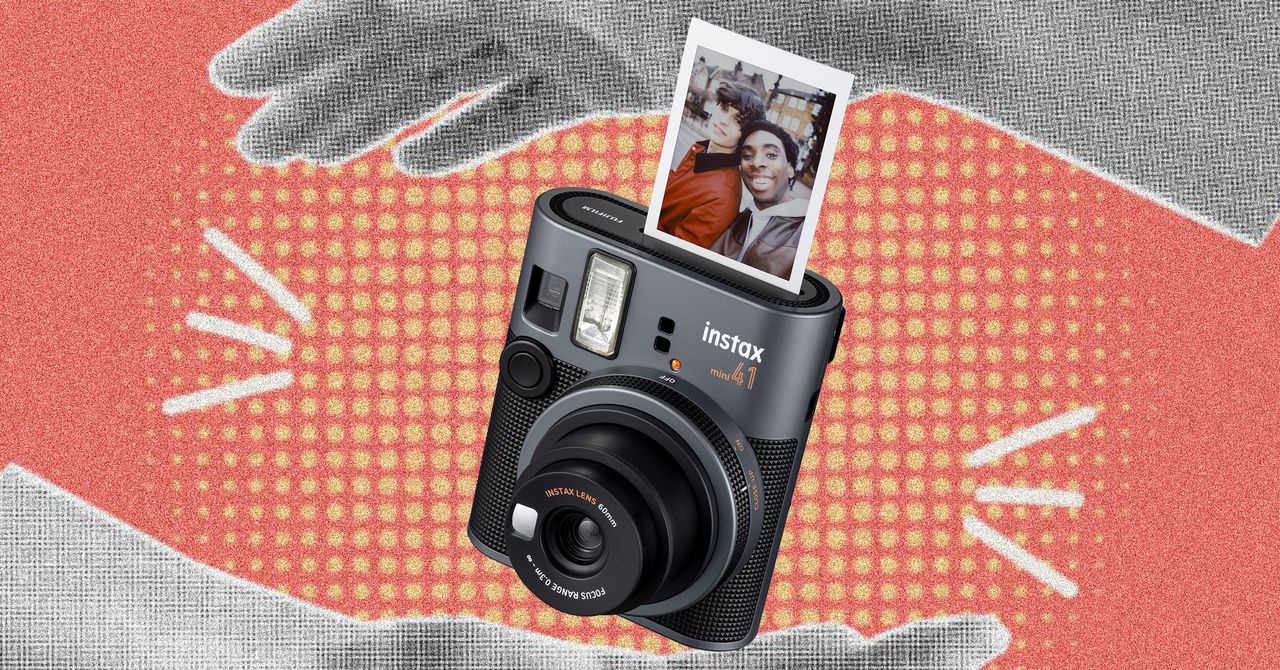
The Instax Mini 41, an affordable model with a nostalgic yet camera-esque style, joins the lineup. Despite its lack of manual controls coveted by photography aficionados, it offers fun simplicity unique to budget-friendly devices.
While the exterior might mislead one to think otherwise, the Mini 41 predominantly comprises plastic materials. The design closely resembles Fujifilm's previous craftworks. Handling it reveals its plastic nature, yet maintains the ease of use and automation synonymous with its predecessors. This might not be ideal for those desiring a more premium feel.
Priced at $129, the Mini 41 sits between the $80 Mini 12 and the $200 Mini 99. The extra cost over the Mini 12 largely goes towards its more authentic camera appearance rather than capabilities. Although, like the Mini 12, it carries fully automated features, such as a sometimes overpowering flash in bright settings, it discards the playful curves for a more traditional form factor.
Ergonomic Enhancements
The body and lens of the Mini 41 boast a synthetic, textured look that imitates more expensive knurling. Though not precisely as tactile as expected, the design aids functional ease.
Significant progress is evident in the lens system, which emulates adjustments seen in recent Instax models. Users can twist the lens to activate it and apply another twist to engage close-focus. This refinement is user-friendly, replacing older models’ less intuitive mechanisms.
Compact Creation
True to its name, the Mini 41 is neatly sized, standing at 4.8 by 4 inches and a mere 2.4 inches in depth, weighing in at 15.1 ounces with batteries and film prepped. While a tight fit for trousers, it slides effortlessly into a jacket pocket. Operating on AA batteries, it is hassle-free—keep spares handy, and power is one less worry.
Images pop out from the camera's top and manifest within roughly one and a half minutes. The autofocus operates competently, with switching between standard and close proximity focus offering some degree of creative control. A reminder here: failing to adjust from close-focus can blur images.
In theory, image output mirrors that of the Mini 12, but the Mini 41 managed to capture what might be the best shot I've achieved with an Instax. Was it mere chance or just the opportune meeting of light and lens? Either way, that image remains a personal favorite—adored by my dog too, alas. With evident tooth marks, perhaps a digital backup system could have preserved it, and reproduction might have been possible.
Characterized by a wallet-sized exposure area (1.8 by 2.4 inches), Instax Mini film suits straightforward portrait orientations effortlessly. This format is both cost-effective and nearly universal to all shooter habits.
As an economical choice with automatic operations cloaked in appealing simplicity, the Mini 41 makes an attractive purchase. Those tempted by the convenience of the Mini 12 but put off by its playful style might find satisfaction here.
The redesign, particularly the operational toggles, improves user experience significantly. However, those seeking versatility and creative freedom might explore models with expanded manual settings.
Score: 7 out of 10
The editors of WIRED carefully select all featured products. We may benefit through retailer partnerships or purchases linked in this article.
Leave a Reply