


Senior Americans Reevaluating Retirement Plans Amid Economic Challenges
Sharon Tagle believed she had set up her finances well before retiring seven years back. However, she found herself re-entering the workforce lately.
In December, Sharon, 68, embarked on a new role at Home Depot, working 20 hours weekly as a cashier, earning $15 per hour. Her return was driven by rising inflation and a problematic property sale. She plans to keep the position for several months, or longer if necessary for financial stability.
"I regret leaving my previous position so soon, as I was simply overwhelmed and uninterested in continuing," confessed Sharon, residing in Tampa, Florida. "I lacked the-needed frugality. We're still enjoying ourselves, albeit less frequently."
Transitioning from a career as a personal injury claims adjuster, she retired with savings of approximately $250,000. Combining their Social Security, Sharon and her husband receive roughly $3,400 a month. Although they aimed to sell their Florida home two years ago and relocate to a state with reduced living expenses, securing a buyer was unsuccessful.
Sharon joins the league of numerous elderly Americans who recently informed Business Insider of their decisions to maintain employment or return to work due to financial unpredictability and insecurity about future prosperity. Many retirees express unease about Social Security's and Medicaid's future, particularly with governmental expenditure reductions looming. Concerns also persist regarding the stability of retirement funds and investments amid fluctuating trade policy impacts on the stock market.
Despite demand, getting back into the job market isn't an option for everyone approaching their golden years. Geoffrey Sanzenbacher, an expert from the Center for Retirement Research at Boston College, highlights that older individuals, especially those in physically demanding jobs, often find it challenging to return to work due to limited capabilities. The absence of employer-sponsored retirement plans, like 401(k)s, compounds this difficulty for many.
Retirement Uncertainties: Health and Financial Concerns
In early April, the House passed a Republican budget proposal cutting $880 billion from key initiatives, including Medicaid, over the next decade. The final proposals are under consideration, with specifics pending.
Though Trump asserted there would be no meddling with Social Security or Medicare, the Social Security Administration has proposed workforce reductions, potentially delaying services. Ex-SSA Commissioner Martin O'Malley and internal staff warned BI these changes could disrupt benefit distribution.
While debates among economists and investors about an impending recession continue, possibilities of an economic downturn have pushed some elderly individuals to consider returning to work.
Seizing New Opportunities Despite Challenges
Securing an ideal job can be particularly arduous for many senior citizens. Financial therapist Amanda Clayman points out that seniors often face rejection from employers, sometimes due to ageism. She advises staying open to various employment types because any earnings can be advantageous.
"The new goal might not be landing the perfect job," Clayman suggested, encouraging more seasoned job seekers to consider temporary or part-time roles, even if they don’t appeal initially.
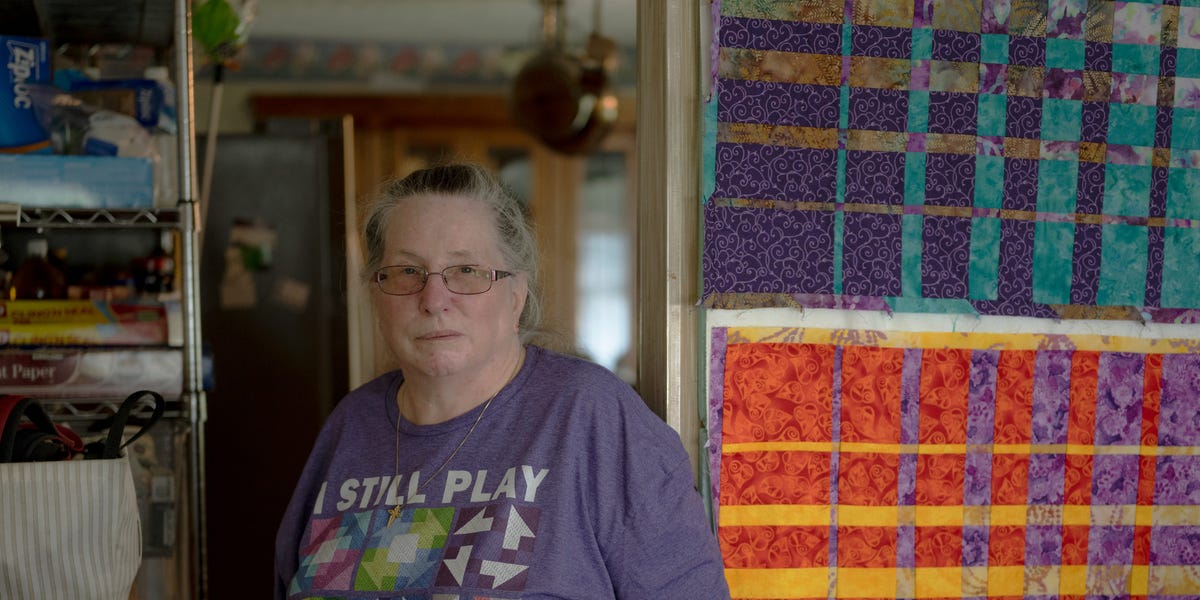
Diann Witherspoon, aged 72, has begun planning the revival of her business in fiber art and quilting, inspired by recent economic uncertainties.
Starting Anew: Small Businesses and Teaching Ventures
Diann has lived paycheck to paycheck across her career in Ohio, balancing two special needs children’s care with demanding jobs in accounting and property management while pursuing her passion for sewing. These duties, combined with subsequent surgeries, limited her employment options.
After she was laid off as she returned post-surgery in 2017 and following her husband's passing from lung cancer, Diann closed her quilting venture in late 2022 for deeper introspection and recovery, despite ongoing back issues and surgeries.
Relying on $467 from her husband's pension and $2,137 in Social Security, the essential expenditures, like her $1,700 mortgage, consume most of her monthly income. Her son, sharing her home, contributes to the household expenses.
To financially stabilize, Diann aspires to craft novel designs to market online and professional tutorials. Her target is modest monthly sales generating $2,000 to $5,000, intentionally keeping operations manageable without needing workforce expansion.
"For the first time in my 72 years here, I'm truly frightened," Diann reflected, emphasizing her desire for self-sufficiency.
Seeking Employment: The Hurdles for Older Individuals
Moira MacLean, 69, was a social assistance case manager before opting for early retirement 2.5 years ago. Now residing in a senior community, she had intended to resume work but faced corporate resistance to part-time arrangements due to fatigue.
Balancing dwindling savings with $2,280 in monthly Social Security, Moira has rejoined the job-searching ranks without success to date, recognizing her age as a significant barrier.
An attempt in the Amazon marketplace selling household items didn't succeed, instead resulting in financial strain.
"Investing elsewhere isn't feasible," Moira revealed concerning her constrained approach to future planning. "I'm too close to financial instability to risk it."
Pam Hovland, now 70, shares similar job-seeking anxieties, with the threat of economic recession amplifying her urgency.
"Economic downturn possibilities are quite alarming," Pam acknowledged, aiming to secure employment before potential hardships emerge.
Forced into retirement prematurely by a critical health event, Pam transitioned from disability benefits to $1,099 monthly Social Security payments by 2020.
2022 brought increased difficulty managing expenses, even affecting her ability to purchase thoughtful gifts for family. Reduced rent assistance provides some relief, although she remains jobless, striving for customer service or fast-food positions.
"My return to work is crucial," she admitted, crediting inadequate savings during disability for her financial plight.
Leave a Reply