


Fluctuating Stock Market as Relief Rally Dims Amid Trade Concerns
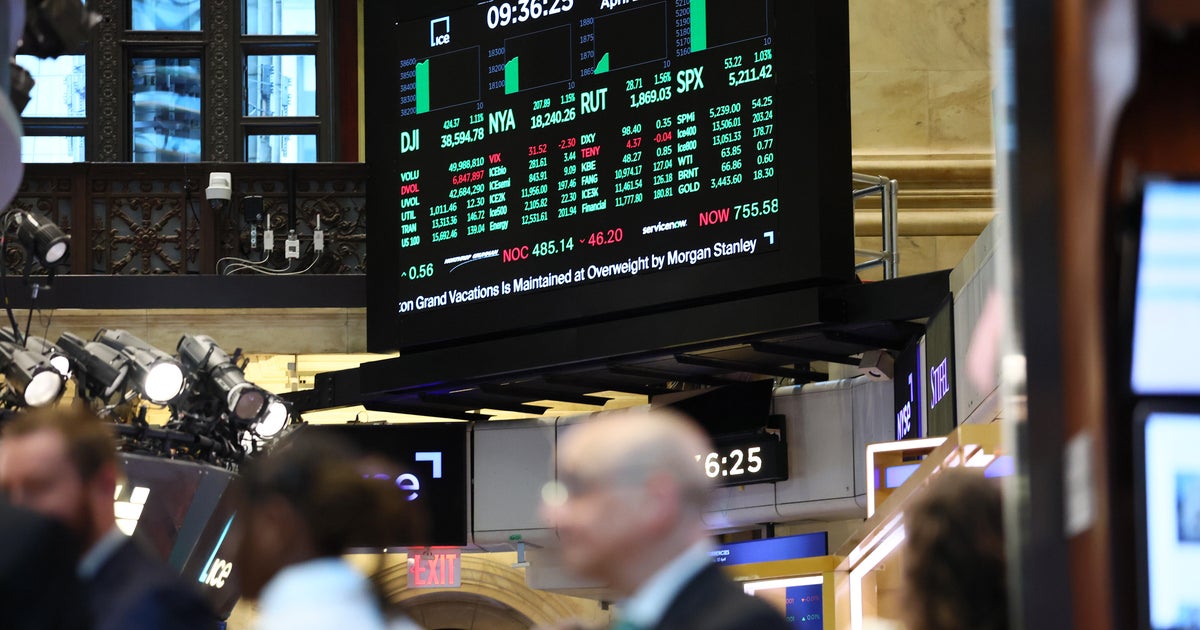
In a volatile Friday trading session, U.S. stocks exhibited instability, suggesting the halt of a brief three-day upswing spurred by optimism for reduced trade tensions.
During the afternoon, the Dow Jones Industrial Average experienced a slight decline of 76 points, or about 0.2%, settling at 40,017. Conversely, the S&P 500 saw a modest increase of 24 points, or 0.4%, reaching 5,509. Meanwhile, the Nasdaq Composite showed a stronger performance with a 0.9% rise, aided by advances in major technology companies.
Recent attempts by President Trump to soften his approach towards trade issues have somewhat calmed investor concerns, initiating a temporary three-day market rally after Monday's turbulent trading. Paul Ashworth from Capital Economics mentioned in a note on Friday that adverse market movements significantly influenced the president to reassess his hefty tariffs on Chinese imports, which currently stand at 145%.
Financial markets are also reacting to confusing signals from the Trump administration regarding potential trade agreements.
Although President Trump suggested a trade agreement with China might be on the horizon, Chinese authorities have denied ongoing negotiations. However, an encouraging sign emerged with reports of China easing its 125% retaliatory tariffs on U.S. semiconductors, potentially indicating a shift in stance.
Corporate Leaders Address Trade Uncertainty
This week, numerous corporations expressed concerns over the unpredictable environment brought on by the trade disputes initiated by Trump, complicating their ability to project future financial performance.
Intel's stocks were negatively impacted after the company disclosed 'heightened uncertainty' affecting their industry. Their forecast did not meet analysts' revenue and profit expectations, leading to a 6.8% drop in stock value, despite outperforming expectations earlier this year.
Eastman Chemical suffered a 5.9% decrease after predicting lower profits for the upcoming spring quarter, not meeting analysts' forecasts. CEO Mark Costa noted the increasing 'macroeconomic uncertainty' and unclear demand due to extensive tariffs as major challenges.
Skechers U.S.A. withdrew its financial guidance for the year, citing 'macroeconomic uncertainty from global trade policies', despite reporting a record revenue quarter of $2.41 billion. This announcement led to a 4.3% decline in their stock value.
The State of Trade Agreements
In recent weeks, President Trump and his team have engaged in dialogues with various nations to negotiate bilateral trade agreements. This initiative follows a temporary suspension of 'reciprocal tariffs' for 90 days, which offered some relief to markets and consumers. UBS analysts see this pause as a sign that the president is aware of the negative implications tariffs have on market dynamics.
David Lefkowitz from UBS Global Wealth Management highlighted that while equity markets may continue to experience volatility, there might be better investment opportunities now that Trump acknowledges risks tied to tariff policies. However, the tariff-induced downturn is expected to suppress corporate profit growth before potentially recovering next year, as businesses adjust and the Federal Reserve considers rate cuts.
The Wall Street Journal reported potential reductions of tariffs on China to between 50 and 65%. Yet, even if tariffs are reduced through trade discussions, analysts warn that lingering tariffs could still hinder economic progress.
Adam Crisafulli from Vital Knowledge observed that although the initiation of tariffs seemed like a peak concern this April, tariffs still impose a significant burden on companies and the economy.
Despite the stock market's slowdown on Friday, there were positive indicators such as a dip in 10-year Treasury yields and a strengthening U.S. dollar, which recovered throughout the week and gained value against the euro and other currencies.
Leave a Reply