


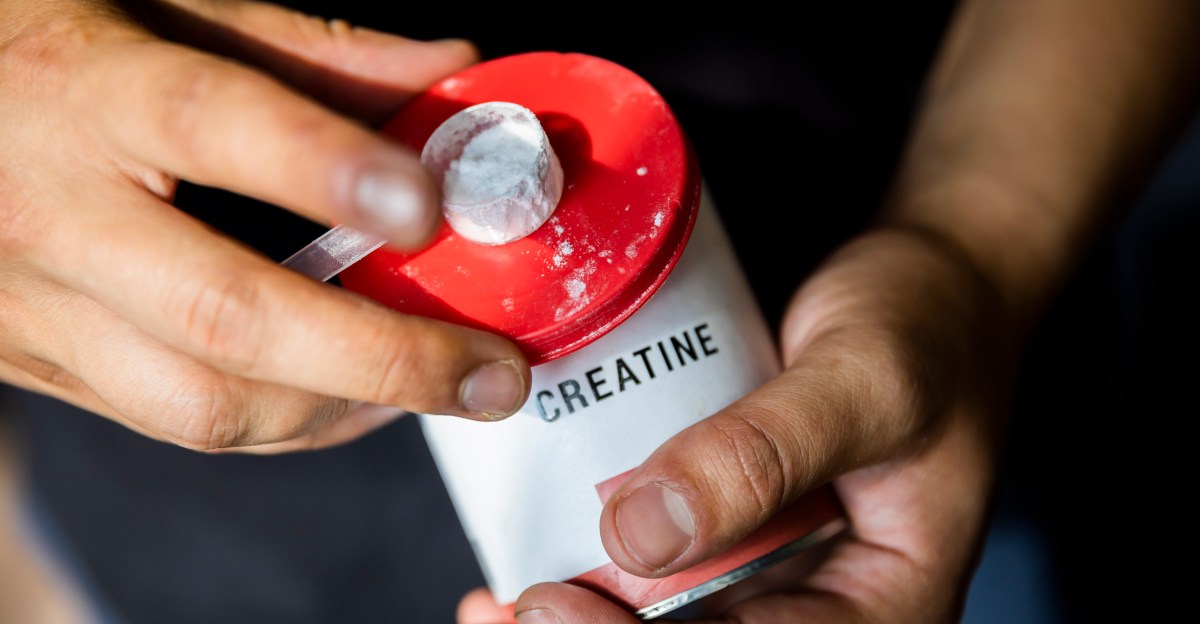
Could creatine, a budget-friendly workout supplement, offer new hope for depression treatment?
Cultivating both strength and serenity.
Known as a staple in the fitness community, creatine is a compound present in every human body. Research on creatine dates back to the 1830s, and its role in muscle energy production has been undisputed for over a century.
In the 1990s, creatine became a widely popular supplement following Swedish research in 1992, which proved its benefits for enhancing endurance and recovery during short bouts of exercise. This led to it becoming a household name in both pharmacies and gyms. Its attractiveness wasn't only in its efficacy but also in its affordability — a convenient supplement for anyone looking to bolster their physical performance. Today, it's estimated that 25% of adults have tried creatine, with an impressive $400 million spent on it annually in the United States.
A 2018 analysis confirmed what many athletes already knew: creatine is an unparalleled dietary aid for boosting exercise capacity and muscle growth during high-intensity workouts. Despite extensive research, no dangerous side effects have come to light.
Surprisingly, creatine's potential application extends beyond enhancing physical prowess to possibly addressing mental health concerns like depression.
In the early 2000s, studies revealed that creatine contributes significantly to brain metabolism as well. Since it aids the brain's energy conversion processes, this sparked a theory that inefficient energy metabolism might underlie various mental health issues, such as depression. Consequently, increasing creatine intake could potentially mitigate these mental health challenges.
The unfolding story from India: Creatine's new frontier?
In a recent small-scale study in India, researchers explored creatine's effectiveness in treating depression without the aid of antidepressant drugs. Though preliminary, these findings could be critical as global mental health efforts seek cost-effective and accessible solutions.
The research, initiated in Dehradun, involved 100 participants and was spearheaded by Dr. Nima Norbu Sherpa from Glasgow Caledonian University. The study was financed by India's Universal Human Rights and Social Development Association.
Dehradun serves as an ideal study location, offering a unique setting due to its lower socioeconomic status and scarcity of mental health professionals. Creatine offers potential because it is both accessible and simple for individuals to self-administer. This environment offered an opportunity to test creatine's potential benefits in mental wellness without the use of antidepressants, according to Riccardo De Giorgi, a co-author from Oxford University.
The trial's participants engaged in cognitive behavioral therapy while one section supplemented their treatment with daily creatine doses, unlike the placebo group.
Following eight weeks, both groups exhibited improvements due to the therapy. However, those on creatine showed significantly better progress.
A standard depression scale was used for assessing participants' progress. Initially, both groups averaged around 18, indicating moderate to severe depression. At the end, the creatine group averaged a score of 5, while the placebo group scored 11. Furthermore, remission was reported in 11 participants in the creatine group compared to 5 in the placebo group.
Although the dropout rate was considerable, which is common in depression treatments, the mild side effects reported among creatine users did not deter the study's promising potential.
Despite these intriguing results, De Giorgi stressed the importance of careful interpretation, noting that past overstatements in similar fields have hindered scientific progress.
Peter Attia, a health expert not involved in this study, believes that if further validated, creatine could be seamlessly integrated into individuals' supplements without major lifestyle changes, especially considering its wide availability.
Meanwhile, he urges caution, emphasizing the necessity for additional evidence before cementing creatine's role in depression treatment strategies.
As we continue to face a global mental health crisis, finding diverse and accessible treatments is crucial. If creatine proves to be a viable alternative, it could offer a remarkably affordable option within the broader landscape of mental health care.
Leave a Reply