


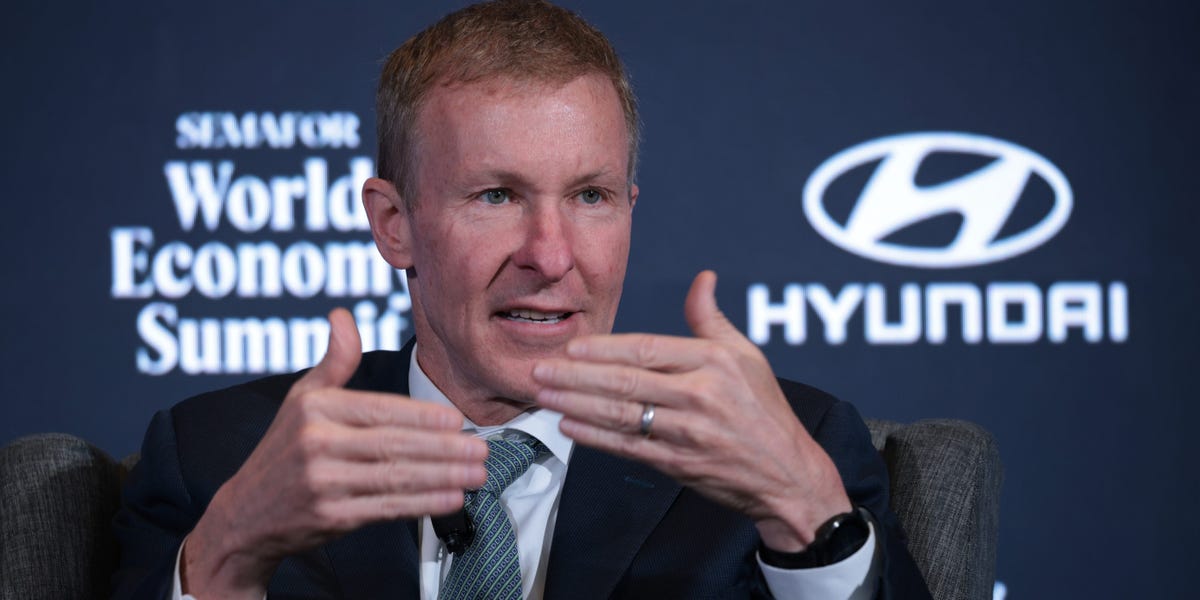
United CEO likens Trump's Tariff Strategy to a Chess Match
The leader of United Airlines has thrown his support behind Donald Trump's initiative on tariffs, even as it creates unease within the travel industry.
"Let's all take a moment to breathe," Scott Kirby advised during his appearance at the Semafor World Economy Summit last Thursday. "This is merely the opening move in a long game of chess, and many more moves are anticipated."
Kirby continued, "While one could easily debate the strategies involved, the President is genuinely striving to improve prospects for middle-class Americans by fostering quality career opportunities."
Highlighting the potential of these tariffs, Kirby mentioned they might generate employment opportunities akin to those at United. He noted that employees at United can enjoy long-term careers, achieving seniority that leads to lucrative, six-figure salaries.
According to Treasury Secretary Scott Bessent, these tariffs play a crucial role in a broader trade plan aimed at enhancing the manufacturing job landscape in the United States.
However, one consequence of the tariff imposition might be an uptick in inflation and a devaluation of the dollar, which would reduce consumer spending power.
Unpredictable Travel Demand Poses Challenges for Airlines
In light of the tariff announcements, airline stocks have experienced significant volatility. Many view travel as an expendable expense, contributing to this instability.
Kirby reflected on past challenges, noting, "We've survived periods where public sentiment was not favorable."
Despite this, he observed that most customers still intend to travel during the summer, though some cautious consumers might choose to scale back.
Recently, airlines have issued warnings about softening travel demand and have signaled intentions to reduce flight offerings in their latest first-quarter financial reports.
In its first-quarter report, United made an unusual move by presenting two different profit forecasts for the year, acknowledging the unpredictable nature of the economy.
Their prior January projection for adjusted earnings per share remains at $11.50 to $13.50. Nonetheless, they cautioned that a recession could lower this figure to as little as $7 per share.
American Airlines has similarly reacted to the economic uncertainties by retracting its yearly financial guidance.
Robert Isom, CEO of American Airlines, shared with CNBC, "After a robust fourth quarter and satisfactory performance in January, domestic leisure travel dropped significantly entering February."
Meanwhile, Delta Air Lines has shelved its plans for a four percent capacity increase, as CEO Ed Bastian remarked that "growth is largely at a standstill."
Despite the turbulent outlook, Kirby's positive perspective might reassure investors that the situation for airlines might not be as dire, particularly given United's status as the largest airline worldwide by fleet size.
Moreover, United is Boeing's largest client, and due to the tariffs, Boeing faces challenges as Chinese airlines return planes. Originally set to deliver 50 jets to China this year, Boeing now seeks other markets for these aircraft.
Leave a Reply