


Russia Acknowledges Readiness for Agreement on Ukraine, Needs Further Refinements
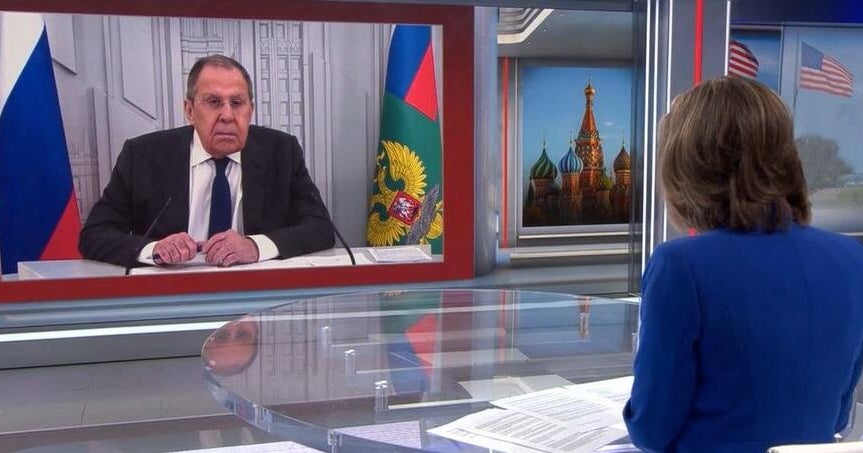
On Thursday, Russian Foreign Minister Sergey Lavrov articulated the Kremlin's openness to striking a deal with the United States concerning the Ukraine conflict. However, he indicated that certain aspects still require meticulous adjustments.
In an interview with 'Face the Nation' on Thursday, Lavrov affirmed, "The President of the United States and I concur that our progress is on the right track."
These statements were shared after a deadly event on Thursday in the Ukrainian capital, marking one of the most lethal attacks in recent months, coinciding with President Trump’s push for a resolution to the war.
Targeting Civic and Military Sites
When questioned about civilian casualties amidst Ukraine's March ceasefire proposal, Lavrov asserted a strategic focus, suggesting that only military objectives or dual-purpose sites for military uses were being targeted.
Lavrov advised that if military usage was documented for any target, it became fair game for the defense officials on the ground to engage.
Positive Indications and Leadership Insights
Lavrov noted multiple positive indicators in talks with Ukraine, singling out former President Trump as a global leader who acknowledges the fundamental issues at play.
Concurrently, Trump took to Truth Social, criticizing the Russian strikes on Kyiv and imploring President Putin to cease further action, condemning the timing amid cessation discussions.
Historical Context and Current Dynamics
Russia's full-scale invasion commenced in 2022, with initial troop deployments in Ukraine's east dating back to 2014. Russia claims provocation by Ukraine and Western forces, a narrative strongly contested by the United States and Europe.
Despite Trump’s assertion of Russia's peace intentions, his critique of Ukrainian President Zelenskyy endures, even while Ukraine accepted a ceasefire proposal. On the campaign trail, Trump committed to swiftly brokering peace, yet nearing 100 days in, tangible results remain elusive.
Diplomatic Pressures and Global Involvement
Vice President JD Vance emphasized the closing window for negotiation, as diplomats from leading nations convened in London. He highlighted an explicit U.S. proposal demanding either party's acceptance or consequent withdrawal.
Amid international concern about U.S. focus potentially coercing Ukraine rather than Russia, dialogues continue as Russian-held territories constitute about 18% of Ukraine, reported by the Institute for the Study of War.
Challenges and Diplomatic Moves
Trump chastised Zelenskyy for complicating peace processes by dismissing Crimea’s recognition under Russian control, despite continued dialogues under his term. He asserted no expectation for Ukraine’s acknowledgement, yet pointed out Crimea’s prolonged detachment.
While reporting on potential pressures on Russia, Trump ambiguously referenced their nature. Highlighting an absence of new sanctions, he mentioned Putin’s restraint from full territorial claims as an informal concession.
U.S. Policy and Prospects for Peace
Zelenskyy reiterated the longstanding U.S. policy on social media, emphasizing nonrecognition of Russian territorial conquests under international law, a stance reflecting resistance against policy shifts under Trump.
During a bilateral meeting in the Oval Office, Secretary of State Marco Rubio expressed optimism about peace, recounting promising diplomatic engagements. He stressed the necessity for consensus to cease aggression, prompted by recent missile attacks.
Leave a Reply