


Europe's New Approach: Investing in Ukraine's Defense Production
In a strategic shift, European nations are now focusing on enhancing Ukraine's ability to independently produce weapons rather than continuing to supply their own diminishing reserves of armaments to the country.
This past March, it was announced by the European Union that nearly €1 billion from a €2 billion aid package, sourced from Russian assets that have been frozen, will be directed specifically towards increasing Ukraine's capability to manufacture artillery. This marks the largest initiative of its type to date and has the potential to create significant effects across the region.
Experts speaking to Business Insider noted that channeling financial resources to expand Ukraine’s defense industry serves the dual purpose of reducing its reliance on international military support while simultaneously bolstering Europe's defense capabilities.
With Europe’s lengthy period of peace now seemingly at an end, a new urgency arises to bolster defenses amid decreasing American backing and fresh threats from Russia under Putin's leadership.
Although enthusiastic, Europe's defense sector faces challenges in replenishing military stockpiles, concurrently struggling to provide Ukraine with necessary ordinances to counter Russia effectively.
Jacob Funk Kirkegaard, an authority at the Bruegel think tank and at the Peterson Institute for International Economics, sees Ukraine’s developing defense industry as a viable way forward. He notes that financial support from wealthier Western European countries to capitalize on Ukraine’s expanding production facilities makes financial and economic sense.
Highlighting Ukraine's cost-effectiveness for mass weapon production compared to Western Europe, Kirkegaard also points out that its defense manufacturing sector is both growing and full of innovation. Emphasizing production in Ukraine itself presents a mutually beneficial scenario—costs are reduced, a key ally is strengthened, and ongoing military testing and improvements are facilitated on active fronts.
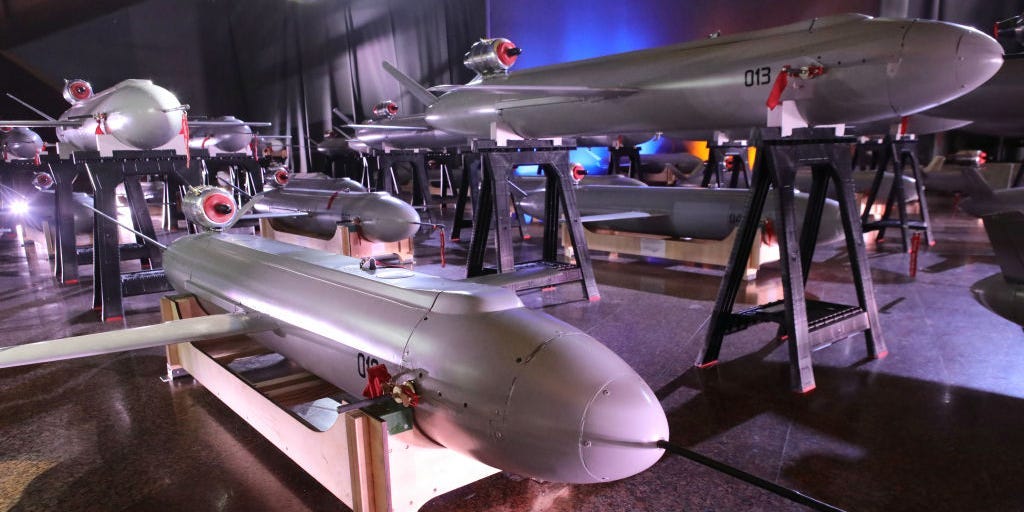
Initially, at the onset of Russia's broader invasion, Ukraine was markedly reliant on Western allies for its military needs, creating only a minor portion of its weapons. However, reviving operations in Soviet-era weapon factories, Ukraine now manufactures around 40% of necessary military assets domestically.
Furthermore, Ukraine has ascended as a global leader in crafting cost-effective UAV drones, now integral in modern warfare. Defense Minister Rustem Umerov stated that Ukraine has become the preeminent producer of both tactical and strategic level drones globally.
European and Ukrainian Defense Industry Alliance
The European arms sector's pace in increasing production has lagged behind demand, impeded by regulatory hurdles and a deficiency in strategic coordination, as UK's Royal United Services Institute analysts observed.
Jacob Parakilas, from RAND Europe, points out that upscaling national defense industries is a lengthy process, whereas Ukraine's more mobilized industry can benefit swiftly from targeted investments and the transfer of specialized knowledge.
Closer collaboration between European countries and Ukraine could magnify production outcomes. Parakilas envisions simultaneous advancements that can meld Ukrainian practical expertise with European financial backing to achieve consolidated gains.
Investment and Integration: A Unified Defense Future
Several key European defense enterprises, including Germany's Rheinmetall, the UK's BAE Systems, and the joint Franco-German KDNS, have commenced manufacturing in Ukraine, producing critical military hardware like armored vehicles.
Additionally, companies such as the French Thales have pursued joint ventures with Ukrainian firms, enhancing cross-national cooperation in weapons manufacturing. Collaborative efforts between Ukraine and NATO in producing military munitions are steadily increasing.
Ukrainian media reports indicate that since 2022, state arms manufacturer Ukroboronprom has partnered with a NATO country to produce ammunition to alliance standards, promoting deeper integration of NATO norms within Ukrainian military frameworks.
Ukraine has partnered with Poland for equipment production since 2023, further embedding regional cooperative strategies in defense manufacturing.
This evolving trend of financial aid is set to pick up momentum by 2025, especially as US military focus pivots from Europe, potentially catalyzing a rise in defense spending throughout Europe, according to Serhii Kuzan of the Ukrainian Security and Cooperation Center.
Ukraine could extend its domestic production significantly beyond 40% with continued European support, potentially developing more complex weaponry and technologies currently dependent on allies. However, this could invite greater risks from Russian hostilities, necessitating cautious and strategic investment for sustainable growth.
Even under these challenges, a future where Western European and Ukrainian defense industries are thoroughly interwoven is plausible.
Ultimately, according to Kirkegaard, distinguishing between European Union and Ukrainian defense sectors might eventually become obsolete, merging into a singular robust entity.
Leave a Reply