


Exploring the Quest for a Perfect Face
Each time I travel to South Korea, the birthplace of my parents, which they left six years before I was born, I find myself battling deep insecurities about my appearance.
This struggle began when I was 14. During my first visit, my family suggested double eyelid surgery as a graduation gift from middle school—a common reward for high-achieving young Koreans in a land renowned as the global hub of cosmetic procedures, with 200,000 such surgeries annually.
Since childhood, I have been consumed by my appearance. In New Jersey, my Korean American friends and I marveled at the beauty of Korean actresses from our local video collection—Song Hye Kyo, Jun Ji Hyun, Choi Ji Woo—and attempted to replicate their defined eyelids. We fashioned crescent shapes from scotch tape, adhering them to our eyes, while risking redness with ballpoint pens to draw folds.
Despite my family's offer, I refused at 14, holding onto my natural features with pride, believing that altering one’s body was merely a patriarchal imposition.
But returning to South Korea at 31 marked a turning point. Years of exposure to flawless Korean celebrities might have worn me down. Turning 30 perhaps shattered my rigid resolve. Vanity, though often considered trivial, cannot be dismissed in today’s world. In South Korea, a significant portion of recruitment decisions once hinged on looks—a practice curbed in 2017 when candidate photos were banned in job applications. Over the years, cosmetic procedures have shed their taboo status and become more prevalent and affordable.
Not long after I arrived in Seoul, I delved into skincare. At Olive Young, akin to Ulta in the U.S., a sale was underway. The salesperson, clad in lab attire and exuding dermatological authority, advised me on products for my winter-parched skin. Soon, I was set to spend close to $200 on a regimen of cleansing, essences, serums, and hydrating creams. When I mentioned living in America, she insisted on double the purchase, and I acquiesced.
I also pondered low-cost beauty treatments: eyelash lifting for $75 to refresh my drooping lashes, Botox for $200 to smooth newly emerging wrinkles, and hyaluronic acid shots priced at $380 to rehydrate my skin. My family and friends encouraged these temporary, budget-friendly procedures, especially given their cost efficiency compared to American prices.
Ultimately, I booked a consultation at one of Seoul’s many plastic surgery clinics, concentrated in the famed Gangnam district, home to 457 clinics within a small expanse. Easily located through advertisements, the clinic seemed as iconic as a landmark.
A Journey to Self-Reassessment
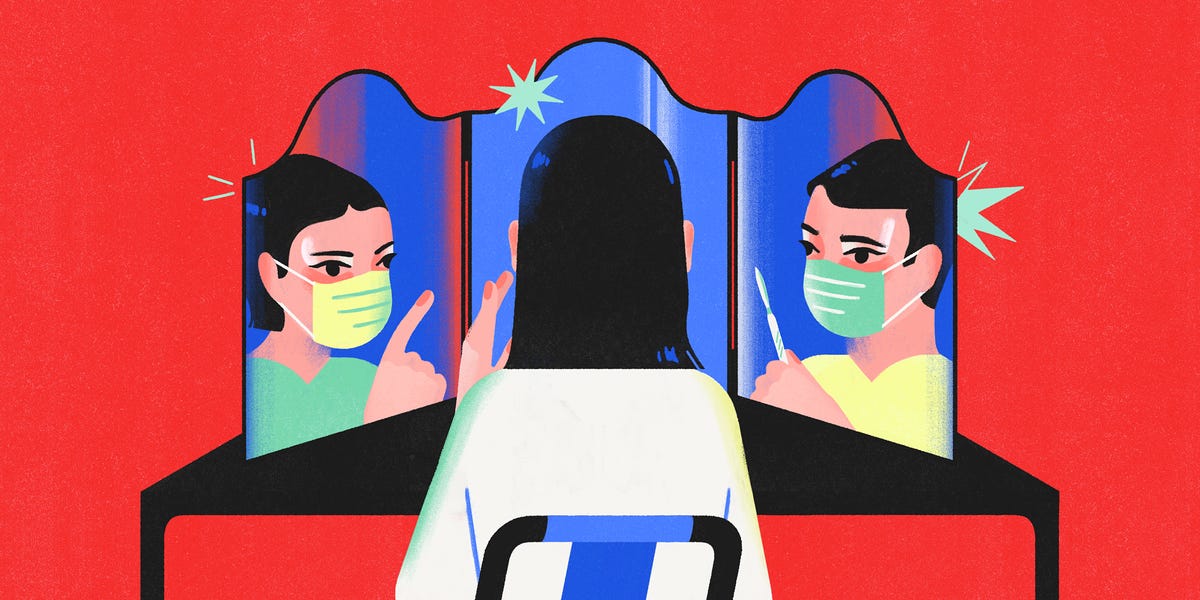
Entering the clinic, I was aware of dissatisfaction with my flat nose but left burdened by fresh insecurities about my entire face.
The clinic's entrance displayed a digital replica of the Girl with a Pearl Earring who repeatedly winked at visitors. Inside, a woman emerged, likely in her 70s, her swollen face heavily bandaged from recent surgeries. The sight of her made me question the agony one might endure for beauty and ponder why such imagery was displayed for patients contemplating their own procedures.
The atmosphere reflected that plastic surgeries are commonplace; in 2021, South Korea led in such operations, performing 8.9 per 1,000 people compared to 5.9 in the U.S.
I navigated the process with Serena, a consultation manager proficient in English, who guided me through assessments involving photos and X-rays. She, alongside a surgeon, critiqued my facial features: eyes deemed too small and sleepy, a nose too flat and stubby, a chin labeled too stout, and a jawline requiring definition.
Stylish yet subtle inquiries shaped these evaluations, crafting a narrative I couldn't oppose. Despite claiming indifference toward my chin, Serena pointed to images showcasing what she called its unfortunate shortness, implying a need for correction, with only my nostrils earning faint praise.
The Ideal Beauty
This encounter highlighted prevalent beauty ideals. While Western norms emphasize sun-kissed complexions and plump features, Seoul’s vision, known as the 'Pan-Asian ideal,' is woven into K-pop and K-drama culture and keenly pursued.
Rather than static definitions, the ideal of Korean beauty evolves, with archetypes often shifting alongside celebrities in vogue. Influencers double as aesthetic analysts, unpacking celebrity transformations without solid proof. At present, Jennie from the girl group Blackpink exemplifies desirable features.
Yet adhering to these ideals is tiring. Being caught between contentment at celebrities resorting to surgery and the realization of unattainable standards led to mixed emotions. This societal framework acts as a yardstick measuring against not just others, but ourselves.
A Cultural and Medical Phenomenon
The double eyelid surgery, integral to achieving 'K-face,' traces its roots to efforts by American military doctors during the Korean War to 'westernize' Koreans seeking a new life in the United States.
Nowadays, Korea exports its beauty ideals as cultural currency. With 606,000 international visitors in 2023, a notable 17% sought surgery, underscoring an industry spurred not by chance, but planned governmental economic strategies hinging on medical tourism.
Though effective, this widespread medical tourism places pressure on Korea’s healthcare system, creating disparities between private beauty practice and necessary medical care, triggering strikes among healthcare professionals.
Reflections and Resolutions
The consultancy session stirred thoughts. My focal worry, my nose, met with advice on much broader changes. Serena suggested proportions rather than isolated modifications, implying sequential adjustments of cheeks and chin to harmonize any nasal enhancements. The idea of becoming a new person loomed, yet my realization was about preserving ties to family, reflected in inherited features, outweighing homogenized beauty.
The allure of resembling popular figures risks losing personal identity. My family connections, especially in the light of losing loved ones, compel me to embrace my origins over altering them for fleeting trends.
Ultimately, I chose to retain my appearance, amidst thoughts of conformity and authenticity battling within. The world of beauty remains an influential machine pulling at insecurities, yet standing firm in self-acceptance reaffirms one's unique beauty.
Final Thoughts
While my journey in search of understanding my own appearance led me back to personal roots, it serves as a reminder of the powerful tides of beauty standards and the necessity of self-acceptance amidst a world of changing ideals.
Leave a Reply