


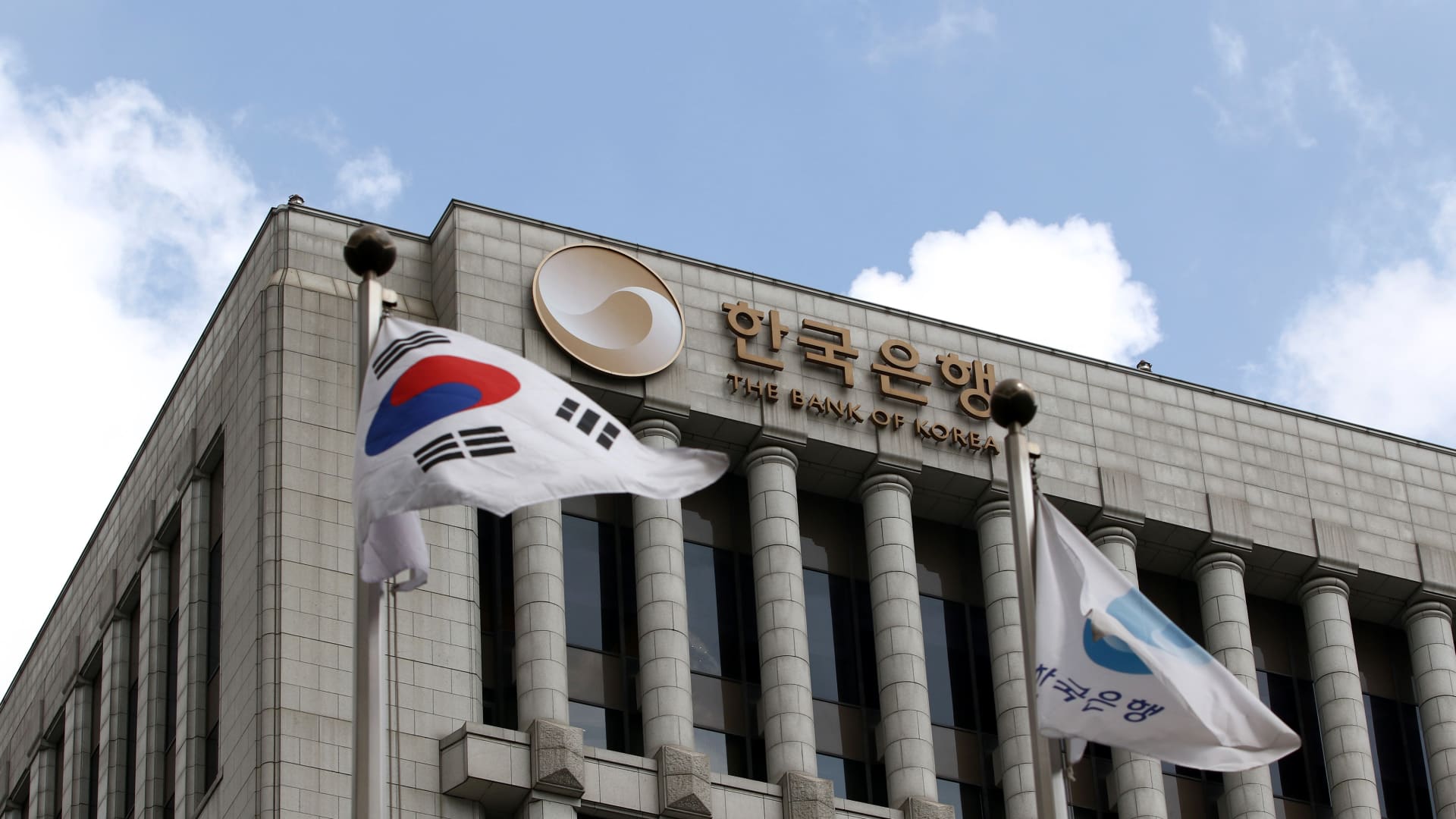
Trade Struggles Impact Global Dynamics, Warns South Korea's Central Bank
The implementation of tariffs by U.S. President Trump has not only posed challenges for South Korea but is also deemed detrimental on a global scale, emphasized Rhee Chang Yong, the Governor of the Bank of Korea.
Expressing concern, Rhee conveyed his wishes for a resolution to the ongoing trade conflicts as he believes they're universally harmful. His comments were made during the IMF-World Bank Spring Meetings.
The escalating trade tensions are creating economic obstacles for South Korea, significantly elevating the risks to its economic development, according to Rhee.
He mentioned that South Korea is vulnerable to direct repercussions from U.S. tariffs, as well as to the secondary impacts affecting global supply chains. This includes industries like semiconductor manufacturing in Vietnam, automotive and electronics production in Mexico, and battery production in Canada.
Rhee's insights came on the brink of new economic data, showing a contraction of 0.1% in South Korea's GDP for the first quarter compared to the previous year, a first since late 2020.
Coinciding with these developments, South Korean officials are set to engage in discussions with U.S. counterparts, where Acting President Han Duck-soo is optimistic about reaching a mutually beneficial agreement.
Although the timetable for these crucial trade discussions remains undecided, South Korea's Ministry of Trade, Industry, and Energy is preparing diligently.
The nation's economic performance may also be influenced by domestic political shifts. Rhee anticipates post-election stability following the presidential elections scheduled for June 3.
South Korea's political scene was tumultuous, marked by the impeachment proceedings against former President Yoon Suk Yeol and Prime Minister Han Duck-soo. These were resolved with the Constitutional Court's dismissal of Han's impeachment in March, leading to his reinstatement prior to April 4.
Recently, the Bank of Korea decided to keep its key interest rate steady at 2.75% during its April meeting, citing concerns about fluctuating exchange rates.
The situation intensified after President Trump's surprising announcements on April 3, sparking volatility in the South Korean won.
Regarding the absence of a proactive rate cut to stimulate economic growth, Rhee attributed their cautious approach to exchange rate vulnerabilities. The bank preferred to assess additional data before taking decisive action.
Rhee likened the current economic uncertainty to entering a tunnel—advising a slower pace until conditions become clearer.
Leave a Reply