


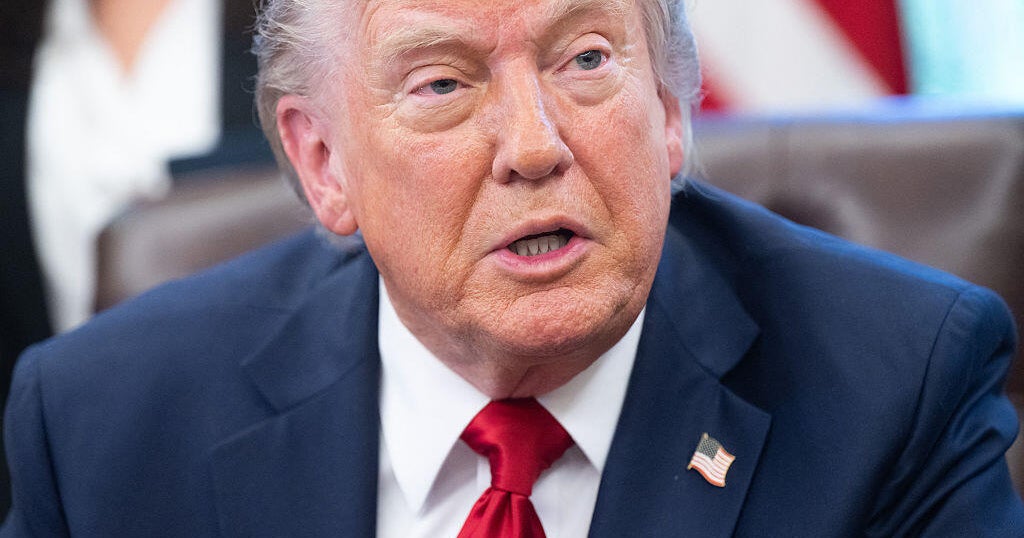
Twelve States Challenge Trump's Tariff Policy, Citing Economic Turmoil
AP Reports
On Wednesday, a coalition of twelve states filed a lawsuit against the Trump administration in the U.S. Court of International Trade located in New York. The group aims to halt the current tariff policy, labeling it as both illegal and damaging to the nation's economy.
The legal complaint argues that President Trump's tariff policy is driven by his personal inclinations instead of a legitimate application of legal authority.
The lawsuit disputes Trump's assertion that he can unilaterally implement tariffs under the International Emergency Economic Powers Act. It requests that the court declare these measures illegal and prevent government bodies and officials from enforcing them.
Efforts to reach the Department of Justice for their viewpoint were unsuccessful.
States participating in the lawsuit include Oregon, Arizona, Colorado, Connecticut, Delaware, Illinois, Maine, Minnesota, Nevada, New Mexico, New York, and Vermont.
Kris Mayes, Attorney General of Arizona, criticized Trump's tariff approach as 'irrational.'
She remarked that it is not just economically unsound but also unlawful.
Connecticut Attorney General William Tong declared, 'Trump's unlawful and disorderly tariffs act as a substantial tax burden on families in Connecticut and spell disaster for the state’s businesses and workforce.'
In a statement, Kush Desai, a White House representative, accused the Democratic state attorneys general of conducting a baseless investigation against President Trump. He asserted, 'The Trump Administration is steadfast in exerting its full legal power to tackle the pressing national issues, including illegal immigration and the surge of fentanyl across the border, along with the widening American trade deficit.'
According to the lawsuit, Congress is the only body authorized to levy tariffs, and the president can only resort to the International Emergency Economic Powers Act when there's a significant and atypical threat from abroad.
The legal filing states, 'By claiming the right to levy significant and variable tariffs on any imported goods he selects, for reasons he chooses to label as an emergency, the President has upended the constitutional hierarchy and has inflicted disorder on the U.S. economy.'
The previous week, California's Governor Gavin Newsom, a Democrat, filed a lawsuit in the Northern District of California's U.S. District Court opposing the tariff policy, emphasizing that as the nation’s largest importer, California might face financial losses in the billions.
In reaction to Newsom's legal action, White House spokesperson Kush Desai remarked, 'The Trump administration remains dedicated to confronting this national crisis, which is ravaging America’s industries and leaving our workers struggling, utilizing all available measures, including tariffs and negotiations.'
Leave a Reply