


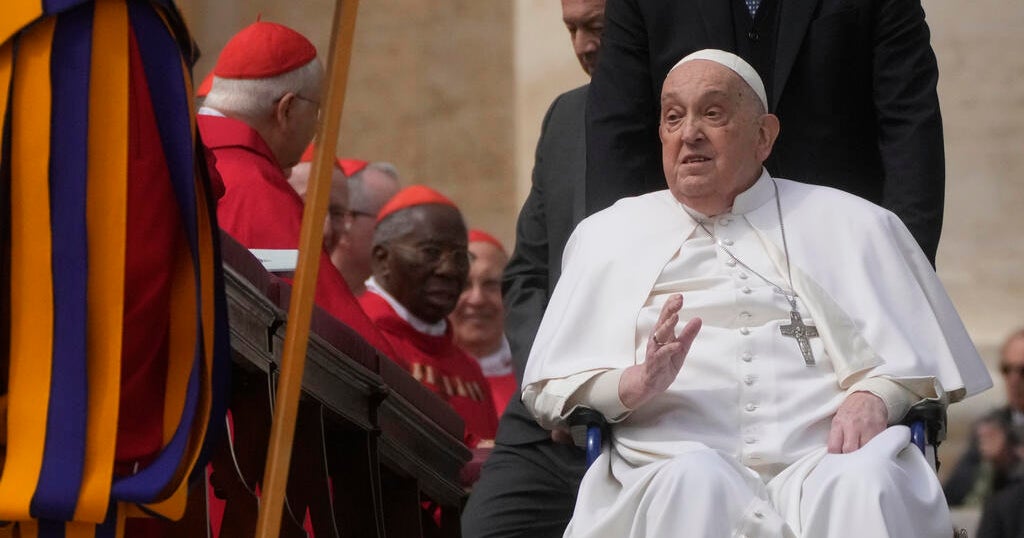
Reflecting on Pope Francis' Influence on the Catholic Church
Known as the 'Pope of the People,' Francis, who served as pontiff into his late years, aimed to bridge the gap between the Church and its followers. He envisioned a Church more attuned to the needs of the impoverished, often choosing to travel in modest vehicles and make public appearances in everyday settings.
Francis had a knack for capturing media attention, frequently providing impromptu interviews during his travels. His verbal spontaneity and open dialogue with journalists made his journeys a key interest for members of the press.
Throughout his excursions, he demonstrated a special energy when engaging with children and marginalized groups, revealing a genuine eagerness to connect with those residing on society's fringes.
Following a surprise public appearance on Easter, where he seemed invigorated, Francis passed away shortly thereafter, leaving the Vatican community and followers in a state of reflection.
We revisited his papacy's milestones and considered future scenarios for the Church with insights from Francis X. Rocca, a seasoned Vatican observer, amidst the backdrop of St. Peter’s Basilica.
Assessing Pope Francis' Legacy
Opinions on Francis' contributions vary widely. He made significant strides in female inclusion within the Vatican hierarchy—a shift met with mixed responses. His tenure often polarized traditionalists by challenging long-held beliefs and fostering open debate on formerly untouchable issues.
Francis' nontraditional approach ruffled conservative feathers from the outset of his papacy. Deviating from established customs, like foregoing the red papal cape, he signaled a penchant for reform. His progressive measures often clashed with conservativism, notably in regions like Africa.
The Polarizing Figure
Throughout the U.S., Pope Francis faced sharp criticism from conservative quarters of the Catholic bishops, who often opposed his de-emphasizing of traditional issues like abortion in favor of social justice matters. Despite attempts to shift focus, his ideals struck a discordant note among entrenched conservatives.
As a leader, Francis exuded an approachable charm, reachable by everyone. Unlike his predecessors, he had a more casual approach, resonating deeply with the public.
Addressing Complex Challenges
Pope Francis tackled pressing matters like clerical sexual abuse, administrative reform, and economic reform within the Church. His handling of misconduct cases, however, sometimes drew criticism for being insufficiently stringent.
His path-breaking statement, 'Who am I to judge?' on LGBTQ matters, symbolized a shift in tone rather than doctrine, yet invited diverse interpretations and sparked wider discussions about Church policies.
His diplomatic engagements, notably with China, and willingness to share episcopal authority, were particularly controversial decisions, unsettling some while striving for broader dialogue.
Impressions of Papal Simplicity
Pope Francis altered perceptions of the papacy by living simply, foregoing traditional papal accommodations for a more modest residence, and maintaining humility in his everyday actions. These choices resonated deeply, symbolizing a break from tradition.
Looking to the Future
As the Church contemplates future leadership, questions abound. Whether the College of Cardinals will continue a liberal trajectory underlined by Francis' appointments or revert to conservatism remains a matter of great speculation.
The enduring impact of Francis' papacy may hinge on his successor’s policies, determining whether his reforms symbolize lasting change or a transient phase in Church history.
Leave a Reply