


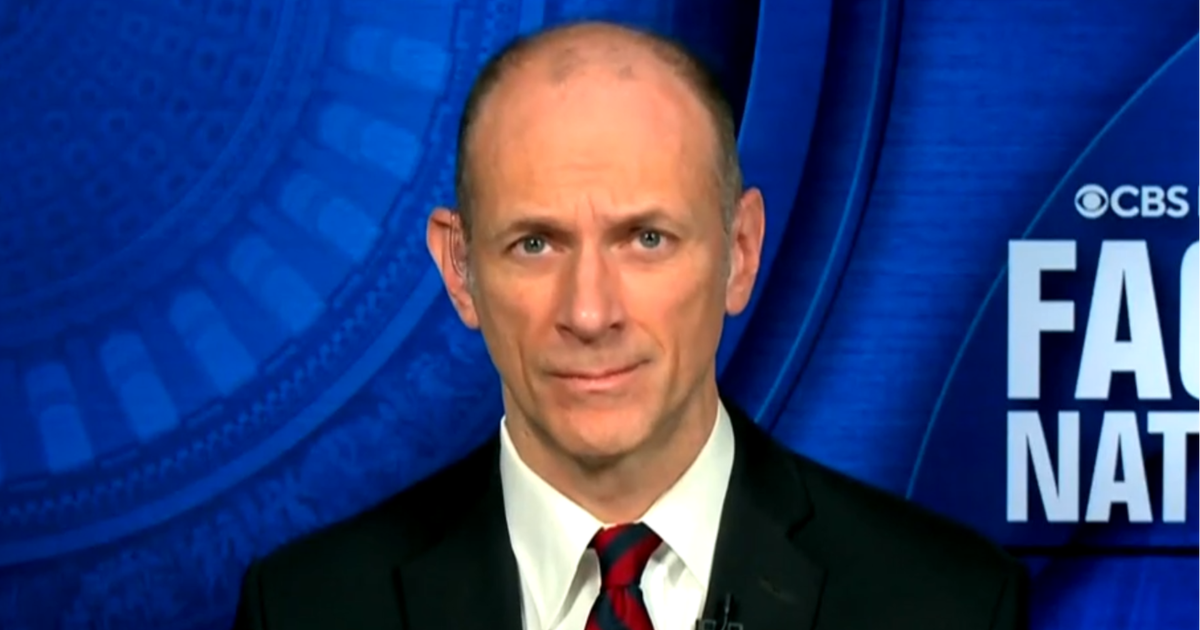
Interview: Austan Goolsbee Discusses Economic Concerns with Margaret Brennan, April 20, 2025
Reported by CBS News
WEIJIA JIANG: Shifting our focus to the current economic landscape, we have the president of the Chicago Fed, Austan Goolsbee, joining us live from Chicago. Austan, good morning and welcome.
AUSTAN GOOLSBEE: Thank you for having me, Weijia.
WEIJIA JIANG: Let's dive into President Trump's strategy on tariffs. Last week, Jerome Powell remarked that the tariff hikes were unexpected, potentially escalating inflation and dampening growth. Do you concur with these views?
AUSTAN GOOLSBEE: Indeed, being here in the Chicago Fed region, which covers much of the Midwest, I've been hearing from numerous business leaders and community stakeholders about their apprehension regarding sizable tariffs. If, as rumored in early spring, the tariffs reach significant levels, it could considerably affect operations. The announcement in early April was more substantial than anticipated. However, uncertainty shrouds our predictions; 90 days down the line, we still don't have clarity on their potential magnitude.
WEIJIA JIANG: Yes, and it's important to note that the government asserts multiple agreements are being formulated, so we need to be patient. Former economic chief Gary Cohn recently shared insights on CNBC regarding the immediate consumer impact. Let's take a listen to his thoughts.
(BEGIN AUDIO)
GARY COHN: The major concern is this summer's timeline. Are we simply shifting demand forward for June to August, as consumers rush to evade tariffs by making early purchases?
(END AUDIO)
WEIJIA JIANG: Gary points out that people are possibly hastening purchases to dodge impending tariffs. Are you receiving similar feedback from your Chicago connections? How do such behaviors affect your economic forecasts?
AUSTAN GOOLSBEE: Yes, such preemptive buying is more marked on the corporate front. Businesses, particularly those reliant on auto components and other manufacturing inputs, are building up inventories as a precaution against future uncertainties. This behavior might lead to elevated activity initially, followed by a lull in summer, echoing Gary's sentiment. However, there's optimism, as the Midwest foresees a potential renaissance in global trade, akin to what Secretary Besent mentioned. It's crucial to recall that economic indicators leading up to April were robust, with stable employment and declining inflation. The prevailing desire is to avoid reverting to the tumultuous inflationary period of 2021 and 2022.
WEIJIA JIANG: Understood. Let's revisit Powell's recent comments, which spurred a sharp reaction from President Trump, suggesting potential haste in his dismissal. Here's the President's take when queried about his authority over Powell's tenure.
(BEGIN AUDIO)
DONALD TRUMP: I have made my dissatisfaction clear to him. Should I decide he needs to leave, it will happen promptly, trust me.
(END AUDIO)
WEIJIA JIANG: Austan, I realize the Federal Reserve remains neutral in political matters, so my question is how statements like these might interfere with your role in maintaining an apolitical stance?
AUSTAN GOOLSBEE: Luckily, you're not seeking legal counsel, as my expertise lies in economics. Independence in monetary policy is crucial, a principle rooted in global observations where lack of such autonomy has resulted in poor economic outcomes like heightened inflation and reduced growth. It is vital that our central bank remains free from political tampering to preserve credibility.
WEIJIA JIANG: Thank you, Austan, for your insights and wishing you a joyful Easter.
AUSTAN GOOLSBEE: Thank you, Weijia, same to you.
WEIJIA JIANG: We'll return shortly.
Leave a Reply