


RFK Investigates 'Environmental' Roots of Autism, Labels Rise as 'Epidemic'
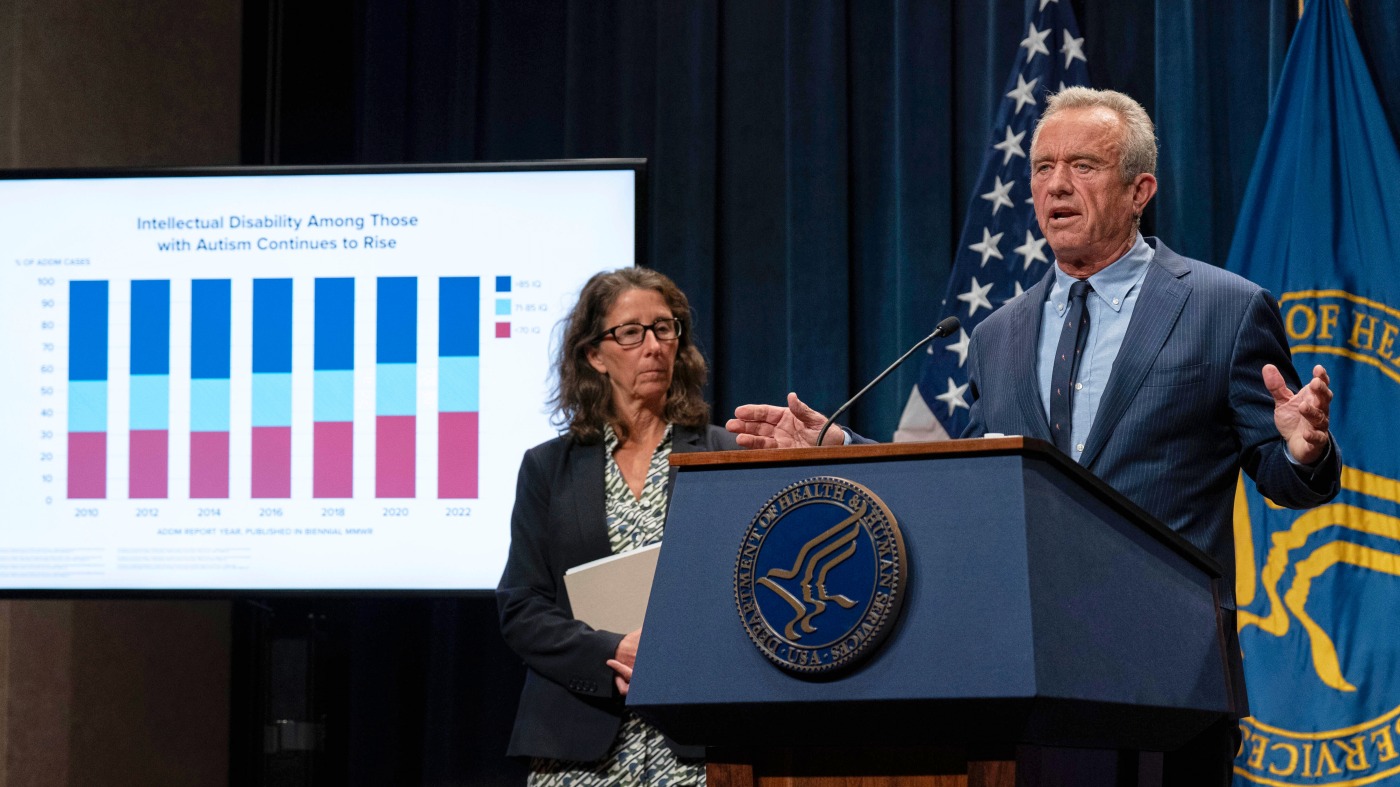
Health and Human Services Secretary Robert F. Kennedy Jr. addressed the media regarding autism rates on Wednesday, April 16, 2025.
Kennedy Jr. proclaimed that autism has become a swiftly escalating 'epidemic' in the United States and committed to unearthing the 'environmental toxin' he suspects is the cause.
He highlighted that the prevalence of autism in the U.S. rose from 1 in 36 children in 2020 to 1 in 31 by 2022, based on a report issued Tuesday by the CDC.
"This unyielding rise is a significant concern," Kennedy stated at a press briefing. "The overall incidence of autism is climbing at an alarming pace."
Discounting the idea that the surge is due to improved diagnosis, recognition, or changing diagnostic guidelines, Kennedy insisted, "This epidemic is tangible." He emphasized the Department's dedication to exploring environmental factors, viewing autism as "a preventable condition."
Within a few weeks, the Department plans to unveil new investigations aimed at pinpointing the 'environmental toxins' behind autism. Kennedy stated, "We are committed to delivering answers to Americans rapidly," with initial findings anticipated by September.
Concerns Over Study Timelines
Critics from the scientific and advocacy communities argue that the proposed timeline is insufficient for conducting robust research capable of yielding credible results.
Kennedy stressed a redirection of efforts from genetic to environmental research, criticizing historical funding allocation. "The financial and resource investment in genetic studies, which have yet to reach a conclusion, far exceeds that in environmental research by federal bodies."
Historically, Kennedy has linked autism to vaccines, a notion largely discredited by scientific communities.
Criticism from Experts and Advocates
Kennedy's assertions have been met with resistance from specialists and autism advocates. They underscore the complexity of autism, which spans genetic, biological, and environmental influences.
The Autism Society of America and other disability-focused groups underline the need for scientific corroboration in research. "While more research is crucial, it should be firmly anchored in scientific evidence," stated the Society's marketing official. "Currently, the notion of a singular environmental cause lacks scientific support."
A UCLA professor in human development and psychology noted the improbability of a singular cause for autism, while Vanderbilt University's Zachary Warren highlighted the interplay of numerous neurogenetic and environmental factors.
"As a healthcare provider, I wish for straightforward solutions for my patients," Warren commented. "Yet, autism encompasses a range of behavioral distinctions and challenges that we seek to optimally support."
The effort to pinpoint autism's origins, as expressed by another expert, might detract from immediate interventions that could assist families dealing with autism daily.
Broader Implications and Societal Views
According to the latest CDC release, improved diagnostic practices might account for some of the increased autism rates. However, differences in community access to early detection and evaluation services also play a role.
A pediatrician from Idaho welcomed the report's findings, recognizing advancements in autism identification, even in historically underserved areas.
Debate Over Epidemic Classification
Despite the recognition of better awareness, another medical school expert emphasized the stark rise in autism cases.
He argued, "Increased awareness cannot account for such an exponential growth in autism cases witnessed over the past two decades."
However, some pediatric professionals caution against labeling it an epidemic, attributing the rise to enhanced detection.
Public Response to Kennedy's Statements
Kennedy's remarks painted a concerning picture for some advocacy groups, noting a lack of representation of the diverse successes within the autism community.
"His portrayal limits the accomplishments of autistic individuals," critiqued the Autism Society of America representative, pointing to stigmatizing language in Kennedy's rhetoric.
The director of the Autistic Self Advocacy Network condemned the fear-driven narrative and highlighted ongoing policy threats that could affect autistic individuals.
The director mentioned concerns over proposed Medicare adjustments and the shutdown of agencies supporting disabled individuals, seeing Kennedy's comments as advancing an anti-vaccine agenda rather than aiding the autistic community.
Leave a Reply