


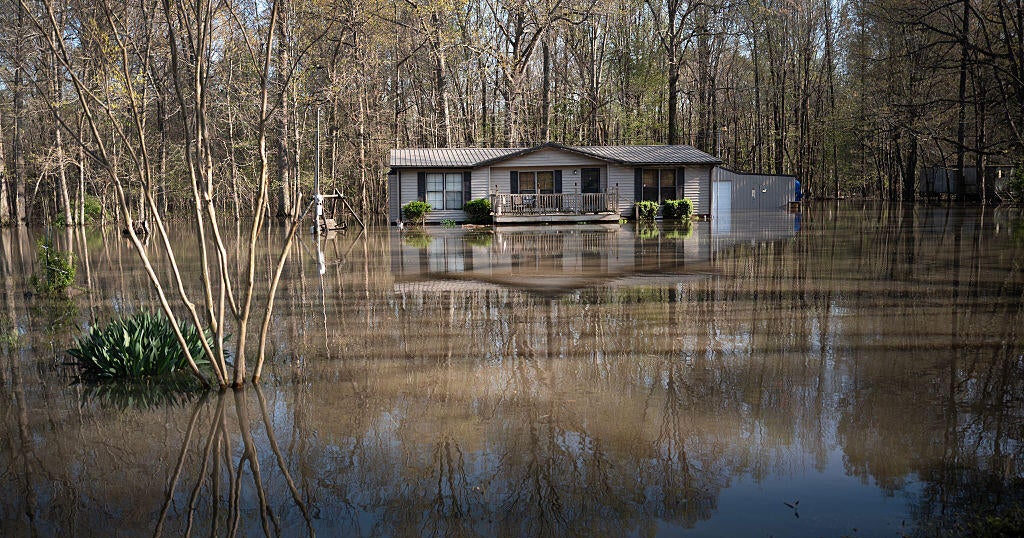
Increased Intensity of Recent Flooding in the Midwest and South Attributed to Climate Change
Recent severe weather events that led to fatalities across eight states in the U.S. in early April were significantly intensified by climate change, according to a fresh study.
The World Weather Attribution group, specializing in climate science, provided an analysis that attributed a 9% increase in precipitation during these storms to human-induced global warming. The resultant heavy downpours led to widespread destruction of houses, infrastructure, and agricultural land.
Between April 3 and April 6, torrential rains swept through the Midwest and Southern regions, including states like Kentucky, Tennessee, and Arkansas, setting unprecedented rainfall records. Researchers attributed the storms' exceptional strength partially to the Gulf of Mexico experiencing sea temperatures that were 1.2 degrees Celsius above average due to climate change.
The report suggests these storms were significantly more probable, estimating a 14-fold increase in likelihood during such conditions.
The accuracy of weather forecasts and the timeliness of warnings played a crucial role in mitigating some damage. However, there is concern regarding workforce shortages at the National Weather Service that could impede future disaster response efforts.
Numerous field offices are experiencing significant staffing deficits, with a notable percentage operating without senior meteorologists. This information was highlighted by Fredi Otto, a principal contributor to the report and an expert in climate science at Imperial College London's Grantham Institute.
These field offices have the responsibility to issue immediate alerts and collaborate with emergency management teams to enhance public safety.
Insurance sectors are also feeling the pressure, as climate change results in more extreme weather, prompting an escalation in insurance premiums for those residing in high-risk zones.
Ben Keys, a finance expert at the Wharton School, noted a significant rise in insurance costs for the top 20% most at-risk areas, with premiums increasing by roughly $1,100 on average from 2020 to 2024.
Without significant intervention, the frequency and severity of such weather phenomena are projected to surge.
Projections from the study indicate that if Earth’s temperatures climb to 2.6 degrees Celsius above pre-industrial levels by 2100, four-day rain events similar to early April's could become 7% more intense and twice as frequent.
Shel Winkley, a climate specialist from Climate Central, emphasized the necessity of future-preparedness, questioning the viability of continuous habitation and development in regions prone to repeated severe weather events. Considerations on safe and sustainable development practices will be crucial to ensure these areas remain livable.
Leave a Reply