


Barriers to Balcony Solar Panels in the US
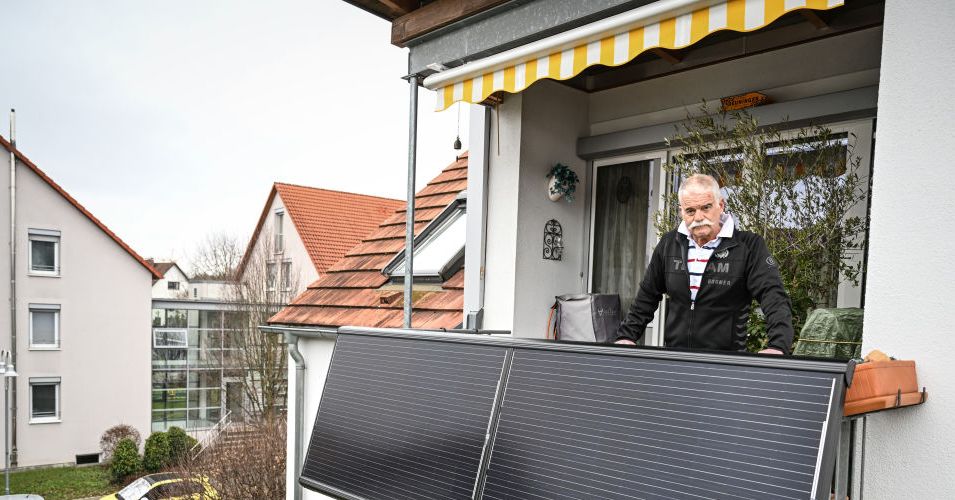
Raymond Ward envisions a day when every balcony in the United States boasts solar panels. Despite the simplicity of using these panels—hanging them on railings and connecting to an outlet—such a future remains out of reach in the US.
Capable of producing up to 800 watts, these panels can energize devices like laptops or small refrigerators. In Germany, they have become tremendously popular, embraced by everyone from consumers to environmental advocates. By December, Germany had registered over 780,000 units with a national regulatory agency.
Meanwhile, in the United States, demand for balcony solar is virtually nonexistent. Ward, who serves as a state representative in Utah, is advocating for change. To him, it seems like an easy opportunity that America has not yet seized. 'You see it working abroad and wonder why it's not here,' he remarked during an interview with Grist.
Ward's efforts recently led to the Utah legislature unanimously passing a law encouraging balcony solar technology. Signed by Republican Governor Spencer Cox, this law frees portable solar gadgets from state regulations that mandate utility company agreements for other power-generating systems. Such agreements and related 'soft costs' are typically financial barriers.
Utah's landmark legislative move aims to reduce obstacles, but other significant barriers persist. The rapid pace of technological development has left regulatory standards outdated. Essential certifications, including adherence to the National Electrical Code and endorsement from Underwriters Laboratories, remain absent.
Establishing Standards: A Work in Progress
Overcoming these hurdles will require dedication, as industry advocates acknowledge. A group of innovators and experts, with support from federal funding, are currently working toward creating these necessary standards—similar to the developments in Germany nearly ten years ago.
Back then, German advocates lobbied for updates to safety regulations, which eventually allowed the sale of balcony solar units. The Electrotechnical Certification Body, VDE, played a crucial role by releasing guidelines that manufacturers needed to follow, resulting in an industry boom.
Technical and Regulatory Challenges
The United States has yet to introduce a safety guideline for balcony solar. Current US electrical standards do not accommodate the idea of plugging solar devices into home outlets. Additionally, the US grid operates at 120 volts compared to Germany's 230 volts, necessitating unique solutions.
One potential risk is breaker masking. This issue arises when an additional power source like balcony solar feeds into a circuit where multiple appliances are already drawing power. The overloaded circuit might not trigger the breaker as intended, increasing the risk of overheating or fire.
Protective Measures Still Needed
In Germany, regulations ensure safety by limiting balcony solar output to 800 watts, even in old homes with outdated wiring. The US lacks similar measures, which could prevent short circuits and fires.
The absence of a suitable ground fault circuit interrupter (GFCI) further complicates adoption. While Germany uses a residual current device that can detect two-way electricity flows, US outlets do not support this feature for devices both generating and consuming power.
Pursuing Formal Approval
The largest hurdle remains achieving a UL standard, a certification essential for the sale and widespread acceptance of plug-in solar products in the US.
Achim Ginsberg-Klemmt, from GismoPower, is leading efforts to create this benchmark. Despite securing a Department of Energy grant to collaborate with Underwriters Laboratories, progress is challenging due to restrictive existing codes.
His company’s product, a mobile carport with solar panels, showcases how such technology can evolve. Designed to be usable in driveways, its potential often hits a regulatory standstill due to absent standards.
Future Prospects and Continuing Efforts
The US National Electrical Code poses another hurdle; it currently prohibits new plug-in solar technologies. Updated every three years, the next version in 2026 might present an opportunity for change if current proposed amendments are accepted.
Although past submissions were rejected, proponents like Ginsberg-Klemmt remain optimistic and continue to seek new strategies and forums to advocate for the inclusion of plug-in solar applications.
Interest in renewable and personalized energy solutions continues to grow. Ward remains hopeful that, much like in Germany, such technology will eventually gain acceptance across the US, promoting energy independence on an individual level.
Leave a Reply