


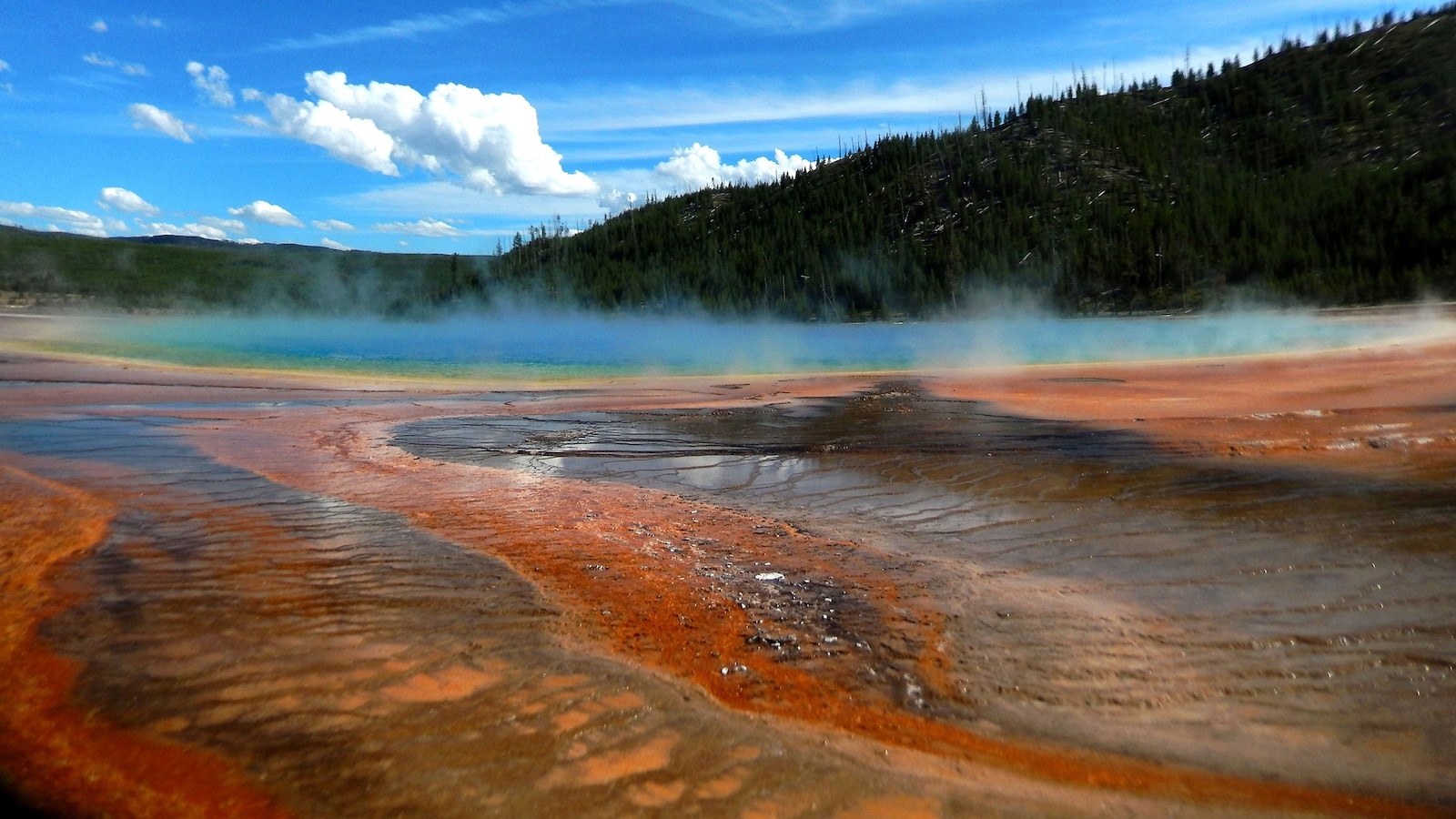
Discovering A Magma Cap at Yellowstone
Researchers have unearthed a magma cap within Yellowstone National Park, offering significant insights into the mechanisms curbing potential large-scale volcanic eruptions in this vast, lively volcanic zone.
Located approximately 2.4 miles beneath the Earth's crust, this magma-filled 'lid' functions as a barrier, confining heat and pressure underneath, as revealed by recent scientific study.
Unveiling the Subterranean Structure
To identify this geological feature, a massive 53,000-pound vibroseis vehicle was employed, generating minute tremors that dispatched seismic waves into the terrain. These waves, upon rebounding, exposed a distinct foundational division where the magma cap exists.
Brandon Schmandt, an Earth and planetary sciences professor at Rice University, highlighted their unexpected findings at such depths within the Earth's layers.
The presence and stability of volatile-rich layers strongly impact the overall safety of volcanic systems. Notably, the magma chamber at Yellowstone's upper crust, residing beneath its caldera, had not been well explored until now.
A Dynamic Yet Stable Reservoir
For decades, magma flow beneath Yellowstone has been acknowledged, yet precise details about the depth and structure of its upper boundary remained elusive. Findings suggest this reservoir, dormant for millions of years, remains dynamic and active.
In 2022, observations revealed the immense caldera's magma exists closer to the surface than previously believed, over shallow conduits that once spawned historical eruptions.
Composition and Behavior of the Magma Cap
Scientists utilized models of various rock formations and molten states to unravel the materials composing the magma cap, a fusion of silicate minerals and supercritical bubbles within porous rocks. These bubbles arise as the ascendant magma depressurizes, separating gases like water vapor and carbon dioxide.
These bubbles can drive eruptions by increasing buoyancy. Despite their presence, scientists assert that no immediate eruption at Yellowstone seems forthcoming.
Current State of Yellowstone's Magma Reservoir
Insights from seismic imaging and advanced computational simulations show the magma chamber actively vents gas in a stable, 'breathing' manner, where rising bubbles permeate the porous magma cap.
"We've observed a volatile-rich layer beneath the surface, but current bubble and magma contents are beneath levels that typically signal imminent eruptions," explained Schmandt.
Challenges and New Discoveries
Extracting clear seismic data from Yellowstone's complex geology proved challenging, due to noisy readings. Yet, perseverance led to obtaining vivid images of the magma reservoir's roof, providing important clues for potential future activities in this vast volcanic system.
Leave a Reply