


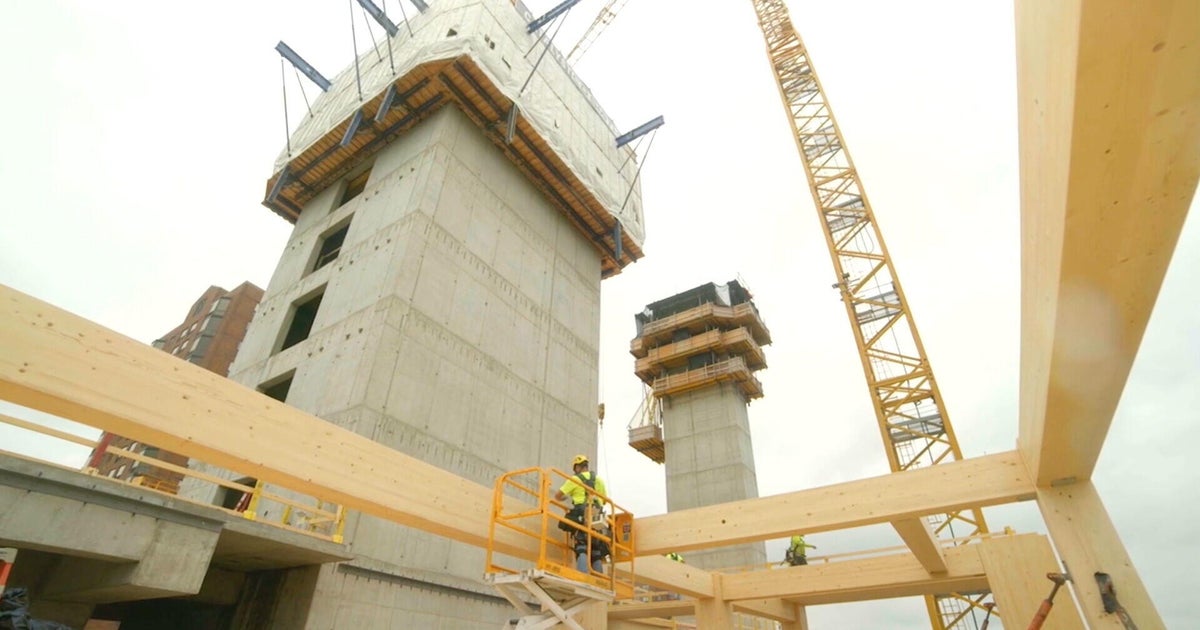
The Future of High-Rise Construction: Milwaukee's Timber Marvel
Nestled in Milwaukee’s Yankee Hill area stands Ascent, a towering 284-foot edifice famously recognized as the tallest timber-concrete fusion building globally. It's not just its stature that captures attention; it signifies a transformative approach to urban construction.
Developer Tim Gokhman emphasizes that the expenses involved with timber structures such as Ascent are on par with conventional building materials. Yet, timber offers distinct benefits over its steel and concrete counterparts.
Gokhman highlights, "Concrete demands precision and intensive labor while contributing significantly to environmental degradation with a large carbon footprint. Steel, with its superior spanning capabilities, is heftier and worse for the environment." Indeed, the U.S. Department of Energy notes that steel production is responsible for 7% of global greenhouse emissions.
Ascent's structure arose from pre-fabricated timber components, assembled efficiently by a team of 12, completing the core within six months. These wooden elements are not only lightweight and affordable but notably strong.
Addressing concerns about tree resources, Gokhman asserts, "We possess ample forestry resources. The real deforestation culprits are the repurposing of forests for industrial, agricultural, and residential use due to insufficient demand for wood products."
Moreover, wood’s recyclability facilitates deconstruction, an environmental boon. However, its primary flaw remains its combustibility, prompting stringent testing for safety.
Before construction, Ascent’s timber underwent rigorous trials at the University of Wisconsin's Forest Products Laboratory. Exposed to temperatures exceeding 2,000°F, the wood's slow charring was crucial in affirming compliance with safety standards.
Ensuring Safety in Timber Structures
Material research engineer Laura Hasburgh underscores, "Our examinations assured that evacuees and rescuers would be safeguarded against structural failures during a fire." The gradual burning of Ascent’s wood met regulatory codes, instilling confidence in its safety.
Looking forward, Gokhman envisions replicating Ascent's design in future developments, applying insights garnered from this pioneering project.
This trend is gaining momentum, with other cities like Boston, Cleveland, and Portland also exploring mass timber for new constructions.
Leave a Reply