


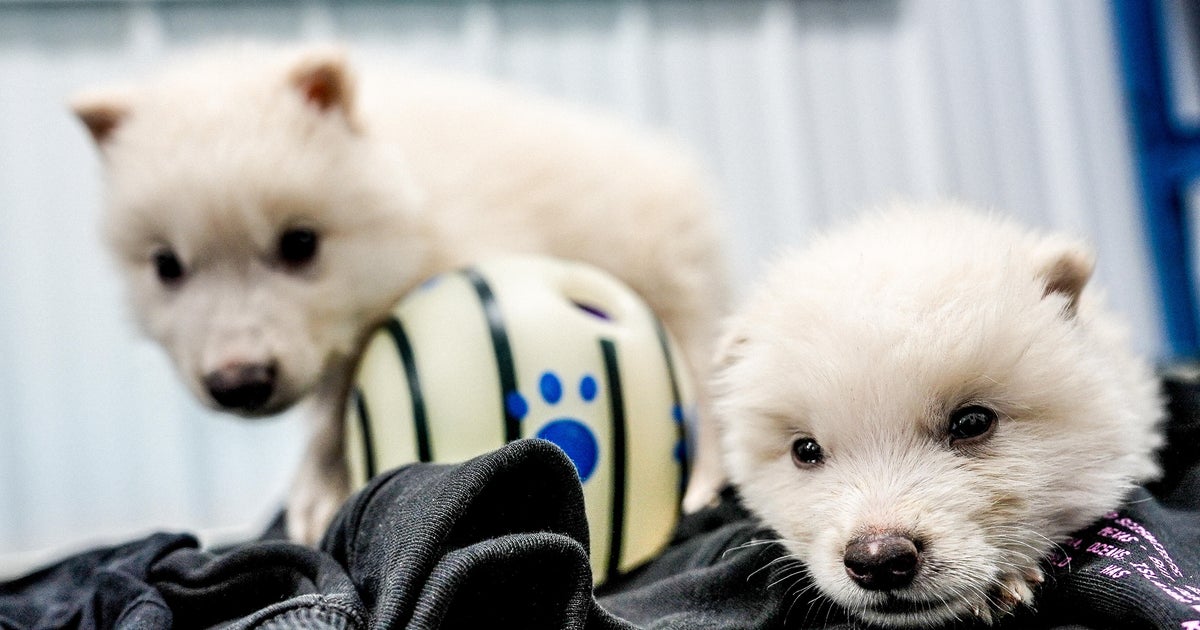
Biotech Breakthrough: Dire Wolf Resurrected After 12,500 Years
A pioneering scientific achievement has occurred as researchers announce the revival of a species long considered extinct—the dire wolf.
Based in Dallas, Colossal Biosciences heralds the birth of three dire wolf offspring, a species that inhabited North America over 12,500 years ago, marking a remarkable milestone in scientific innovation.
Genetic Miracles and Modern Science
Colossal's CEO, Ben Lamm, unveiled that their team utilized ancient genetic material extracted from a tooth aged approximately 13,000 years and a skull about 72,000 years old. These findings allowed them to reconstruct the full genetic blueprint necessary to engineer three vibrant dire wolf pups.
Insights from the Colossal platform reveal that while numerous dire wolf fossils are found in the La Brea Tar Pits in Los Angeles, the DNA was not intact in these specimens. Leveraging samples from a global study, the company unearthed unprecedented amounts of dire wolf genetic data.
Advanced Genetic Techniques
By employing the CRISPR gene-editing technology, the team at Colossal altered the genetic makeup of cells derived from a living gray wolf, departing from traditional cloning that depends on existing tissue samples. These altered cells led to the formation of embryos, which were gestated by a surrogate, identified as a domestic dog.
Ultimately, three dire wolf pups, named Romulus, Remus, and Khaleesi (inspired by 'Game of Thrones'), were born, representing both the success and the limitations of de-extinction endeavors.
Debates on Authenticity and Ecological Roles
There is ongoing debate within the scientific community about whether these new creatures can truly be classified as dire wolves. Vincent Lynch, a biologist from the University at Buffalo, expressed skepticism, suggesting these animals may resemble the extinct species only superficially.
Lynch also highlighted that irrespective of physical similarity, these engineered creatures cannot fulfill the ecological niches the original dire wolves occupied.
Conservation and Future Endeavors
Colossal assures that the newly created dire wolves are living in a specially designed 2,000-acre sanctuary, which has both USDA registration and American Humane Society certification.
Additionally, Colossal has reported success in cloning red wolves, one of the globe's most endangered wolf species. This process of de-extinction might offer valuable contributions to conservation strategies worldwide. Dr. George Church, a Harvard geneticist and Colossal co-founder, stressed the importance of genetic preservation to avert the extinction of threatened species like the red wolf.
Vision for Future De-Extinction Projects
In 2021, Colossal disclosed intentions to bring back the woolly mammoth, a concept under development by Dr. Church for years. He speculates that within five years, advancements may lead to successful de-extinction in mice, progressing eventually to elephants.
An exploratory genetic project recently led Colossal's team to modify the genes of mice to produce shaggy, woolly fur. These experiments, shared online, await verification by the broader scientific community in peer-reviewed publications.
This burgeoning field might revolutionize conservation methodologies, although considerable challenges lie ahead, particularly when working with endangered species such as the Asian elephant.
Leave a Reply