


Unprecedented Blizzard Hits the Southern States, Arctic Chill Causes Severe Freeze
A snowstorm of historical dimensions blanketed the Deep South, compelling a National Weather Service branch in Louisiana to alert the public with an unprecedented blizzard warning. This ferocious weather event is bringing perilous conditions stretching from Texas all the way to North Carolina.
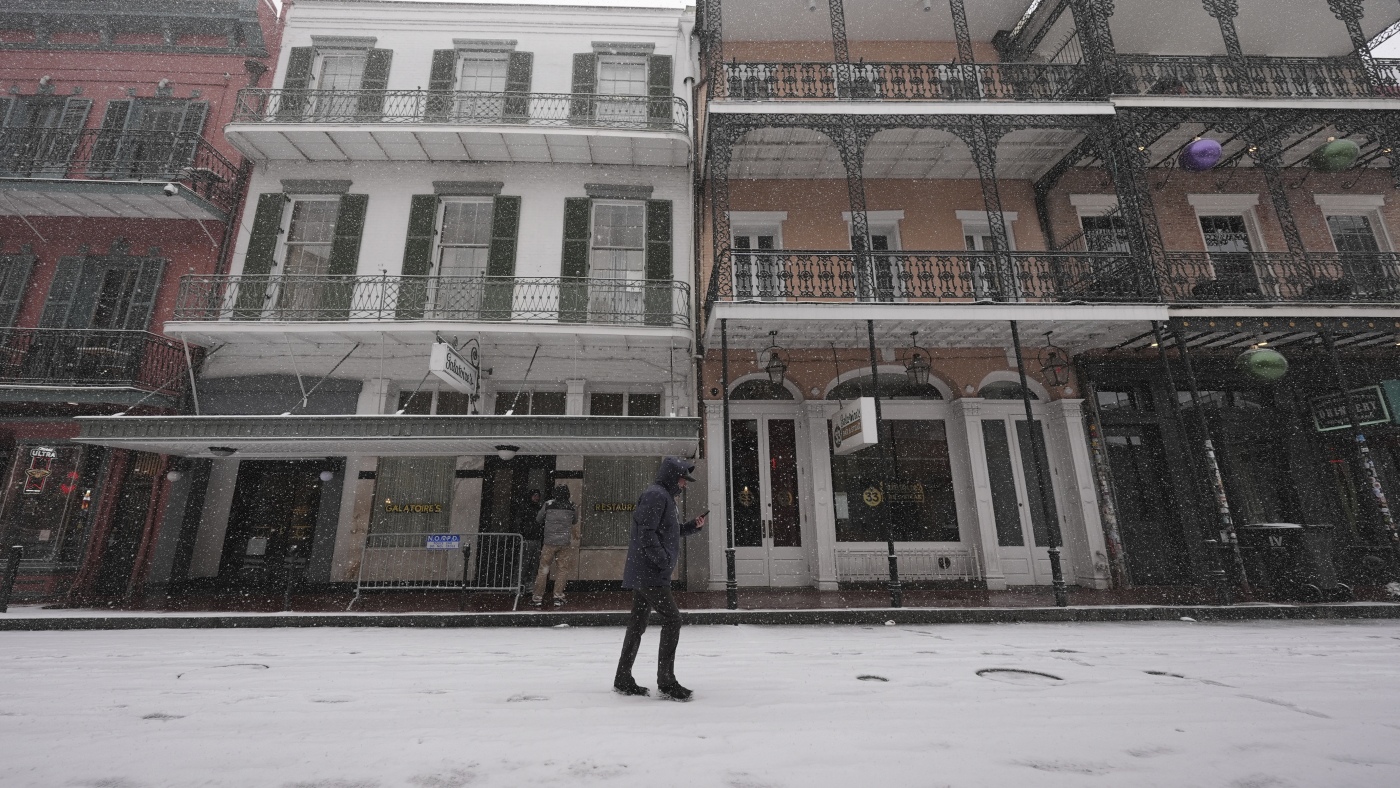
Images of snow piling up along Bourbon Street in New Orleans, a rare sight for the region, have captured attention.
Usually, blizzard conditions are confined to more northern areas, but on a recent Tuesday, the unimaginable occurred when southwest Louisiana’s meteorologists flagged a blizzard warning for selected counties and parishes.
Meteorologist Donald Jones, based at the National Weather Service in Lake Charles, Louisiana, expressed disbelief at the unfolding situation, noting it was unprecedented to issue such warnings there.
Residents are being cautioned to prepare for strong 35 mph winds resulting in visibility dropping below a quarter of a mile across portions of Texas and Louisiana. This comes as bitterly cold conditions, involving icy mix and snowfall, engulf a large swath of the South.
As stated by Jones earlier in the day, snow accumulations were already recorded at 1 to 3 inches with more snowfall anticipated.
Confronting Rare Winter Weather in the South
Snowfall also decorated New Orleans earlier, with predictions pointing to freezing temperatures persisting throughout the week.
The forecast includes bitter wind chills potentially falling to the teens or even lower, notably impacting New Orleans, Baton Rouge, and southern Mississippi.
On Tuesday, Stephanie Cain and her young daughter took to the snowscape of Houston, enjoying snowball fights amidst a surreal environment as snow and sleet continued to fall. Forecasts suggested possible snow accumulations of 3 to 6 inches in the area.
New Orleans residents should prepare for the chilliest temperatures on Wednesday morning, with a forecast predicting a frigid low of 22 degrees. Caution is advised for those venturing outside.
Authorities have urged the public to shield themselves, their pets, and vegetation from the frosty weather. Warming centers are being set up, and there are advisories regarding treacherous roads that could be covered in hazardous ice.
Eric Bullard from the Mississippi Emergency Management Agency strongly advised the public to remain indoors if possible, highlighting the perilous driving conditions.
Expansive Impact of the Winter Storm from Texas to Carolina
Spanning from southern Texas to northern North Carolina, the storm is challenging millions with danger. In response to plummeting temperatures, health alerts and road closures have become routine, yet residents are also indulging in the rare chance to enjoy a snow-covered landscape.
Houston resident Patrick Van Pelt shared his astonishment at experiencing such snow, noting the infrequency of such events that incite thoughts of sledding.
This powerful storm owes its strength to an unusual mix of Arctic air descending southward together with a Gulf of Mexico-derived low-pressure system, thereby creating a wintry storm on a path similar to that of tropical systems, moving ice and snow from the Gulf Coast eastwards.
The Florida Panhandle’s city of Pensacola is bracing for its first notable snowfall in several years.
On Tuesday, a historic oak in New Orleans stood spectacularly enveloped by snow, underscoring the storm’s reach and effect.
As the storm progresses, southeastern Alabama and southwestern Georgia expect heavy snow accumulations throughout Tuesday afternoon, with the potential for accumulations reaching up to 4 inches.
Georgia Governor Brian Kemp has declared an emergency situation to last until the end of January, while Florida's Governor Ron DeSantis has taken similar steps.
Meteorologists have consistently issued warnings about potential consequences of this storm, and while events have unfolded, many predictions remain fluid given evolving weather dynamics, particularly regarding how snow and freezing precipitation will accumulate.
Leave a Reply