


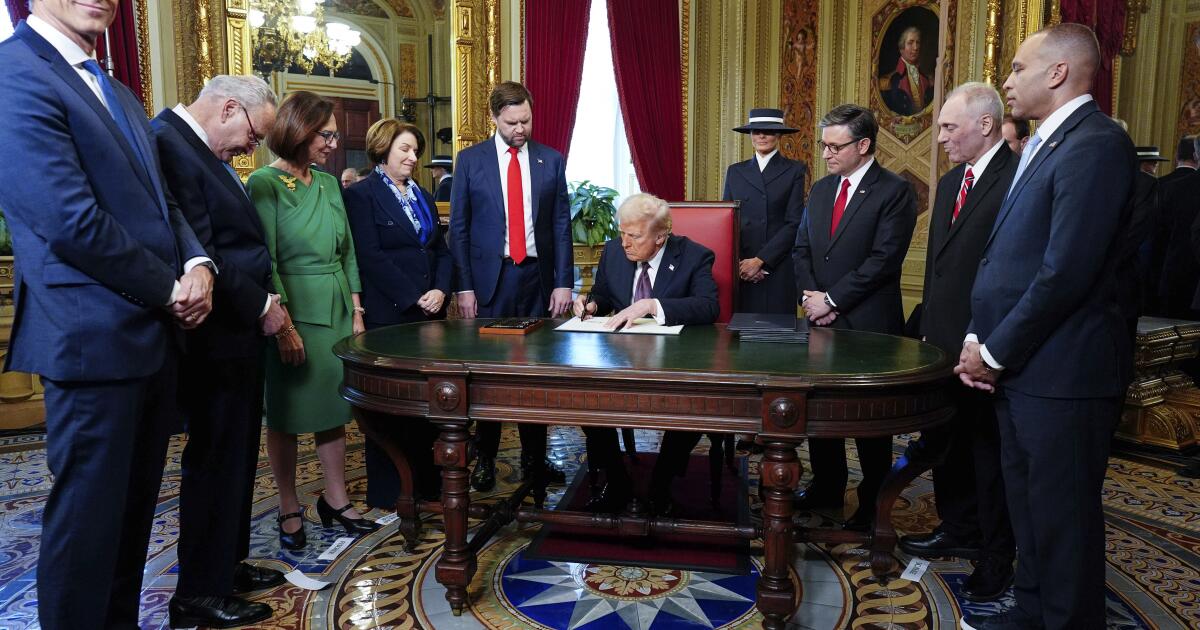
Trump's Initiative: Reversing Green Policies from Day One
Upon assuming the presidency, Donald Trump pledged to immediately sign a suite of executive orders aimed at dismantling California's stringent vehicle emissions standards and undoing environmental protections established during Biden's tenure. His statement of 'drill baby drill' was met with enthusiastic cheers both in the Capitol Rotunda and Capital One Arena, signaling a boost for U.S. fossil fuel industries.
Targeting California's Emissions Regulations
During his inaugural address, Trump indicated plans to overturn California's impending ban on the sale of new gasoline-only vehicles by 2035. This legislation requires that a growing proportion of cars sold be zero-emission, powered by electric or hydrogen systems, and marginally by plug-in hybrids.
Trump declared his commitment to revoke these mandates, highlighting that this would save the automotive industry and honor his promise to American workers, allowing consumers to purchase vehicles of their preference.
Impact on Environmental Goals
As an advocate for fossil fuels and a climate change skeptic, Trump's impending executive maneuvers could halt or delay California’s ambitious environmental progress, a state already battling severe climate-induced hardships.
California is notably affected by wildfires that have ravaged the Los Angeles area, exacerbated by climate change effects. Droughts, water shortages, and the threat of rising sea levels are rising challenges for the state’s extensive coastlines.
Cara Horowitz from UCLA emphasized California's urgent climate objectives and the repercussions of potential delays induced by federal obstructions, underscoring the broader negative implications for environmental goals.
Legal and Health Implications
Under the Clean Air Act, California has the unique ability to set stricter vehicle emission standards with EPA endorsement. The state’s Advanced Clean Cars II policy was poised to save lives and billions in health benefits, yet Trump's executive orders threaten its implementation.
Environmental advocacy groups are preparing to confront the administration legally, opposing these rollbacks that could raise gasoline prices, diminish opportunities for electric vehicle producers, and increase healthcare expenditures.
Challenges to National Climate Strategy
Without federal cooperation, California has faced hurdles in enacting aggressive climate policies, such as transitioning away from fossil-fuel vehicles, under the waning support from the preceding administration. Danny Cullenward highlighted the struggle to meet California's 2030 climate objectives, which are now further imperiled by federal antagonism.
Federal incentives, like those from the Inflation Reduction Act for zero-emission technology, are also under threat of revocation, potentially stifling progress in clean technology advancements.
Declaring an Energy Emergency
Trump's broader strategy includes declaring a national 'energy emergency,' enabling a suspension of existing laws to accelerate fossil fuel production. This echoes past declarations of emergencies used to expedite initiatives like border wall construction.
This move would grant Trump sweeping powers to prioritize fossil fuel infrastructure, including utilizing stockpiles and diverting resources towards coal-powered facilities, potentially bypassing pollution regulations.
Intent to Withdraw from the Paris Agreement
Trump announced, for the second time, his intent to pull the U.S. out of the Paris Climate Agreement, a crucial global pact aimed at reducing greenhouse emissions and combating global warming. Critics, like Rachel Cleetus from the Union of Concerned Scientists, have labeled this as a severe misstep undermining urgent global climate efforts.
The formal process of withdrawal entails a year-long duration, during which the U.S. remains part of the agreement. Environmental advocates urge reconsideration, emphasizing the economic and environmental drawbacks of favoring fossil fuels over renewable options.
Despite initial withdrawal moves during his first term, Trump's policies galvanized states and local governments to fortify independent climate commitments. California, for instance, forged international agreements and collaborated with automakers independently of federal directives.
Looking Ahead
California's leadership in climate action during Trump's initial presidency could resonate as the state faces regulatory challenges anew. Governor Newsom reiterated a steadfast commitment to pursuing clean air and water ambitions, exemplified through state-level initiatives and continued resistance to federal rollbacks.
Leave a Reply