


Trump's Climate Policy Shift Sparks Concerns and UN Cautions
In a move reminiscent of prior decisions, U.S. President Donald Trump has once more opted for the United States to exit a major climate agreement. This step is seen as an opportunity for other nations to step into a role of global environmental leadership, as highlighted by the leading climate authority at the United Nations.
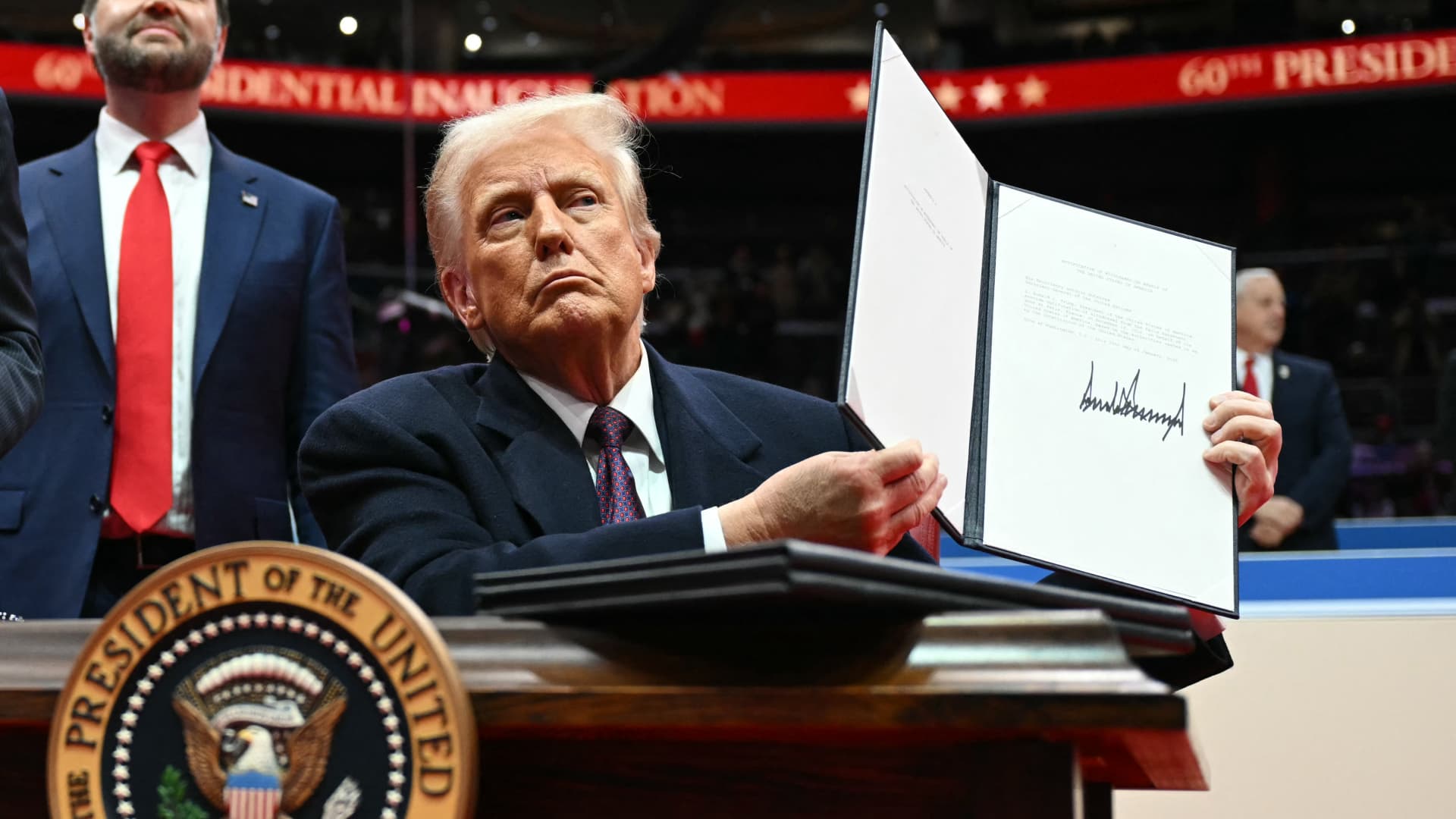
On Monday, Trump initiated an executive order effectuating the U.S. withdrawal from the most extensive global framework aimed at curbing increasing global temperatures. He concurrently declared a 'national energy emergency,' aiming to scale back regulations established during Biden's presidency, while boosting the output of fossil fuels.
This decree to abandon the Paris climate accord is a significant setback to worldwide environmental efforts. Initially established in 2015, the Paris Agreement sets a global strategy to reduce emissions and limit the increase in global temperatures to well below 2 degrees Celsius, with an effort to cap it at 1.5 degrees Celsius above pre-industrial numbers.
Repeating History?
"We've experienced this kind of scenario previously," remarked Simon Stiell, the UN Climate Change Executive Secretary, during a discussion at the World Economic Forum. He noted a considerable difference between Trump's previous decision in 2017 to exit the Paris Agreement and his recent proclamation, emphasizing the substantial progress in addressing climate issues in the interim.
Stiell stated that the global transition towards cleaner energy is an irreversible trend. A striking testament to this is the over $2 trillion investment made last year into renewable energy, overshadowing the $1 trillion spent on fossil fuels. "This sends an unmistakable message," he said, indicating that any regression in climate measures opens opportunities for other nations to capitalize.
Scientific and Global Responses
Environmental scientists have voiced concerns over Trump's decision to remove the U.S. from the Paris Agreement. This announcement closely follows alarming reports by scientific agencies confirming recent months as the warmest on record, further underscoring the urgency for collaborative climate action.
President Trump has previously referred to climate change as exaggerated, and on Monday reiterated his administration's focus on expanding oil and gas production over his next potential term, with emphatic declarations of a new era for fossil fuel exploitation.
Industry Reactions and Future Outlook
Some European insurance leaders have downplayed the immediate effects of Trump's climate policies. Oliver Bate, CEO of a leading insurance firm, mentioned that although the situation presents challenges, the global community acknowledges the necessity for improvement. He suggested that action may be more beneficial than mere discourse at this juncture.
Mario Greco, another industry CEO, contested the view that Trump’s withdrawal significantly shifts the political landscape, pointing out that the Paris Agreement has yet to fulfill its ambitious targets. He argued that technology must play a crucial role in reducing temperatures, indicating optimism for alternative means to achieve essential climate goals.
Leave a Reply